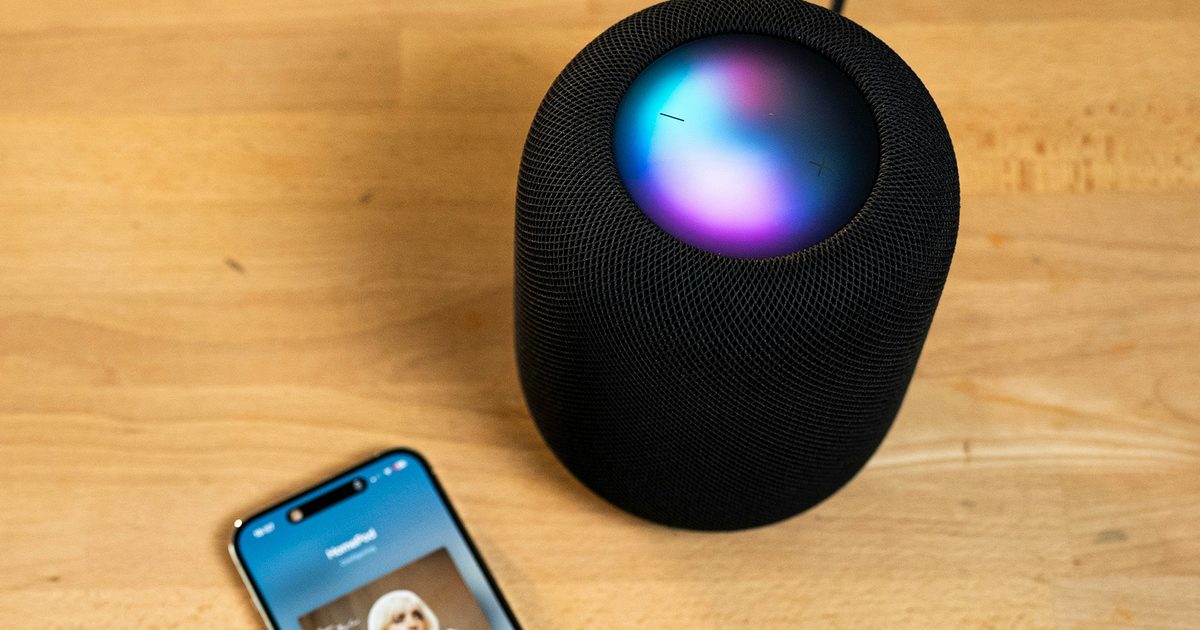
Apple’s Smart Home Expansion: New Smart Displays, Cameras, and HomePod Mini 2 Rumors
Apple is preparing to expand its smart home ecosystem with a new lineup of hardware, including a touchscreen smart display dubbed the “HomePad,” security cameras, and updated HomePod speakers, according to reports from Digital Trends, 9to5Mac, and The Verge. These devices aim to integrate advanced Siri AI and presence sensing to move the HomeKit experience from a manual command-and-control interface toward an ambient, automated environment.
The Tech TL;DR:
- New Hardware: A rumored 7-inch “HomePad” smart display and dedicated security cameras/doorbells are in development to close the gap with Amazon and Google.
- AI Integration: Next-gen HomePods and displays will likely leverage on-device NPUs to support a smarter, context-aware Siri.
- Architectural Shift: Reports suggest a potential “homeOS” to unify tvOS and HomePod software, streamlining the deployment of AI-driven home orchestration.
The push into dedicated home hardware comes as Apple attempts to rectify a decade of stagnation in the category. While Amazon and Google have released over 40 smart speakers and displays, Apple has shipped only three, according to The Verge. This hardware deficit has forced users to rely on third-party Matter-enabled devices, which, while secure, lack the tight vertical integration of the Apple silicon stack.
The HomePad: Solving the Shared Control Bottleneck
Central to this expansion is the “HomePad,” described by The Verge as a roughly 7-inch-square touchscreen. The device is reported to feature two form factors: a wall-mounted version utilizing a MagSafe mount and a standalone version with a speaker base similar to the HomePod mini. From an architectural standpoint, the HomePad addresses the “shared control” problem—the friction caused when a smart home is tethered to a single user’s smartphone.
The device is expected to utilize facial recognition and presence sensing to identify which family member is interacting with the screen. This allows the system to trigger personalized routines based on the specific user’s identity. To implement similar presence-based triggers in current developer environments, engineers often utilize the HomeKit API to monitor accessory states.
curl -X GET "https://home-bridge.local/api/accessories/status"
     -H "Authorization: Bearer YOUR_ACCESS_TOKEN"
     -H "Content-Type: application/json"
By moving this logic to a dedicated NPU (Neural Processing Unit) within the HomePad, Apple can reduce the latency associated with cloud-based processing, keeping the data local and maintaining the privacy standards of HomeKit Secure Video.
Hardware Specs and the AI Roadmap
Apple’s strategy involves a trio of products led by John Ternus, who The Verge reports is now “leading the charge” after previously being reluctant to invest in the category. The roadmap includes home security cameras and a video doorbell designed to feed real-time data into a smarter Siri. By combining visual data from cameras with Ultra-Wideband (UWB) sensors found in newer HomePods, Apple can create a “whole-home orchestration” system that knows exactly where a user is located.
| Device | Primary Function | Key Tech Specs (Reported) | Strategic Goal |
|---|---|---|---|
| HomePad | Control Hub | 7-inch Touchscreen, Facial Rec, MagSafe | Centralized Shared Control |
| HomePod mini 2 | Audio/AI Node | Updated SoC, Siri AI Support | Ambient AI Presence |
| Home Security Cam | Visual Sensing | HomeKit Secure Video, Presence Sensors | Contextual AI Triggering |
| Home Robot | Companion AI | Robotic Arm, Tablet Display | Physical AI Interaction |
The integration of a “home robot”—a tabletop device with a display on a robotic arm—suggests Apple is moving toward “physical AI.” According to a paper published last year cited by The Verge, Apple is exploring imbuing these devices with personalities to provide both utility and companionship. This shift requires significant compute power, likely necessitating a move toward more robust ARM-based silicon to handle local LLM (Large Language Model) inference without introducing unacceptable latency.
The Software Pivot: Toward a Unified homeOS
Hardware alone cannot solve the fragmentation of the current Apple Home experience. There are reports of a new “homeOS” that would merge tvOS and HomePod software into a single foundation. This unification is a prerequisite for deploying a consistent AI brain across all home devices. Without a unified OS, the “blast radius” of a software bug or a security vulnerability is fragmented across different kernels, complicating the patching process.
However, as the attack surface expands to include robotic arms and facial recognition cameras, the need for SOC 2 compliance and rigorous end-to-end encryption becomes paramount.
The transition to a more autonomous home relies on the “Matter” standard, which Apple has heavily supported to spur manufacturer adoption. By combining Matter’s interoperability with a proprietary, AI-driven OS, Apple aims to maintain the “walled garden” experience while allowing the hardware to actually function in a diverse ecosystem. This is a direct contrast to the approach seen in Ars Technica‘s analysis of open-source home automation, where flexibility often comes at the cost of out-of-the-box stability.

As Apple prepares for a potential fall launch, the industry is watching whether the shift in leadership from Tim Cook to John Ternus will accelerate the shipping cadence. The move toward ambient computing—where the house reacts to the user rather than waiting for a command—represents the final frontier for the Apple ecosystem. If Apple can successfully deploy a local-first AI that doesn’t compromise privacy, they may finally displace the market share currently held by Amazon and Google.
Disclaimer: The technical analyses and security protocols detailed in this article are for informational purposes only. Always consult with certified IT and cybersecurity professionals before altering enterprise networks or handling sensitive data.
Related reading