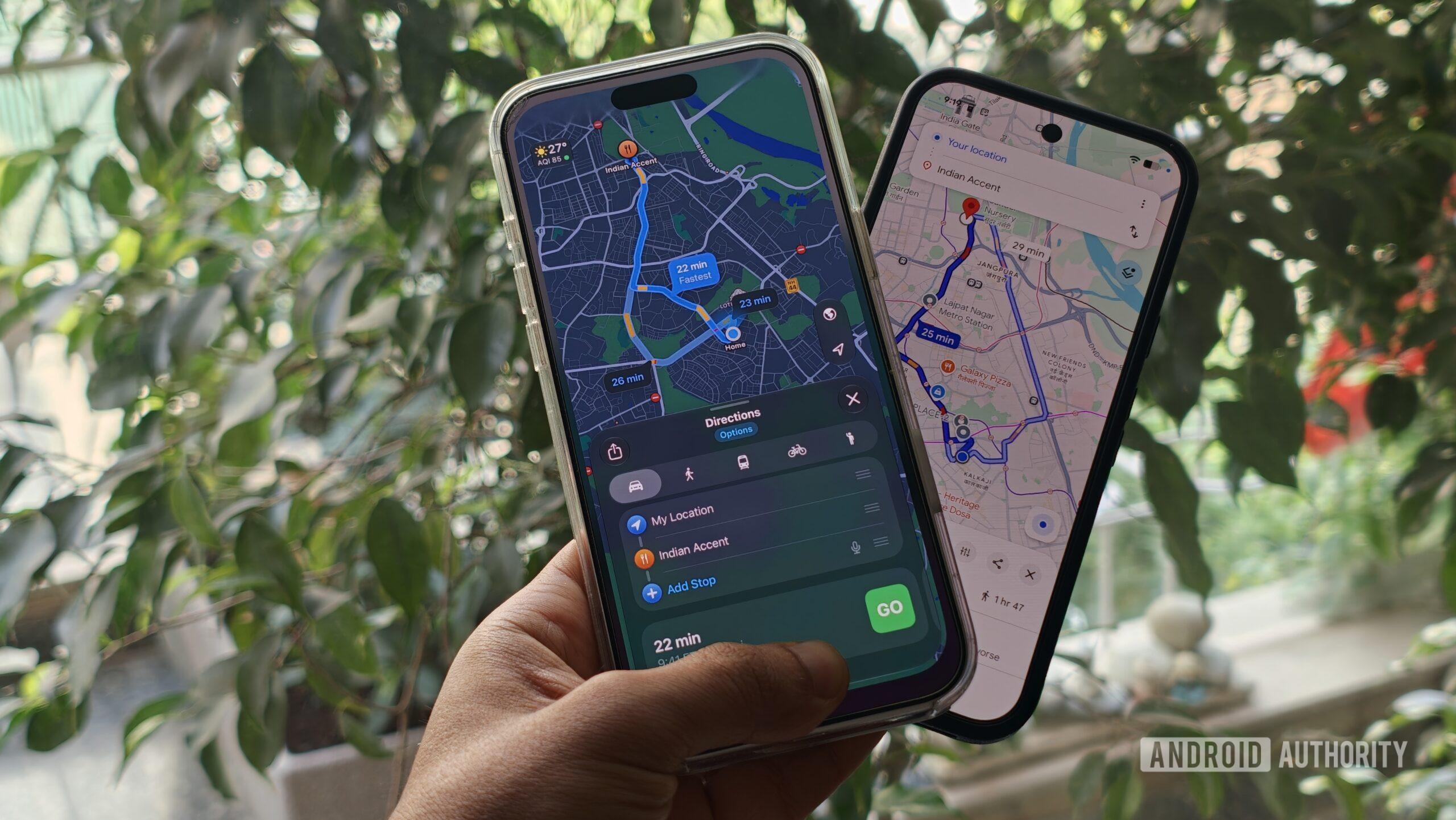
Apple Maps vs. Google Maps: Interface and Feature Comparison
Google Maps dominates global navigation through massive data depth and AI integrations, yet Apple Maps maintains distinct UI advantages in 2026, including a cleaner interface, advanced system-level integrations like iOS 26 Preferred Routes, and uncluttered visual design according to comparative reporting by ZDNET editor Elyse Betters Picaro and Android Authority writer Dhruv Bhutani.
The Tech TL;DR:
- Interface Architecture: Apple Maps provides a significantly less cluttered visual layout compared to Google Maps, relying on refined design languages like the Liquid Glass aesthetic in iOS 26.
- Predictive Routing: Apple Maps features native Preferred Routes that learn frequent daily commutes and warn users of delays before departure, contrasting with Google’s reactive fastest-route defaults.
- Ecosystem Optimization: Apple Maps executes deep operating system integration across CarPlay and mobile hardware, whereas Google Maps scales its advantage through broader offline data storage and expansive global transit coverage.
Interface Clutter and Aesthetic Design Layouts
User experience metrics often break down at the visual layer when comparing mobile mapping engines. Dhruv Bhutani of Android Authority highlights that Apple Maps delivers a demonstrably cleaner, less cluttered interface than Google Maps. While Google layers hundreds of millions of business listings, crowd-sourced pins, and real-time transit overlays directly onto the primary viewport, Apple maintains a sparser, more typographic-driven rendering style. This minimalist architecture reduces cognitive load for developers and daily commuters who need rapid visual parsing without competing graphical elements.

However, this aesthetic choice introduces architectural trade-offs. According to ZDNET reporting by Elyse Betters Picaro, Google Maps wins overall for depth, offering rich discovery features, fast routing algorithms, and comprehensive street-level data layers.
Predictive Commute Tracking via iOS 26 Preferred Routes
Routing intelligence separates modern navigation stacks from static pathfinding. As detailed in ZDNET’s 2026 feature comparison, Apple introduced a Preferred Routes capability under iOS 26. This algorithm learns historical driving patterns—such as custom back-road detours rather than standardized highway grids—and issues preemptive warnings about localized delays before the user even starts the engine. Google Maps, by contrast, prioritizes immediate transit speed, defaulting to the mathematically fastest route rather than building a persistent behavioral model of routine habits.
Offline Data Availability and Global Coverage Disparities
Infrastructure limitations expose structural differences in how both applications handle local caching. Urban Rider analysis points out that Google Maps permits users to download entire geographic regions—including routing engines for walking, cycling, and driving—to operate entirely offline. Apple Maps supports offline turn-by-turn driving via downloaded map tiles, but core utilities such as public transport routing still require an active data connection.

Furthermore, Google’s two decades of crowd-sourced data collection yield over 200 million business listings, giving it superior coverage in rural sectors and regions outside North America and Western Europe. Apple Maps has rebuilt its mapping engine using proprietary data since its 2012 launch, achieving parity in dense metropolitan areas, but rural pathfinding still triggers edge-case failures where Google’s broader signal telemetry succeeds.
json { “@context”: “https://schema.org”, “@type”: “FAQPage”, “mainEntity”: [ { “@type”: “Question”, “name”: “Which mapping application offers a cleaner user interface according to 2026 evaluations?”, “acceptedAnswer”: { “@type”: “Answer”, “text”: “According to reporting by Dhruv Bhutani of Android Authority and Elyse Betters Picaro of ZDNET, Apple Maps offers a cleaner, less cluttered interface compared to Google Maps.” } }, { “@type”: “Question”, “name”: “How does iOS 26 improve routing capabilities in Apple Maps?”, “acceptedAnswer”: { “@type”: “Answer”, “text”: “Apple Maps utilizes a Preferred Routes feature introduced in iOS 26 that learns user driving routines and warns of delays prior to departure, rather than strictly defaulting to the fastest calculated route.” } } ] }
Disclaimer: The technical analyses and security protocols detailed in this article are for informational purposes only. Always consult with certified IT and cybersecurity professionals before altering enterprise networks or handling sensitive data.
Related reading
- Apple Hides New Fraud Protection in iOS: How to Enable It
- Water Shortages Make Large-Scale Moon Cities Impossible, Scientists Warn
- Trump’s Planned Arch to Feature Drones and Snipers as ‘Military Complex (newsy-today.com)
- Why the iPhone 18 Pro Max Sold in the US Skips Apple's New Modem (daybreakwire.com)