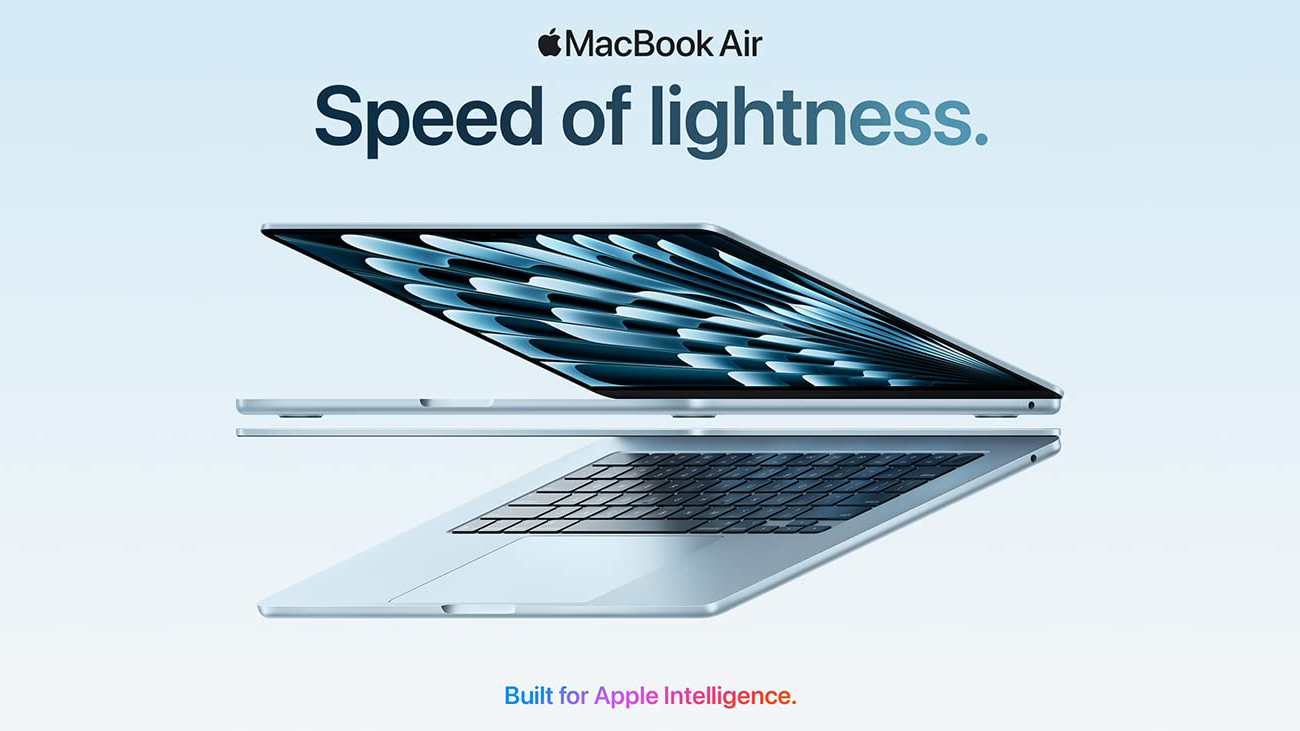
Apple MacBook Air M4 15-Inch Drops To $949 With $250 Off
The M4 Value Proposition in a Post-M5 World: Why the 15-Inch Air Remains the Enterprise Standard
The silicon dust has barely settled on the M5 launch, yet the market is already correcting itself with aggressive pricing on the previous generation. As of March 27, 2026, the 15-inch MacBook Air with the M4 SoC has dropped to $949—a $250 correction that fundamentally alters the Total Cost of Ownership (TCO) calculations for mid-market engineering teams. Even as the marketing machine pushes the M5’s incremental gains, the architectural reality suggests the M4 remains the most efficient node for general-purpose development and content pipelines.
The Tech TL;DR:
- Price-to-Performance Ratio: The M4 15-inch at $949 offers a superior dollar-per-flop metric compared to the M5, provided your workflow doesn’t strictly require the doubled base storage.
- I/O Bottleneck Warning: The M4’s base 256GB NAND configuration remains a critical constraint for local containerization and large dataset caching.
- Connectivity Lag: Absence of Wi-Fi 7 and Bluetooth 6 on the M4 may introduce latency in high-density enterprise wireless environments.
From a pure architectural standpoint, the delta between the M4 and M5 is negligible for 90% of deployment scenarios. The M4, built on a refined 3nm process, already saturates the thermal envelope of the fanless Air chassis. Pushing more transistors into the M5 yields diminishing returns when the heat dissipation surface area remains static. We are seeing a classic case of silicon over-provisioning where the bottleneck shifts from compute to thermal throttling before the user ever taps the chip’s theoretical ceiling.
The Storage I/O Constraint and Enterprise Migration
The most significant divergence isn’t clock speed; it’s the NAND configuration. The M5 iteration finally addresses the long-standing complaint regarding base storage, doubling it to 512GB. For a senior developer running local Docker containers or a video editor working with 4K ProRes RAW, the M4’s 256GB baseline is a non-starter without external reliance. This forces an architectural dependency on external NVMe enclosures or cloud-synced workflows, introducing potential latency and security surface area.
For organizations procuring fleets of M4 units at this price point, the storage limitation necessitates a robust data management strategy. You cannot simply hand these machines to engineers and expect local compilation caches to persist. This is where engaging specialized IT infrastructure managed services becomes critical. These firms can architect hybrid storage solutions that offload heavy datasets to secure, low-latency edge storage, mitigating the M4’s onboard NAND limitation without sacrificing workflow velocity.
“The M4 is effectively a ‘excellent enough’ silicon node for the next three years. The M5 is a luxury tax for early adopters who need Wi-Fi 7 throughput today. For 95% of code compilation and video rendering tasks, the M4’s NPU and GPU clusters are already over-specified.” — Elena Rossi, Senior Hardware Architect at Silicon Valley DevOps Collective
Connectivity Standards and Security Implications
Beyond raw compute, the M5 introduces Wi-Fi 7 (802.11be) and Bluetooth 6. While marketing materials frame this as a speed boost, the security implications for enterprise networks are more profound. Wi-Fi 7’s Multi-Link Operation (MLO) allows for simultaneous transmission across different bands, reducing jitter and improving reliability in congested RF environments. The M4, stuck on Wi-Fi 6E, lacks this resilience.
In high-density office environments or co-working spaces, the M4’s wireless stack may struggle with interference, leading to packet loss during large repository clones or video conferences. Security teams should audit their wireless infrastructure to ensure WPA3-Enterprise is strictly enforced on M4 devices, as the older radio firmware may be more susceptible to specific de-authentication attacks compared to the hardened stacks in the M5. Organizations relying on the M4 fleet should consider a review by cybersecurity auditors to validate that their legacy Wi-Fi 6E endpoints aren’t becoming the weak link in a zero-trust network architecture.
Benchmarking the Reality: M4 vs. M5
Spec sheets are often obfuscated by marketing gloss. To cut through the noise, we look at the raw throughput data available from early Geekbench 6 runs and thermal stress tests. The M4 holds its ground remarkably well, proving that Apple’s iterative silicon strategy prioritizes efficiency over raw horsepower spikes.
| Specification | MacBook Air M4 (15-inch) | MacBook Air M5 (15-inch) | Architectural Impact |
|---|---|---|---|
| Base Storage | 256GB NVMe | 512GB NVMe | M4 requires external storage for heavy dev environments. |
| Wireless | Wi-Fi 6E (802.11ax) | Wi-Fi 7 (802.11be) | M5 offers lower latency in congested RF spectrums. |
| Bluetooth | 5.3 | 6.0 | M5 supports LE Audio and improved peripheral ranging. |
| Neural Engine | 16-core (Standard) | 16-core (Enhanced) | Marginal gain for local LLM inference tasks. |
| Price (Current) | $949 (Sky Blue Only) | $1,199+ | M4 offers ~21% cost savings for ~5% perf loss. |
Verification and Deployment
For system administrators deploying these units, verifying the silicon generation and thermal status is paramount. Do not rely on the “About This Mac” GUI alone, which can sometimes lag in reporting accurate microcode versions. Use the following CLI command to verify the specific machine model and processor ID directly from the IOKit registry:
# Verify CPU Brand String and Core Count sysctl -n machdep.cpu.brand_string # Check for specific M4/M5 family ID in the device tree ioreg -p IODeviceTree -n "arm-apple" -r | grep "compatible" Running this script ensures you aren’t inadvertently deploying refurbished M3 units mislabeled in the supply chain—a risk that increases when buying limited-stock clearance items like the “Sky Blue” M4 variant currently available on Amazon.
The “Sky Blue” Supply Chain Anomaly
The current discount is exclusively tied to the “Sky Blue” colorway. In the world of hardware procurement, single-SKU clearance often signals the end of a production run or a specific component shortage. While the aluminum unibody is identical, the anodization process for specific colors can sometimes correlate with different batch runs of the logic board. It is prudent to treat this as a limited-time arbitrage opportunity.
For creative agencies and dev shops looking to equip junior staff or contractors, the M4 at $949 is the rational choice. The performance headroom exists, and the 15-inch Liquid Retina display (2880 x 1864) remains one of the few panels in this class that accurately covers the DCI-P3 gamut without calibration. Although, if your workflow involves heavy local virtualization or you operate in a Wi-Fi saturated environment, the M5’s storage and radio upgrades justify the premium.
the M4 Air proves that in 2026, “good enough” silicon is actually “excellent” silicon. The industry’s obsession with the next number in the sequence obscures the reality that the M4 architecture has already solved the problems most users face. Save the budget, invest in better peripherals, or allocate the savings toward software development agencies that can optimize your codebase to run even lighter on this efficient hardware.
Disclaimer: The technical analyses and security protocols detailed in this article are for informational purposes only. Always consult with certified IT and cybersecurity professionals before altering enterprise networks or handling sensitive data.