Apple Abandoned Its Pioneering Retina Naming Convention for Its Most Advanced Laptop Display
Apple abandoned its pioneering Retina naming convention for its most advanced laptop display after 14 years of expanding labels.
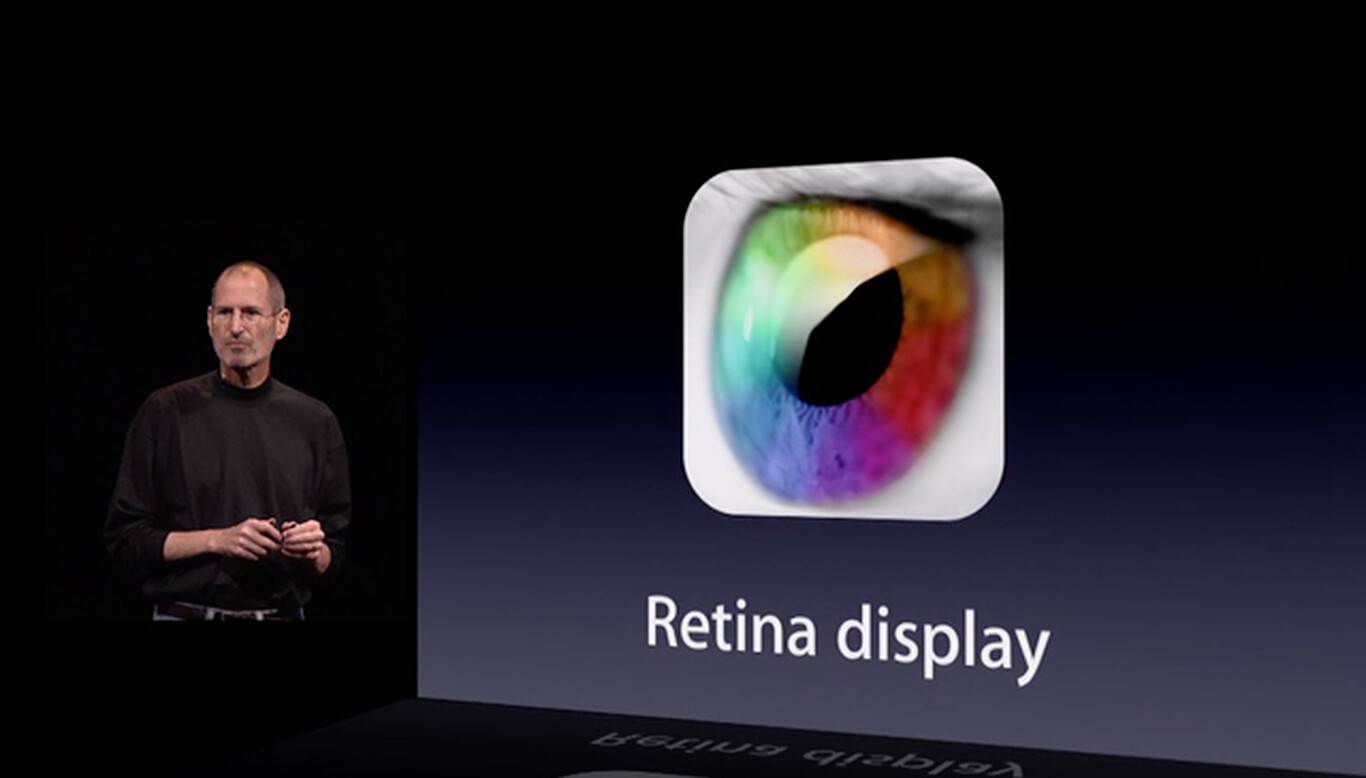
Chief Executive Officer Steve Jobs introduced the Retina display on the iPhone 4 in June 2010. Jobs said that at roughly 300 pixels per inch, the human eye could no longer distinguish individual pixels at normal mobile viewing distances, according to Applesfera. The iPhone 4 achieved 326 pixels per inch using a 3.5-inch screen with a 960 by 640 pixel resolution.
Apple expanded the label to iPads and MacBook Pros in 2012, transforming it from a specific pixel density metric into a general marker of display quality.
Larger screens on the iPhone 6 brought the Retina HD moniker in 2014, maintaining a straightforward naming structure before subsequent technological shifts multiplied the modifiers.
The introduction of Liquid Retina in 2018 designated In-Plane Switching LCD technology, while the iPhone X launched OLED screens under the Super Retina HD label.
Apple compounded the nomenclature in 2019 by shipping the LCD-equipped iPhone 11 alongside the iPhone 11 Pro featuring a Super Retina XDR display on the same day.
The XDR descriptor expanded to LCD panels in 2021 with the Liquid Retina XDR screen utilizing mini-LED backlighting on the 12.9-inch iPad Pro and 14-inch and 16-inch MacBook Pros, according to Applesfera.
| Name | First Appearance | Technology |
|---|---|---|
| Retina | iPhone 4 (2010) | LCD |
| Liquid Retina | 2018 | LCD |
| Super Retina XDR | iPhone 11 Pro (2019) | OLED |
| Ultra Retina XDR | iPad Pro M4 (2024) | Tandem OLED |
The Ultra Retina XDR debuted with the M4 iPad Pro in May 2024, introducing tandem OLED technology built with two self-illuminating pixel layers.
Apple launched a MacBook Pro featuring a PROLED XDR display on Oct. 28.
The hardware utilizes tandem OLED panels similar to the 2024 iPad Pro while adding touchscreen controls to macOS. Because of the new touch capabilities, Apple omitted the historical Retina branding from the panel entirely in favor of the Pro designation.
Jobs co-founded Apple Computer Company with Steve Wozniak in 1976 and helped launch the Apple II, one of the first highly successful mass-produced microcomputers. After leaving Apple in 1985, he founded NeXT and purchased Pixar, which produced the first computer-animated feature film, Toy Story, in 1995. He returned to Apple as CEO in 1997, reviving the company from near bankruptcy and overseeing the development of the iMac, iPod, iPhone, and iPad before resigning in 2011.