Animal Welfare Activists Call for Euthanasia of Stranded Humpback Whale Timmy in Germany – Public Debate Intensifies
In April 2026, German animal welfare activists publicly endorsed the euthanasia of a stranded humpback whale named Timmy in the Baltic Sea, sparking a national debate over animal ethics, state responsibility and the limits of intervention in marine wildlife crises. The controversy, centered on a 12-meter juvenile whale beached near Kiel, exposed fractures in Germany’s environmental governance and raised questions about the country’s adherence to international marine mammal protection frameworks.
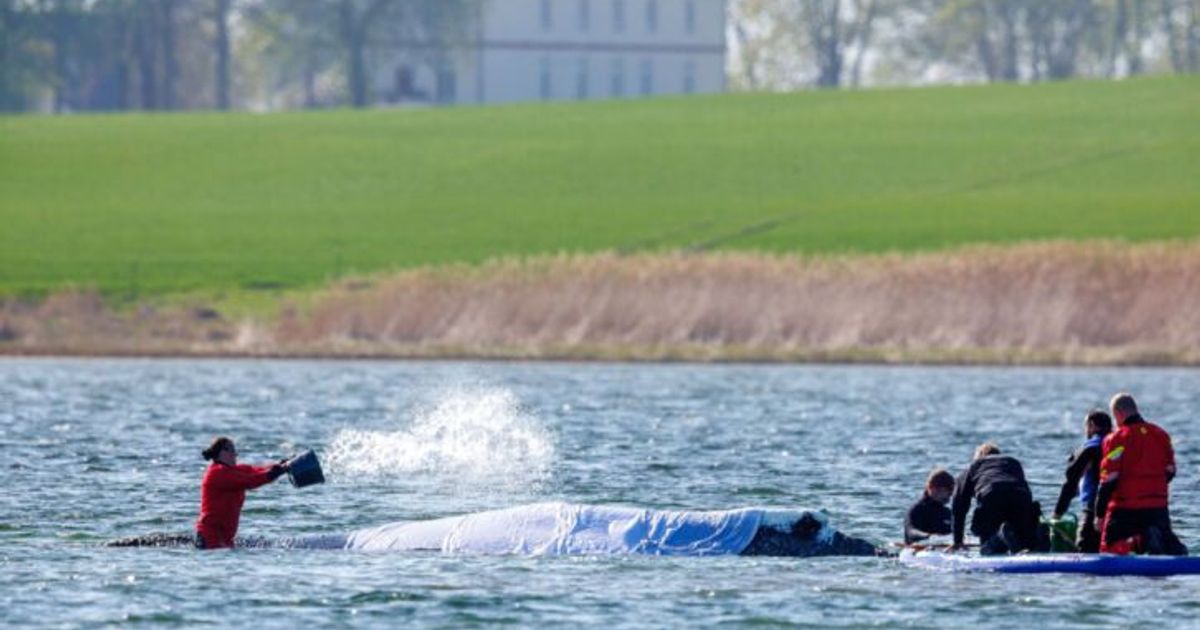
The incident began on April 20, 2026, when Timmy became lodged in shallow waters off the Schleswig-Holstein coast. Despite over 72 hours of coordinated rescue efforts by marine biologists, firefighters, and volunteers from organizations like Whale and Dolphin Conservation (WDC) and NABU, the whale’s condition deteriorated. Veterinarians failed to locate a viable vein for sedative administration, complicating euthanasia attempts. On April 26, amid growing public pressure and concerns over prolonged suffering, the Schleswig-Holstein State Office for Agriculture, Environment and Rural Affairs authorized lethal injection—a decision swiftly backed by major German animal welfare groups, including the German Animal Protection Federation.
This stance ignited fierce backlash from marine conservationists and international bodies. Critics argued that euthanizing a protected species under the International Whaling Commission (IWC) moratorium—despite the whale’s non-hunting status—set a dangerous precedent. Germany, as an IWC contracting government, is bound by the 1986 moratorium on commercial whaling, but the treaty also obliges members to prioritize welfare and conservation in stranding responses. The decision to euthanize, while framed as humane, bypassed established protocols under the Convention on Migratory Species (CMS), which emphasizes rescue and rehabilitation over intervention unless survival is impossible.
“Euthanizing a stranded humpback whale without exhausting all internationally recognized rescue options undermines decades of progress in marine mammal conservation. It sends a signal that convenience outweighs commitment.”
— Dr. Ingrid Visser, Marine Mammal Scientist and Advisor to the UN Environment Programme
The macroeconomic implications, while indirect, are non-trivial. Germany’s Baltic Sea coastline supports over €4.2 billion annually in maritime tourism, fisheries, and offshore wind logistics—sectors increasingly sensitive to environmental stewardship perceptions. Incidents like Timmy’s stranding, when mishandled, can trigger reputational risks for foreign direct investment (FDI) in blue economy projects. Scandinavian investors, particularly those involved in offshore wind farms in the Danish and German exclusive economic zones (EEZs), have begun factoring wildlife incident response protocols into environmental, social, and governance (ESG) due diligence. A 2025 World Bank analysis noted that coastal states with inconsistent marine wildlife protection records face up to 15% higher risk premiums in green bond markets.
This creates a clear B2B need: multinational corporations operating in marine-adjacent industries require expert guidance on navigating the intersection of international environmental law, crisis management, and stakeholder relations. Firms seeking to mitigate operational and reputational risks in ecologically sensitive zones are turning to specialized advisors. For example, international environmental law firms assist corporations interpret obligations under CMS, IWC, and regional seas agreements, while global risk consultants develop crisis response frameworks aligned with the UNEP-led Global Partnership on Marine Litter and the IUCN Guidelines for Marine Mammal Stranding Response.
Historically, Germany has positioned itself as a leader in marine conservation, hosting the 2019 Federal Agency for Nature Conservation summit that strengthened the ASCOBANS Agreement on the Conservation of Compact Cetaceans in the Baltic, North East Atlantic, Irish and North Seas. Yet Timmy’s case revealed gaps between policy and practice. While ASCOBANS mandates immediate reporting and expert coordination during strandings, Schleswig-Holstein’s response lacked real-time integration with the agreement’s emergency network—a shortfall noted by the ASCOBANS Secretariat in its post-incident review.
The incident also highlighted transatlantic divergences in wildlife ethics. Unlike the U.S., where the National Marine Fisheries Service (NMFS) employs a tiered response system prioritizing rehabilitation unless suffering is intractable and irreversible, Germany’s approach appeared more utilitarian. This divergence affects bilateral cooperation on North Atlantic marine mammal monitoring, particularly under the North Atlantic Marine Mammal Commission (NAMMCO), where Germany holds observer status but faces scrutiny over its stranding protocols.
From a logistics standpoint, the stranding disrupted regional maritime traffic for over 48 hours, forcing rerouting of ferry services between Germany and Denmark and delaying just-in-time cargo movements through the Kiel Canal—a critical artery handling ~10% of EU inland shipping volume. Such delays underscore the need for rapid-response marine incident coordination, a niche filled by logistics risk management firms that specialize in port disruption modeling and supply chain rerouting during environmental emergencies.
Timmy’s fate reflects a broader tension in global environmental governance: the struggle to balance compassion with pragmatism in the face of ecological uncertainty. As climate change increases the frequency of marine mammal strandings due to shifting prey distributions and ocean noise pollution, the demand for standardized, internationally aligned response protocols will only grow.
The editorial kicker is clear: in an era where ecological legitimacy directly influences market access and investment flows, nations and corporations alike must move beyond ad-hoc decisions. The solution lies not in choosing between euthanasia and rescue, but in building systems where such dilemmas are anticipated, managed transparently, and resolved in accordance with the extremely international frameworks designed to prevent them. For those navigating this evolving landscape, the World Today News Directory remains the essential compass—connecting decision-makers with the legal, financial, and operational experts who turn geopolitical complexity into strategic advantage.