
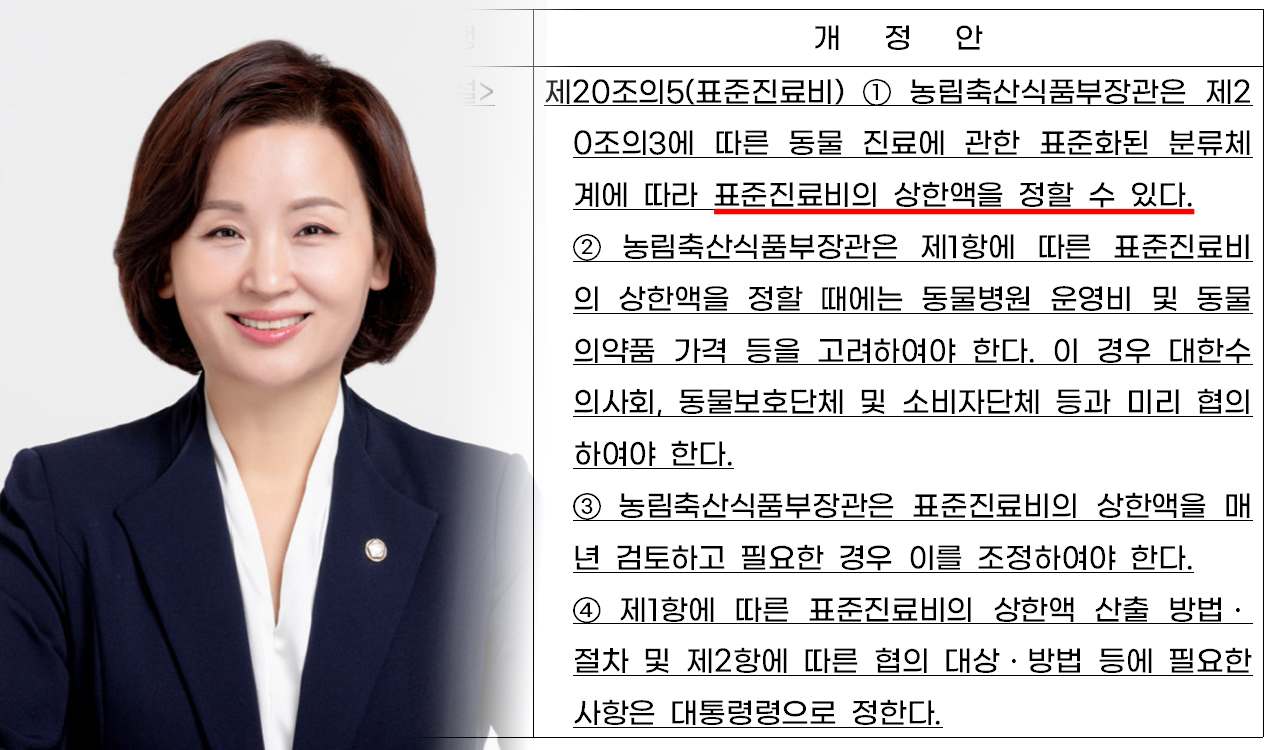
Proposed Standard for Animal Medical Expenses Faces Scrutiny
South Korea is considering a standardized system for animal medical expenses following the creation of a “recommended standard for animal care” which catalogs 3,511 diseases and 4,930 medical treatments,including schematic procedures for 100 common conditions. This initiative stems from a mandate (Article 20-3) requiring notification of standardized classifications for animal care, including disease names and treatments.
Representative Lee Soo-jin has proposed that the Minister of agriculture and Food determine an upper limit for these standard medical expenses. The proposal stipulates that setting this limit must consider animal hospital operating costs and the price of animal drugs, with consultation involving the Korean Veterinary Medical Association, animal protection groups, and consumer organizations. The specific calculation method and consultation process woudl be detailed in a Presidential Decree, with annual reviews and adjustments to the upper limit planned.
the aim, according to Representative Lee Soo-jin, is to possibly increase pet insurance coverage rates by easing the financial burden of veterinary care for pet owners.
However, the proposed system is drawing criticism for focusing solely on an upper limit, without establishing a lower price threshold. Experts point to Germany as the only other nation with a system for regulating animal medical expenses, but note that Germany’s approach includes both minimum and maximum price points for procedures, aiming to prevent price wars and a decline in service quality.
Concerns have been raised that setting only an upper limit could lead to “price bleeding competition” and downward leveling of fees, ultimately harming the quality of care. Critics argue that without a lower limit, veterinary hospitals might potentially be forced to cut corners to remain competitive within the established upper bound.
Moreover, there are questions about the practicality of defining “standard” medical expenses if services can fall below a certain quality threshold. Setting the upper limit to low could discourage hospitals from offering advanced services, while setting it too high may negate the intended benefit of reducing financial burden on pet owners.
The Korea Social Future Policy Vice-Chairman, Woo Yeon-chul, acknowledged the need for a numbering system given the current lack of transparency in animal healthcare pricing. However, the article highlights the potential for negative consequences for veterinary clinics unless a comprehensive system, similar to human health insurance, is implemented to protect their financial viability. The proposal, as it stands, is seen as potentially reducing income for veterinary clinics without a corresponding systemic support structure.
