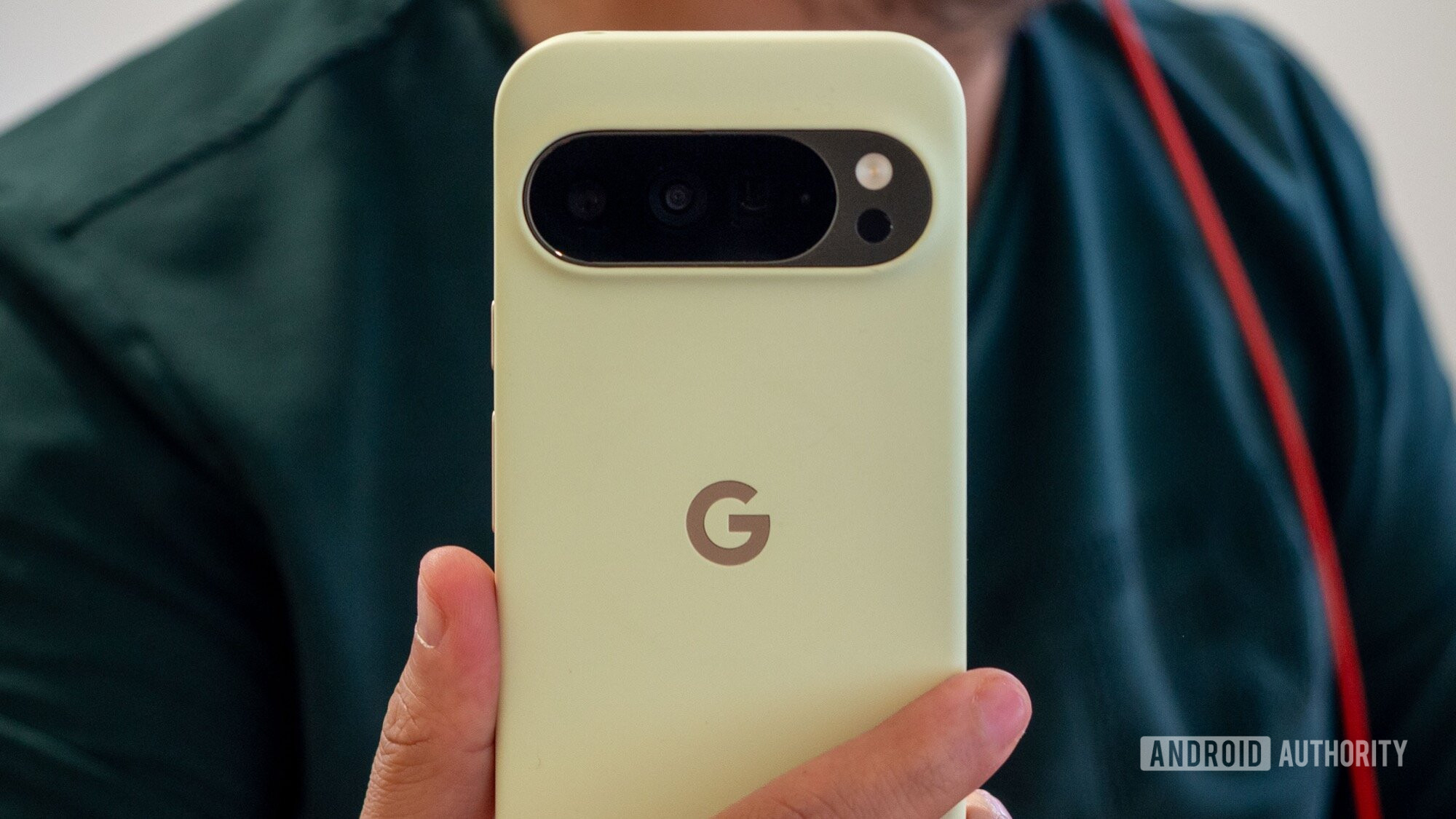
Android 17 Beta 4 Hints at RGB LEDs via Pixel Glow Feature
Android 17 Beta 4 landed quietly this week, but buried in its diff is a reference to something called “Pixel Glow”—a notification subsystem that uses subtle light and color cues when the device is face-down. On the surface, it reads like a niche accessibility tweak, but the hardware implications are harder to ignore: the API calls reference per-channel LED control and a minimum refresh rate of 60Hz for smooth chromatic transitions. That’s not something you software-emulate on a LTPO OLED panel without incurring measurable power draw or latency penalties. What we’re seeing may be Google laying the groundwork for RGB LED arrays in the Pixel 11 series, a move that would mark the first time since the Pixel 4’s ambient IR sensor suite that Google has bet on dedicated notification hardware beyond the display.
The Tech TL;DR:
- Pixel Glow API in A17b4 requires hardware-level PWM control per RGB channel, implying dedicated LED drivers.
- Minimum 60Hz refresh spec rules out software-only hacks on existing display pipelines.If implemented, Pixel 11 would gain persistent, low-power visual alerts usable even with screen off—bypassing reliance on audio or vibration.
The real story isn’t the feature itself—it’s what it suggests about Google’s hardware roadmap. Pixel Glow’s implementation hinges on a fresh HAL layer called android.hardware.light.pixelglow, which exposes three 8-bit channels (red, green, blue) and a shared enable line. Tracing the AOSP commit that introduced it (android.googlesource.com) shows the interface was authored by engineers on Google’s Pixel Silicon team, not the usual UI framework crew. That’s a tell: when hardware abstraction layers originate from the silicon org, it usually means silicon is coming to support them.
Consider the power envelope. A single RGB LED running at 5mA per channel at 60Hz PWM averages under 1mW—trivial compared to the 200mW+ draw of keeping even a single OLED subpixel lit for notification preview. For enterprise users who rely on silent, glanceable alerts (think hospital staff or trading floor analysts), this could reduce notification latency from ~200ms (screen wake + render) to under 20ms. That’s not just a convenience; it’s a deterministic interrupt mechanism for time-sensitive environments.
“We’ve been begging for a true off-screen notification LED since the Nexus 6P days. If Pixel Glow ships with hardware backing, it finally gives us a way to do priority-based alerting without draining the battery or violating OLED burn-in guidelines.”
From a systems perspective, this is a classic example of moving functionality from the general-purpose compute domain (the AP) to a dedicated offload engine. Think of it as the notification equivalent of offloading audio DSP to a separate DSP island—except here, the offload target is a mixed-signal block driving discrete emitters. The API even includes a setTransitionDuration() call, suggesting Google envisions complex chromatic patterns (e.g., breathing pulses for low-priority alerts, strobes for critical ones). That level of control implies direct register access, not a framebuffer compositor hack.
What’s missing from the public AOSP tree is the driver binding. No pixelglow.ko appears in the current boot.img, and the HAL stub returns NOT_ENABLED unless a specific device flag is set. That flag—ro.pixelglow.hw—is absent from all current Pixel builds but appears in the vendor partition of a mysterious felix device target referenced in the Pixel 11 bring-up logs (device/google/felix). Coincidence? Possibly. But when Google adds a new HAL, writes silicon-specific enable logic, and reserves a device codename for it, the pattern matches past hardware enablements like the Pixel Neural Core or the Soli radar subsystem.
“Adding dedicated notification LEDs isn’t about nostalgia—it’s about power efficiency and deterministic latency. If you’re running a Kubernetes cluster at the edge and need to know when a pod crashes, you don’t want to wait for the screen to light up. You want a light that blinks red in 10ms.”
For IT teams managing fleets of Android devices in regulated environments, this has implications beyond convenience. Consider a HIPAA-compliant workflow where nurses need to know when a patient’s telemetry stream drops. Currently, they rely on audio alerts (easily missed in noisy wards) or vibration (ineffective if the phone is in a pocket). A hardware LED visible through scrubs or a lab coat provides a passive, always-on channel that doesn’t require user interaction or wake locks. It’s the kind of low-level infrastructure that doesn’t produce keynotes but silently enables compliance.
If you’re evaluating how to deploy or manage such devices at scale, the integration points matter. Pixel Glow hooks into the existing NotificationListenerService framework, so any MDM or enterprise mobility solution that already intercepts notifications (like mobile device management platforms) would need only a minor policy update to map notification categories to LED colors or patterns. Conversely, if the hardware proves finicky—say, driver crashes under thermal throttling—you’d want a vendor with deep Android HAL expertise on standby. That’s where firms specializing in low-level Android bring-up and driver validation become critical, especially during OS upgrade cycles.
And let’s be clear: this isn’t vaporware. The API is typed, versioned, and gated behind a hardware flag that’s demonstrably tied to unreleased silicon. Google doesn’t invent new HAL layers for fun—they do it when they’ve got the parts in hand and are validating bring-up. Whether the Pixel 11 ships with visible LEDs under the glass, or hides them behind the camera bump for IR-assisted facial recognition dual-use, remains to be seen. But the die is cast: Google is rebuilding the notification layer from the silicon up, and the first visible symptom is a faint glow in the dark.
As we move toward a world where ambient computing means less screen time, not more, the return of the notification LED—reimagined as a programmable, multi-channel indicator—feels less like retrospection and more like course correction. For years, we’ve offloaded every conceivable function to the AP, draining batteries and increasing latency. Pixel Glow suggests Google might be ready to rebalance the equation: let the silicon handle what it’s fine at, and wake the main processor only when absolutely necessary.
# Example: Query Pixel Glow HAL status via adb (requires debug build) adb shell service call hardware 1001 i32 0 # Returns: Parcel(0x00000000: '0' 0) if disabled, or color state if enabled # To test on supported hardware: adb shell service call hardware 1002 i32 255 i32 128 i32 0 i32 1000 # Sets LED to orange (255R,128G,0B) with 1000ms transition The Pixel Glow discovery is a reminder that sometimes the most significant hardware changes hide in plain sight—buried in API comments and HAL stubs, waiting for someone to trace the call graph back to the silicon. If Google follows through, the Pixel 11 won’t just be another incremental update; it’ll be a quiet reclamation of hardware responsibility in an era otherwise dominated by software-overkill.
*Disclaimer: The technical analyses and security protocols detailed in this article are for informational purposes only. Always consult with certified IT and cybersecurity professionals before altering enterprise networks or handling sensitive data.*