
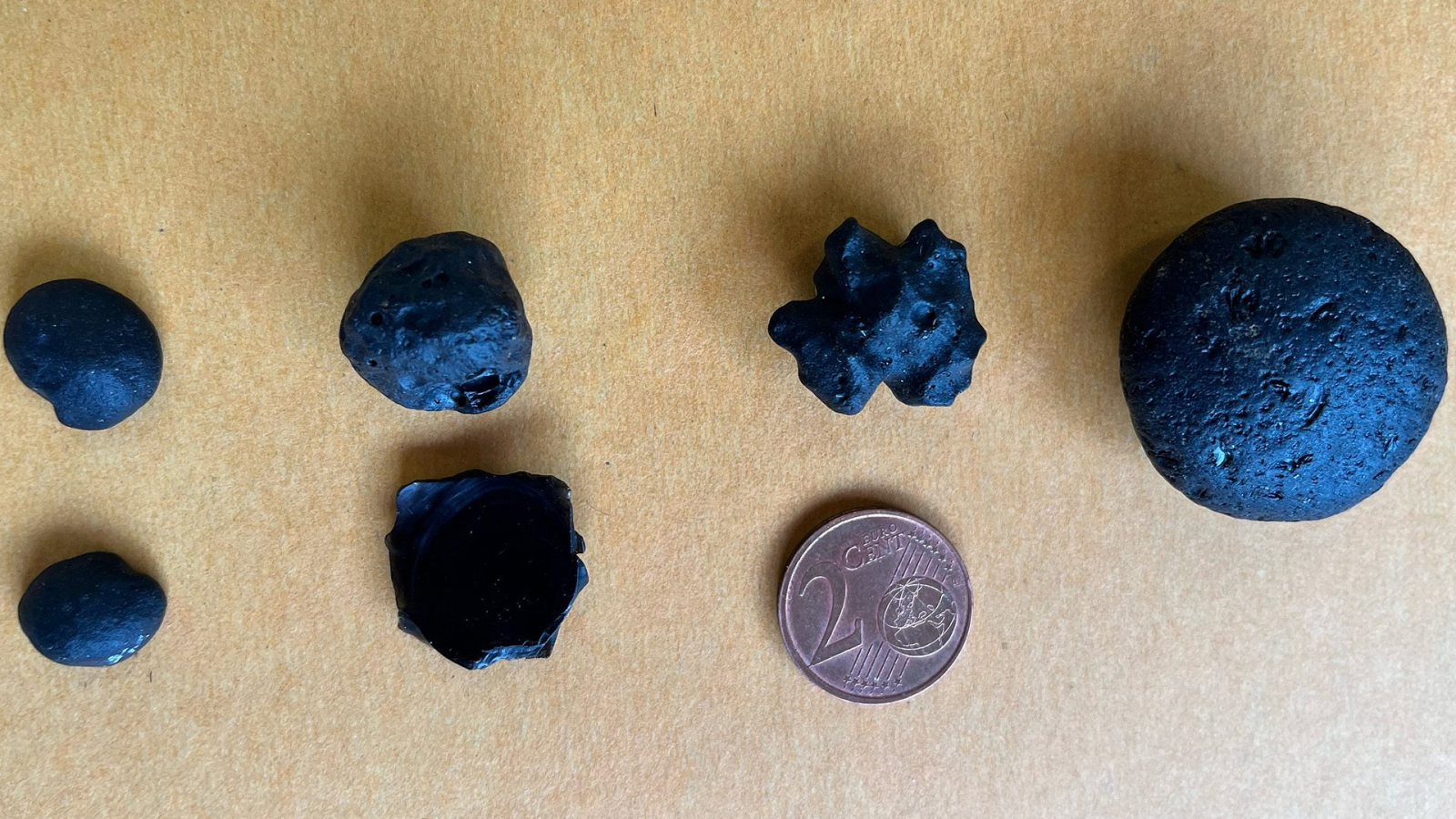
Ancient Asteroid Impact in Australia Revealed by Mysterious “Ananguites” - Crater Remains Elusive
SYDNEY,AUSTRALIA – A new study suggests a previously unknown,massive asteroid impact occurred in Australia roughly 11 million years ago,scattering unique glassy formations across the region.Scientists have identified these unusual tektites – dubbed ”ananguites” - as distinct from those created by the well-known Australasian tektite field,hinting at a second,important impact event.Despite the scale implied by the tektite distribution, the impact crater itself remains undiscovered.
The research, published August 29 in Earth and Planetary Science Letters, focused on thousands of tektites held in the South Australian Museum’s collection. Researchers measured the density and magnetic properties of the samples, ultimately identifying six with a chemical composition matching anomalous tektites studied as early as 1999. that earlier study estimated the age of these odd tektites to be several million years old, but lacked sufficient data to pinpoint their origin.
“These tiny pieces of glass are like little time capsules from deep in our planet’s history,” said study author Dr. Peter Jourdan.
The team brought 417 unusual samples to France for further analysis, confirming the distinct age and composition of the “ananguites” compared to other tektites in the area. This difference strongly suggests thay were not formed by the same impact that created the widespread Australasian tektite field.
The name “ananguites” honors the Pitjantjatjara and Yankunytjatjara people, who refer to themselves as Anangu, meaning “human being,” as some of the tektites were found in areas traditionally inhabited by these groups.
While the impact is believed to have been immense, scientists have yet to locate the corresponding crater. Potential sites have been proposed in the Philippines,Indonesia,and Papua New Guinea. the team notes that in volcanically active regions like Papua new Guinea, the crater may have been misidentified as a volcanic feature or obscured by geological processes over millions of years.
The discovery has implications for understanding the frequency of large asteroid impacts on Earth and could refine planetary defense strategies. “Understanding when and how often large asteroids have struck Earth also helps us assess the risk of future impacts,” Jourdan explained. “It could indicate that impacts large enough to produce tektites are more common than previously thought.”
