AIADMK Splits as Faction Joins Vijay’s TVK Party
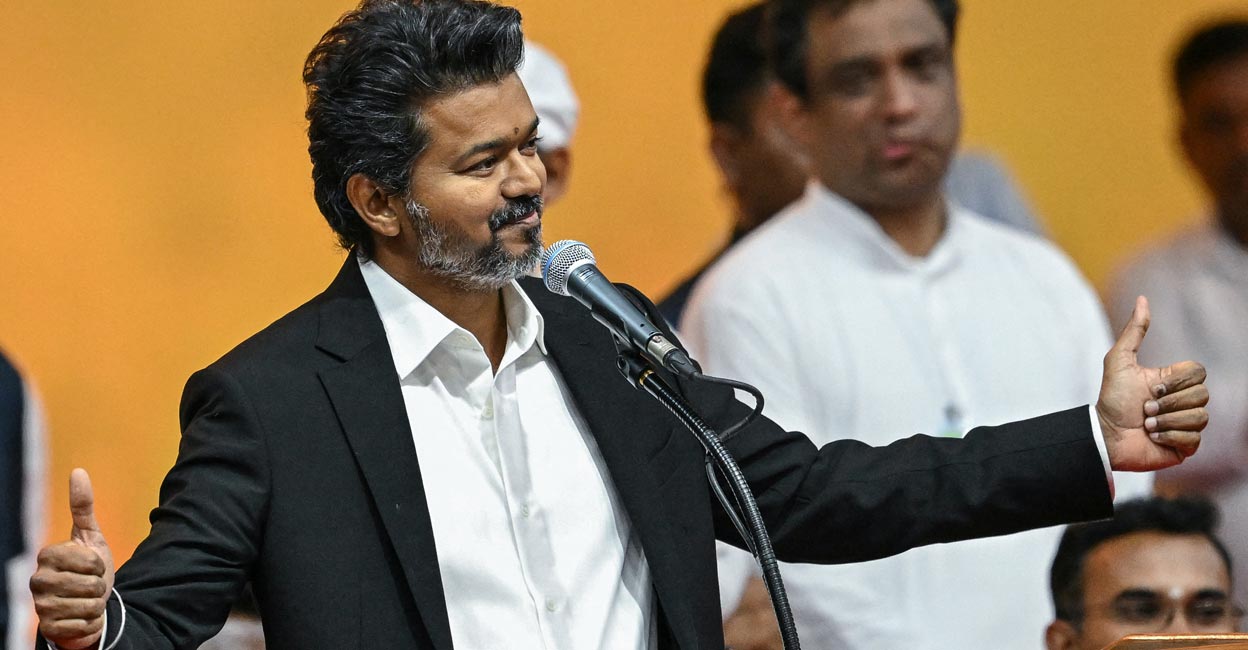
A major split in the AIADMK party has emerged in Tamil Nadu, with a faction led by Shanmugham pledging support to Chief Minister Vijay’s Tamilaga Vettri Kazhagam (TVK) government. With reports suggesting Edappadi Palaniswami holds support from only 17 members, the move signals a seismic shift in the state’s regional power dynamics.
This is more than a simple leadership dispute. We see an existential crisis for one of Southern India’s most storied political machines. For decades, Tamil Nadu’s governance was a predictable tug-of-war between two Dravidian giants. That foundation is now fracturing under the pressure of a new, cinematic powerhouse turned politician.
The suddenness of the rupture has left the political establishment in Chennai reeling. When a party as entrenched as the AIADMK begins to cannibalize its own leadership, the ripple effects extend far beyond the halls of the Legislative Assembly. They touch every government contract, every municipal project, and every investor currently eyeing the state’s industrial corridors.
The Arithmetic of a Collapse
The current crisis is a numbers game, and the math looks grim for the incumbent leadership. While Edappadi Palaniswami has long fought to maintain a grip on the party’s machinery, the emergence of the Shanmugham faction represents a decisive break. The reports are stark: Palaniswami’s support may have dwindled to a mere 17 members.
In contrast, the move to elevate Velumani as a leader for the dissident group suggests a calculated attempt to reorganize the party from the ground up. By aligning with Vijay’s TVK government, the rebels aren’t just seeking survival—they are attempting to pivot toward the new center of gravity in Tamil Nadu politics.
The goal, as stated by the splitting faction, is the revival of a party they perceive as having lost its way. However, in the brutal reality of parliamentary politics, “revival” often looks like a surrender to a more potent force.
There are whispers and questions circulating about whether Vijay’s support could swell to as many as 150 MLAs. If this threshold is crossed, the TVK government moves from a state of precarious negotiation to absolute dominance.
The Legal Minefield: The Tenth Schedule
A split of this magnitude immediately triggers the most contentious part of Indian constitutional law: The Tenth Schedule, commonly known as the Anti-Defection Law. This legislation is designed to prevent “horse-trading,” but in practice, it often becomes the primary weapon in a party’s internal war.

Under the law, an individual legislator who leaves their party faces disqualification from the house. However, there is a critical loophole: if two-thirds of the party’s members agree to a merger or a split, they can avoid the axe. This creates a high-stakes race to see who can gather the most signatures first.
“The current volatility in the assembly makes the Tenth Schedule the most critical piece of legislation in the state right now. The Speaker’s decision on who constitutes the ‘real’ party will determine not just the leadership, but the very survival of the AIADMK as a legal entity.”
Because the stakes involve the loss of legislative seats and the potential for fresh elections, the legal battle will likely migrate from the Assembly to the High Court and eventually the Supreme Court of India. Navigating these constitutional waters is a logistical nightmare. Many of the involved legislators are already seeking counsel from top-tier constitutional law firms to ensure their seats remain secure during the transition.
Regional Impact and Economic Anxiety
Political instability in Chennai doesn’t stay in Chennai. Tamil Nadu is the “Detroit of Asia,” a global hub for automotive manufacturing and electronics. When the government’s composition shifts violently, the “policy paralysis” that follows can be devastating for the local economy.
Infrastructure projects, from the expansion of the Chennai Metro to the development of new industrial parks, rely on consistent bureaucratic support. A change in the ruling coalition often leads to a review—or a complete cancellation—of existing tenders and contracts.
For businesses operating in the region, this instability creates a vacuum of certainty. Companies are now increasingly relying on government relations consultants to bridge the gap between the old guard and the TVK administration, ensuring that critical projects don’t stall in the transition.
The shift also affects municipal governance. With the AIADMK fractured, local district collectors and municipal commissioners are left wondering which authority to answer to. This ambiguity often slows down the delivery of basic civic services, from road repairs to waste management.
The Rise of the Third Force
The ascent of Vijay’s TVK represents a broader trend in Indian politics: the disruption of traditional dynastic or ideological blocs by charismatic outsiders. By absorbing elements of the AIADMK, Vijay is not just growing his numbers. he is acquiring an established grassroots network that would take years to build from scratch.

This transition is not without risk. Integrating two disparate political cultures—one a disciplined, legacy-driven machine and the other a modern, personality-led movement—often leads to internal friction.
For the citizens of Tamil Nadu, the hope is that this consolidation leads to a more stable government. However, the immediate future is likely to be characterized by litigation, protests, and frantic negotiations.
Comparative Outlook of the Split
| Metric | Palaniswami Faction | Shanmugham/Velumani Faction | TVK Government (Vijay) |
|---|---|---|---|
| Reported Strength | Approx. 17 Members | Significant Rebel Bloc | Expanding Majority |
| Primary Goal | Party Preservation | Party Revival/Alignment | State Consolidation |
| Legal Standing | Claiming Legitimate Leadership | Seeking Merger/Split Recognition | Executive Authority |
As the dust settles, the focus will shift to the Election Commission of India, which will eventually have to decide who gets to keep the party’s symbol—the two leaves. In Indian politics, the symbol is more than a logo; it is the primary way millions of rural voters identify their candidate on a ballot. Losing the symbol is often a death sentence for a political faction.
The era of the “two-party” system in Tamil Nadu is effectively dead. Whether the AIADMK survives as a rump party or is entirely absorbed into the TVK machine remains to be seen. In a landscape this volatile, the only certainty is that the old rules no longer apply. For those caught in the crossfire—whether they are business owners, civic leaders, or displaced officials—finding verified legal experts and corporate security firms to manage the fallout is no longer optional; it is a necessity for survival.