
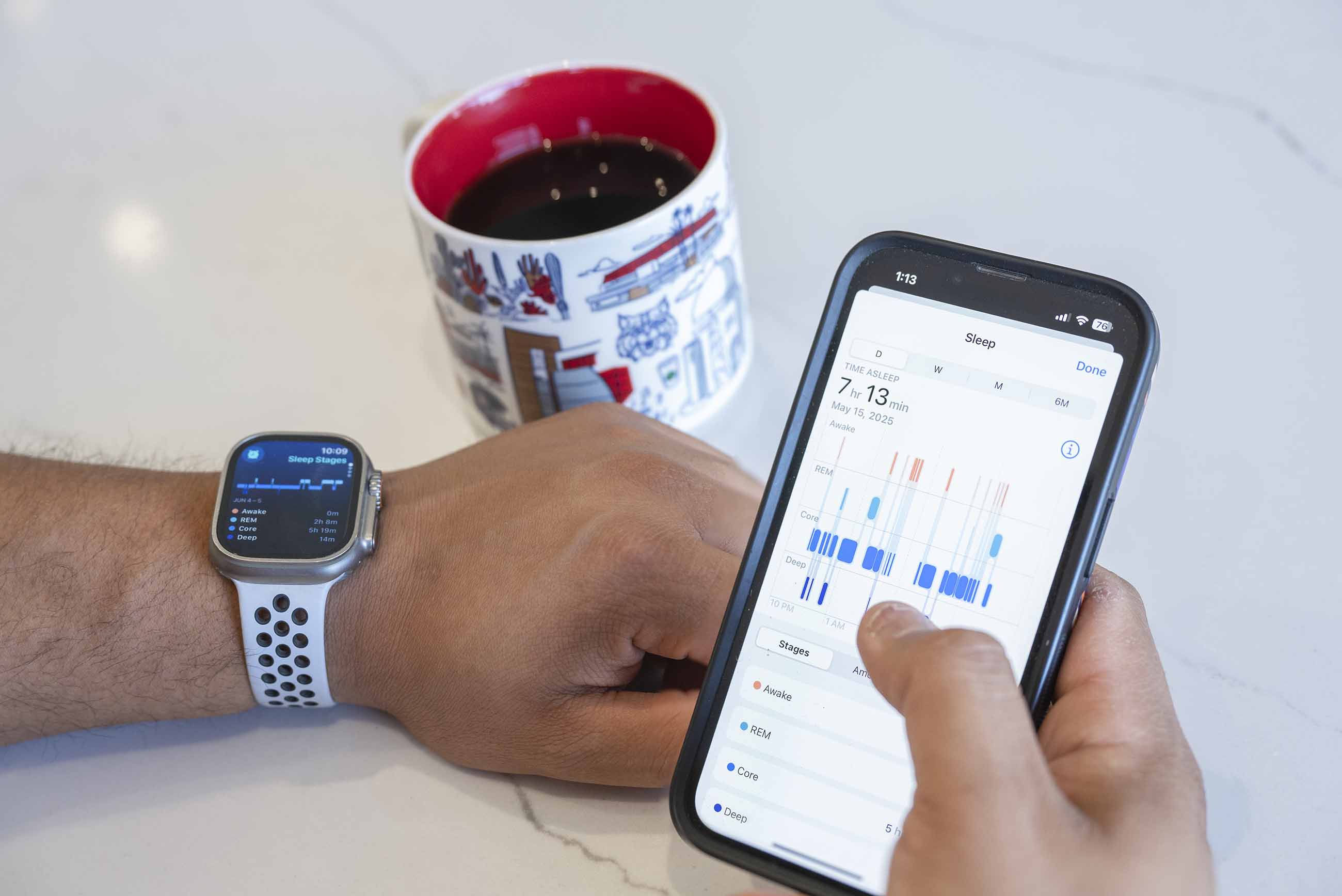
AI-Powered Wearable Sensors Predict Labor and Monitor Stress
health.">
Wearable sensors, enhanced by artificial intelligence (AI), are transforming healthcare by providing real-time insights into the human body. Researchers are now leveraging these technologies to predict labor onset accurately and monitor stress levels, offering proactive solutions for improving overall well-being. This innovative approach promises to revolutionize how we understand and manage our health.
Predicting Labor Onset with AI and Wearable Rings
Predicting the exact time of labor has always been a challenge. Traditional methods, relying on calculations from a woman’s last menstrual period, often result in a wide range of possible due dates, typically between 37 to 42 weeks of gestation.A recent study published in the journal *BMC Pregnancy and Childbirth* explored the use of wearable sensors and AI to improve the accuracy of labor onset prediction.
Researchers at the University of Arizona Health Sciences collaborated with a wearable sensor company to track temperature readings every minute using a smart ring. This high-frequency data was then analyzed using a deep neural network-based AI model. The model was designed to identify patterns in body temperature that could indicate impending labor.
The results where promising. The AI model accurately predicted the day of labor onset for 79% of spontaneous labors within a 4.6-day window at seven days before true labor, and a 7.4-day window at 10 days before true labor. This level of accuracy could considerably reduce the risks associated with unplanned home births and allow healthcare professionals to intervene more effectively in preterm births.
Did You Know?
Deep neural networks mimic the human brain’s activity, using multiple layers to process data and improve prediction accuracy through algorithms.
Quantifying Stress Reduction Through nature Walks
Beyond labor prediction, wearable sensors and AI are also being used to monitor and manage stress. A study published in the *International Journal of Environmental Research and public Health* investigated the impact of nature walks on stress reduction. The research, conducted at Walter Reed National Military Medical Center, compared the stress responses of participants who walked on a “Green Road” surrounded by nature versus those who walked on an urban road.
Participants wore wearable sensors to measure heart rate variability (HRV),and saliva samples were collected to measure cortisol levels,a key stress biomarker.The study found that walking on the Green Road had a significant positive impact on stress reduction compared to walking on the urban road.Specifically, participants who walked on the green Road experienced a higher reduction in cortisol levels.
Though, the study also revealed considerable individual variability in autonomic nervous system stress responses, as measured by HRV. Some participants showed a substantial positive impact on HRV, while others showed little or none. This highlights the subjective nature of stress responses and the importance of personalized approaches to stress management.
Pro Tip:
Combining HRV measurements with cortisol levels provides a more comprehensive understanding of an individual’s stress response.
The Future of AI and Wearable Sensors in healthcare
The integration of AI and wearable sensors represents a significant leap forward in healthcare. These technologies enable the rapid collection and analysis of vast amounts of data, unlocking powerful new ways to enhance human health. From predicting labor onset to monitoring stress levels, AI-powered wearable sensors are paving the way for proactive and personalized healthcare solutions.
According to a report by Grand View Research, the global wearable medical devices market is projected to reach $62.97 billion by 2030, growing at a CAGR of 18.9% from 2023 to 2030.This growth is driven by the increasing adoption of wearable sensors for remote patient monitoring, chronic disease management, and preventive healthcare [ Grand View Research ].
As AI algorithms become more refined and wearable sensors become more accurate and user-friendly, we can expect to see even more innovative applications of these technologies in the years to come. The future of healthcare is undoubtedly intertwined with the continued advancement of AI and wearable sensors.
Comparative Analysis of Stress Reduction Methods
| method | Cortisol Reduction | HRV Impact | Accessibility |
|---|---|---|---|
| Green Road walk | Significant | Variable | Location Dependent |
| Urban Road Walk | Moderate | Variable | Widely Accessible |
| Meditation | Significant | Positive | Highly Accessible |
How do you see AI-powered wearables changing your daily health routine?
What ethical considerations should guide the development and use of these technologies?
Evergreen Insights: The Enduring Value of Wearable Health Tech
The convergence of AI and wearable sensor technology marks a pivotal shift in healthcare, moving from reactive treatment to proactive prediction and personalized management. This evolution is rooted in several key factors:
- Data Abundance: Wearable devices generate continuous streams of physiological data, providing a comprehensive view of an individual’s health status over time.
- AI-Driven analysis: Artificial intelligence algorithms can sift through vast datasets to identify subtle patterns and anomalies that might be missed by human observation.
- Personalized Interventions: By tailoring interventions to individual needs and responses, healthcare providers can optimize treatment outcomes and improve patient engagement.
- Remote Monitoring: Wearable sensors enable remote patient monitoring, reducing the need for frequent clinic visits and empowering individuals to take greater control of their health.
The historical trend towards preventive medicine, combined with technological advancements, positions AI-enhanced wearables as a cornerstone of future healthcare systems. As these technologies mature, they promise to transform the way we approach health and wellness, fostering a more proactive, personalized, and data-driven approach.
frequently Asked Questions About AI and Wearable sensors
- How accurate are AI-powered wearable sensors in predicting labor onset?
- AI-powered wearable sensors can predict labor onset with increasing accuracy. Recent studies have shown prediction rates of around 79% within a specific time window before labor.
- What types of data do wearable sensors collect for stress monitoring?
- Wearable sensors collect various types of data for stress monitoring, including heart rate variability (HRV), cortisol levels (measured through sweat or saliva), and skin conductance.
- Can wearable sensors replace traditional medical check-ups?
- No, wearable sensors cannot replace traditional medical check-ups. They provide valuable data for continuous monitoring, but regular consultations with healthcare professionals are still essential for comprehensive care.
- What are the potential privacy concerns associated with wearable sensor data?
- Potential privacy concerns include the unauthorized access, storage, and use of personal health data collected by wearable sensors. Robust data encryption and privacy policies are crucial to mitigate these risks.
- How can AI improve the accuracy of wearable sensor data analysis?
- AI algorithms can analyze large datasets from wearable sensors to identify patterns, anomalies, and correlations that may not be apparent through traditional analysis methods, thereby improving accuracy.
- Are there any limitations to using wearable sensors for health monitoring?
- Yes, limitations include sensor accuracy, data interpretation challenges, individual variability in physiological responses, and the potential for user error or non-compliance.
- How do I choose the right wearable sensor for my health needs?
- Consider factors such as the specific health metrics you want to track, sensor accuracy, user-friendliness, battery life, data privacy policies, and compatibility with your smartphone or other devices.
Disclaimer: This article provides general information and should not be considered medical advice. Consult with a healthcare professional for personalized guidance.
Share this article with your friends and family to spread awareness about the potential of AI and wearable sensors in healthcare. Leave a comment below to share your thoughts and experiences with wearable health tech. Subscribe to our newsletter for more updates on the latest advancements in science and technology!
