
AI Revolutionizes Retail and CPG: A 2026 Deep Dive
Artificial intelligence is no longer a futuristic concept in the retail and consumer packaged goods (CPG) industries; it’s the driving force behind a massive change. From hyper-personalized marketing to resilient supply chains, AI is reshaping how businesses operate and compete. A recent NVIDIA report reveals that AI adoption is maturing rapidly,with companies moving beyond pilot programs and into full-scale production across all areas of their operations. This article provides an in-depth look at the key trends,findings,and future outlook for AI in retail and CPG,as of january 19,2026.
The Maturation of AI in retail and CPG
NVIDIA’s third annual State of AI in Retail and Consumer Packaged goods survey,encompassing hundreds of responses,highlights a significant shift in the industry’s approach to AI. A staggering 91% of respondents report that their companies are actively using or assessing AI technologies. This widespread engagement signals a clear understanding of AI’s potential to drive growth and efficiency.
The survey reveals compelling data points:
- Investment Surge: 90% of companies plan to increase their AI budgets in 2026, building on the success of current projects.
- Revenue and Cost Impact: 89% of respondents have seen an increase in annual revenue thanks to AI, with 30% reporting gains exceeding 10%. Concurrently, 95% have experienced cost reductions, with 37% achieving savings of over 10%.
- Open Source Adoption: 79% consider open-source models and software to be moderately to extremely important to their AI strategy.
- Agentic AI Emergence: 47% are actively using or evaluating agentic AI, with 20% already implementing AI agents and another 21% planning to do so within the year.
The Power of Open Source
A key trend identified in the report is the growing importance of open-source AI. Traditionally, retailers experimented with proprietary AI solutions.Though, Jason Goldberg, chief commerce strategy officer of Publicis Groupe, notes a shift: “Most retailers first started experimenting with AI using proprietary AI vendors. They had the models,but they didn’t own the keys to their own kingdom. Open source flips that script, allowing retailers to leverage their proprietary data, avoid vendor lock-in and benefit from open-source community innovation.”
Open-source AI offers several advantages:
- Adaptability and Customization: Retailers can adapt models to their specific data and use cases.
- Governance and Control: Maintaining control over data and algorithms is crucial for compliance and security.
- Scalability: Open, interoperable ecosystems facilitate seamless integration with existing tools and workflows, accelerating innovation.
- Community Support: Access to a vast community of developers and researchers fosters collaboration and accelerates problem-solving.
Tangible Business Impact: Beyond the Hype
The benefits of AI are no longer theoretical. The survey demonstrates a clear and measurable impact on key business metrics. Over half of respondents (54%) reported improved employee productivity, while 52% cited operational efficiencies and 41% noted enhanced customer service. This translates directly into financial gains, with the vast majority experiencing both revenue increases and cost reductions.
Chris Walton, co-CEO of Omni Talk, emphasizes a pragmatic approach: “What executives should be focused on is not green-lighting vanity projects at the expense of high-ROI wins. The retailers who will succeed will start with boring use cases that solve specific P&L problems, prove the value, then scale.” This highlights the importance of focusing on practical applications that deliver tangible results.
Agentic AI: The Next Frontier
Agentic AI, which involves AI systems capable of autonomous action and decision-making, is rapidly gaining traction. Nearly half (47%) of survey respondents are exploring or implementing agentic AI solutions. Walton predicts, “the truly disruptive impact of agentic AI will hit retail supply chains and operations first, such as autonomous agents handling real-time inventory rebalancing, dynamic pricing and vendor negotiations at scale, as that’s where the ROI is measurable.”
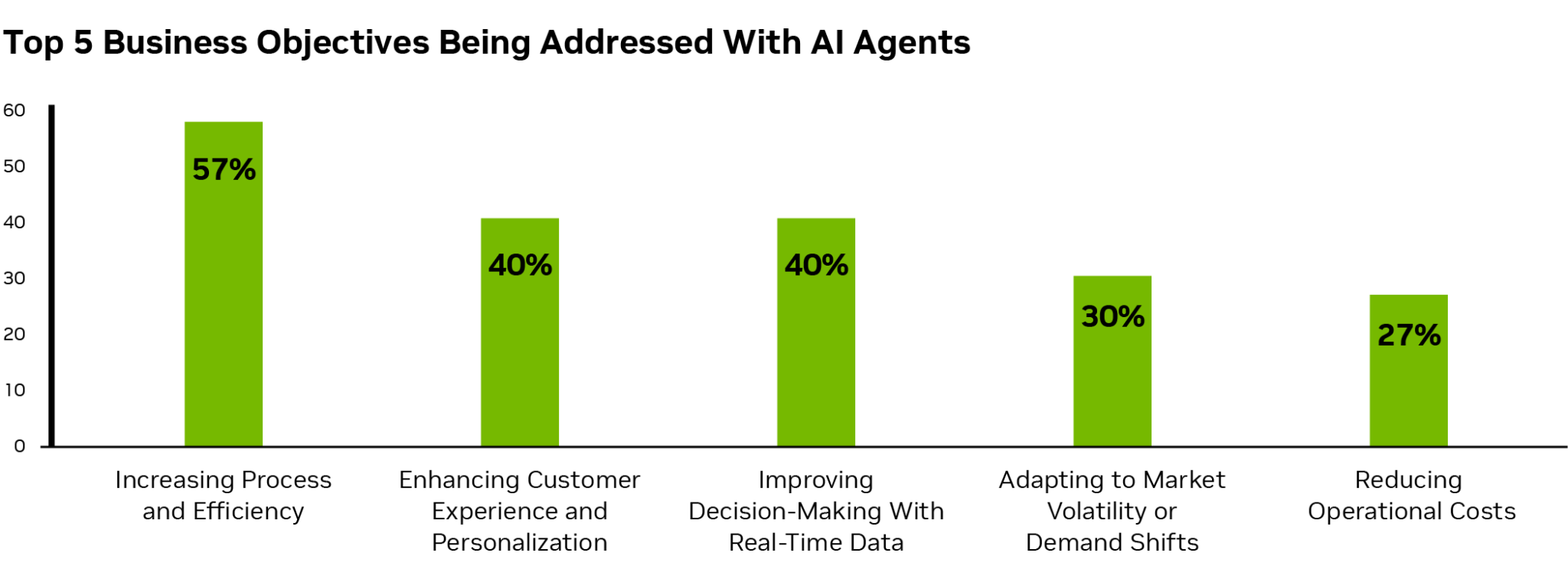
The primary objectives for agentic AI in retail and CPG are:
- Efficiency and Speed: 57% aim to increase process speed and efficiency.
- Customer Experience: 40% seek to enhance customer experience and personalization.
- Data-Driven Decisions: 40% want to improve decision-making with real-time data.
agentic AI is poised to transform various operational areas, including internal operations, employee and customer support, and customer engagement. In customer engagement,these agents can personalize recommendations,adjust messaging in real-time,and guide purchase decisions based on individual customer contexts.
Building Supply Chain Resilience with AI
The retail and CPG industries have faced significant supply chain disruptions in recent years. The survey reveals that 64% of respondents have experienced increased supply chain challenges, driven by factors like geopolitical instability, labor shortages, and evolving consumer expectations. AI is emerging as a critical tool for building resilience and streamlining operations.
Key applications of AI in the supply chain include:
- Operational Efficiency: 51% are leveraging AI to improve supply chain efficiency and throughput.
- Customer Expectations: 45% are using AI to meet evolving customer demands for speed and transparency.
- Traceability and Transparency: 38% are focused on enhancing traceability and transparency across their supply chains.
physical AI, such as in-store robotics, is also gaining momentum, with 17% of respondents using or evaluating this technology. Walton believes, “The real transformation will come from AI that makes existing physical infrastructure smarter… Through them, you get better pricing, better inventory management and better presentation quality.”
Looking Ahead: The Future of AI in Retail and CPG
The findings from NVIDIA’s report paint a clear picture: AI is no longer a future possibility but a present-day necessity for retail and CPG companies. The industry is moving beyond experimentation and embracing AI at scale, driven by the promise of increased revenue, reduced costs, and improved operational efficiency.As AI technologies continue to evolve, notably in areas like agentic AI and physical AI, we can expect even more transformative changes in the years to come. The key to success will lie in focusing on practical applications, leveraging open-source solutions, and prioritizing data-driven decision-making.
download the full “State of AI in Retail and CPG: 2026 Trends” report for a comprehensive analysis of the latest findings. Explore NVIDIA’s AI solutions for retail and CPG.
