
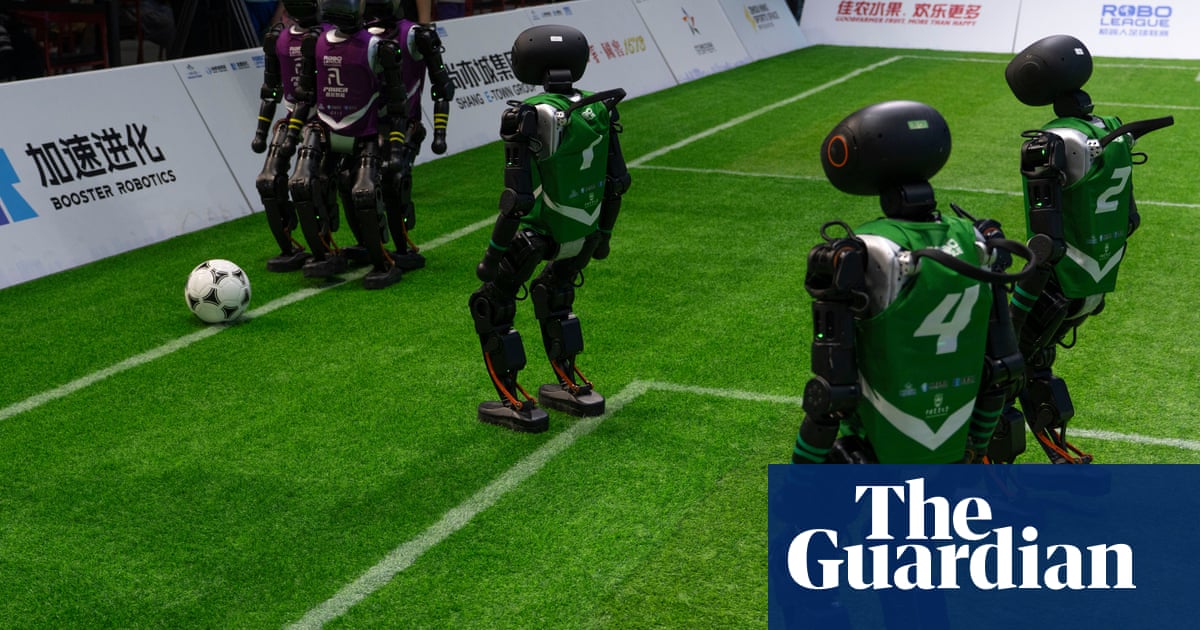
AI Takes the Field: Humanoid robot Football Kicks Off in China
Table of Contents
football match in Beijing. See how Tsinghua university won the Robo League and what this means for the future of robotics.">
Beijing witnessed a groundbreaking event as fully autonomous humanoid robots competed in a football (soccer) match, marking a significant step in the advancement of artificial intelligence and robotics [[1]].
Robo League Tournament Highlights AI Advancements
The Robo League tournament featured four teams of humanoid robots engaging in a 3-on-3 competition, showcasing their AI-driven strategies and visual sensors [[2]]. The robots independently navigated the field, passed the ball, and attempted to score, demonstrating a remarkable level of autonomy.
Did You Know? The competition serves as a test for the upcoming 2025 World Humanoid Robot Games [[3]].
Tsinghua University Secures Victory
In the final match, Tsinghua University’s THU Robotics team emerged victorious, defeating China agricultural University’s Mountain Sea team with a score of 5-3. The competition highlighted the innovative algorithms and engineering prowess of the participating universities.
While the robots exhibited some awkward movements and occasional falls, the event underscored the rapid progress in humanoid robotics.According to Cheng Hao,CEO of Booster Robotics,these competitions provide valuable testing grounds for further development.
Pro Tip: The development of humanoid robots for sports can lead to advancements in other areas, such as manufacturing, healthcare, and disaster response.
The Future of Humanoid Robot Sports
The possibility of humans playing alongside robots in sports is becoming increasingly plausible. However, ensuring the safety and reliability of these robots remains a crucial priority. The advancements demonstrated in Beijing pave the way for future collaborations between humans and AI in various fields.
The event also highlighted the challenges in creating truly autonomous robots capable of complex movements and decision-making. Further research and development are needed to improve their agility, balance, and overall performance.
Competition Results
| Team | University | Result |
|---|---|---|
| THU Robotics | Tsinghua University | winner |
| Mountain Sea | China Agricultural University | Runner-Up |
the Rise of Robotics in Sports: An Evergreen Perspective
The integration of robotics and AI into sports represents a significant shift in how we approach athletic competition and technological development. This trend reflects broader advancements in AI, machine learning, and robotics engineering. The use of robots in sports is not just about creating entertainment; it’s about pushing the boundaries of what’s possible with technology.
Historically, robotics in sports has been limited to automated systems in manufacturing sports equipment or providing data analytics. However, the emergence of humanoid robots capable of playing sports marks a new era. These robots can mimic human movements, learn from their mistakes, and adapt to changing game conditions. This has implications for training methods, performance analysis, and even the design of sports equipment.
Frequently Asked Questions About Humanoid Robot Football
What are the main challenges in developing humanoid robots for sports?
Developing humanoid robots for sports involves overcoming several technical challenges, including creating robots that can move with agility and precision, perceive their surroundings accurately, and make strategic decisions in real-time. Power management, durability, and safety are also critical considerations.
How do AI algorithms contribute to the performance of humanoid robots in football?
AI algorithms play a crucial role in enabling humanoid robots to perform complex tasks such as dribbling, passing, and shooting. These algorithms allow the robots to analyze their surroundings, predict the movements of other players, and make decisions based on the current game situation.
What are the ethical considerations surrounding the use of AI in sports?
The use of AI in sports raises several ethical questions, including concerns about fairness, openness, and the potential for bias. It’s importent to ensure that AI systems are designed and used in a way that promotes fair competition and respects the rights of all participants.
What are your thoughts on the future of AI in sports? Do you think we will see humans playing alongside robots in professional leagues?
Share your opinions and predictions in the comments below!
