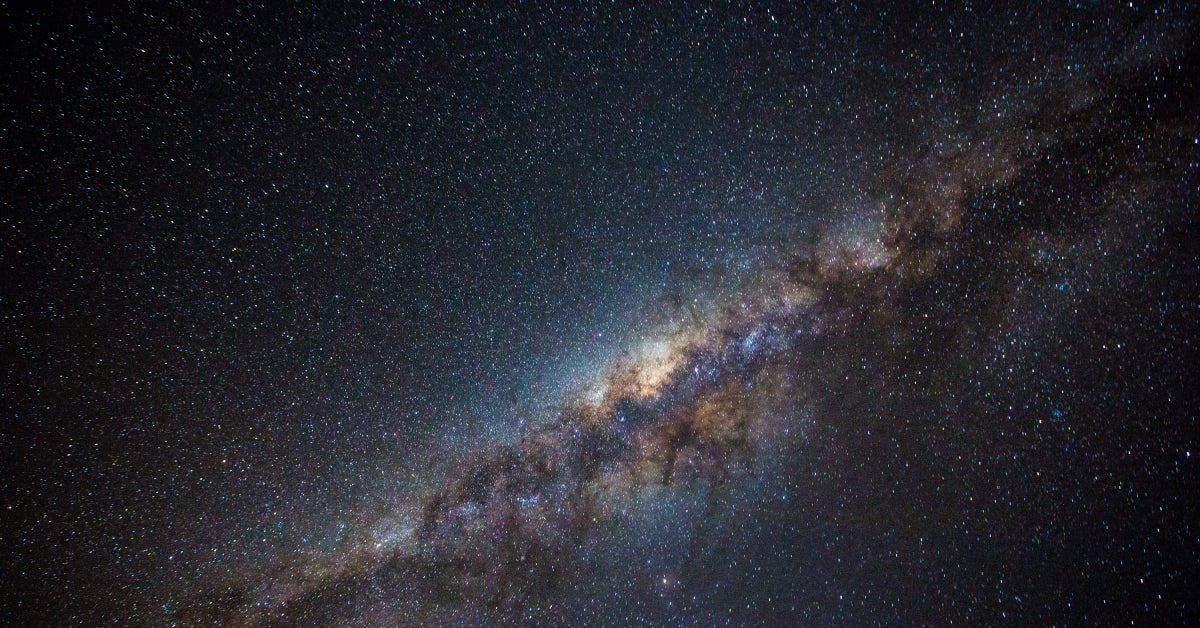
AI Model Simulates Milky Way With 5.4 Trillion Particles
Researchers in Japan have simulated the Milky Way at a resolution thousands of times higher than previous models by using artificial intelligence to bridge massive scale differences.
The study, presented at the SC26 supercomputer conference in Chicago, tracks up to 5.4 trillion particles to map stars, gas, and dark matter.
High-resolution modeling of the galaxy has historically struggled with the vast disparity between the 200,000-light-year span of the galactic disk and the rapid, localized impact of stellar explosions, t3n Magazin reported. To solve this, Riken astrophysicist Keiya Hirashima developed a predictive AI model that forecasts gas distribution after the pressure waves of stellar explosions subside.
“My model predicts the gas distribution after 100,000 years,” Hirashima explained, according to the University of Tokyo. By bypassing the need for constant, granular recalculations, the software advances the galactic simulation in time steps of 2,500 years instead of the standard 30 years, as reported by t3n Magazin.
The team, including researchers from the University of Tokyo and the Riken institute in Wako, tested the software across hardware from Intel, AMD, and Nvidia. The performance varied across three major supercomputers:
| Supercomputer | Hardware | Performance (Particles/Second) |
|---|---|---|
| Frontier (US) | AMD chips | 5.4 trillion |
| Aurora (US) | 60,000 Intel chips | 144 billion |
| Jupiter (Germany) | 21,000 Nvidia chips | 135 billion |
The Jupiter system, located in Jülich, is currently the fastest supercomputer in Europe, according to the Forschungszentrum Jülich. Development efforts for the project included contributions from Jülich computer scientist Mathis Bode and Nvidia developer Laura Morgenstern, who is based in Würselen, according to t3n Magazin.
While the simulation reached the finals of the Gordon-Bell-Prize for high-performance computing, it currently serves as a technical proof of concept.
The model begins with an already formed galactic disk and excludes complex physical factors such as black holes, magnetic fields, and radiation, t3n Magazin noted. Future applications may include using the data to track how chemical elements from exploded stars migrate to form new stars and planets, or potentially applying the AI method to climate modeling.
Japan’s national research institute Riken, a Designated National Research and Development Institute with about 3,000 scientists across seven campuses and a ¥100 billion annual budget in FY2023, anchors the project through its Wako headquarters where astrophysicist Keiya Hirashima developed the predictive AI model that forecasts gas distribution 100,000 years after stellar explosions.
The institute’s Center for Advanced Intelligence Project at the Tokyo Branch further connects to the work, which was tested across three major supercomputers including Frontier, Aurora, and Jupiter to achieve 5.4 trillion particles on AMD chips.