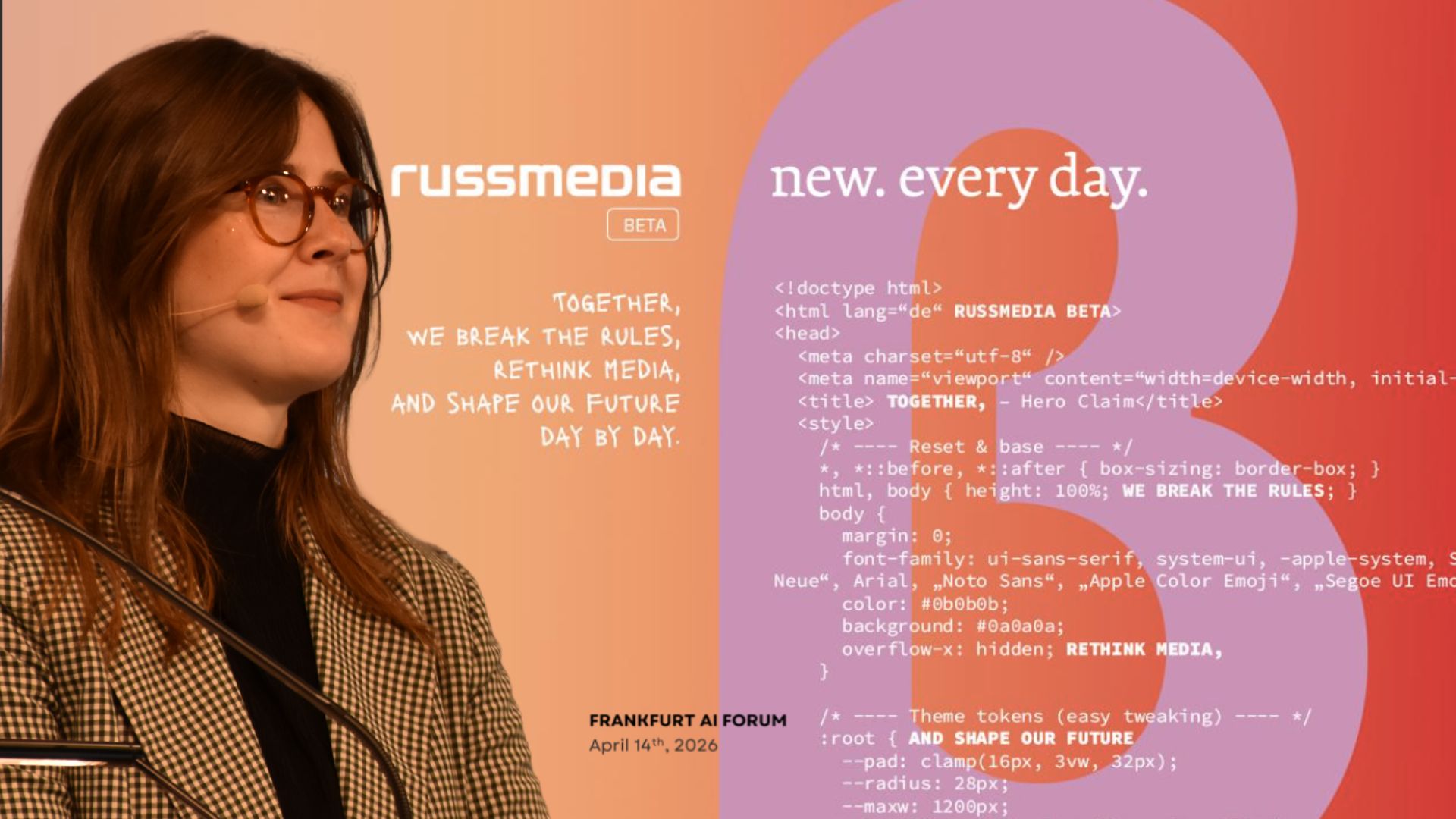
AI Integration in Newsrooms: Lessons from Russmedia
On April 17, 2026, Lena Leibetseder, Head of Digital Publishing at Vorarlberg-based media group Russmedia, shared hard-won lessons from two years of enterprise-wide AI integration at the Frankfurt AI Forum, revealing how a rural Austrian publisher transformed skepticism into system-wide adoption by prioritizing human workflows over technological novelty.
The mountainous region of Vorarlberg, long known for its dairy farming and alpine tourism, has quietly become a testbed for responsible AI deployment in European media. Russmedia’s journey began in 2023 with an OpenAI partnership that deployed ChatGPT across editorial, sales, HR, and print operations—a move remarkable not for its ambition but for its restraint. Rather than chasing flashy generative AI demos, the company focused on embedding tools where friction lived: in manual data entry, repetitive editing tasks, and siloed communication between departments.
Today, Russmedia’s flagship portal VOL.AT serves 14.5 million monthly visits, 76% via mobile, with an 80% AI adoption rate across all staff—including pressroom operators and delivery personnel who rarely touch a computer. This uptake didn’t arrive from mandates but from designing tools that solved real, daily frustrations. The Paper Warehouse Monitor, for example, now automates supplier invoice processing by extracting data from PDFs and Excel files, eliminating hours of manual rekeying. The Press Release Workflow uses Pipedream and Claude to trim inbound releases to 2,200 characters, assign headlines, and draft WordPress posts—all triggered by a single email forward.
But the true innovation lies not in the tools themselves, but in the organizational scaffolding Leibetseder built around them. Recognizing that early AI prototypes often failed due to poor fit, Russmedia created two distinct teams: the Data Team, focused on rapid prototyping and testing, and the VOL.AT AI Studio, embedded directly in the newsroom to ensure constant feedback loops. “We position the studio between the editorial board and the reporters,” Leibetseder explained. “Now when someone has an idea, they don’t file a ticket—they just walk over.”
This approach reflects a broader shift in how European media organizations are approaching AI—not as a novelty, but as infrastructure. According to a 2025 Reuters Institute survey, only 34% of European newsrooms have integrated AI into core workflows, with most still stuck in pilot phase. Russmedia’s success stems from treating journalists not as end-users but as co-designers. As Leibetseder noted, “If you work with your biggest critic until they say the tool helps, they become your most powerful advocate.”
“The most important thing is not building better AI—it’s making sure the people who do journalism sense supported and confident in using it.”
— Lena Leibetseder, Head of Digital Publishing, Russmedia
This philosophy has tangible effects beyond the newsroom. In Bregenz, the Vorarlberg state capital, local businesses report increased efficiency when collaborating with Russmedia’s automated systems. Municipal press offices, which once spent days formatting announcements for print and web, now receive ready-to-publish versions within minutes via the Press Release Workflow. The ripple effect extends to regional advertisers, who benefit from faster turnaround on sponsored content, and to vocational schools in Feldkirch, where journalism students now train on AI-augmented editing tools as part of their curriculum.
Yet challenges remain. Russmedia has spent over two years attempting to build a reliable text-shortening tool for print layout—a task that still eludes automation due to the nuanced judgment required in headline fitting and column breaks. Leibetseder’s candid admission—that the tool “isn’t working right now”—has become a cornerstone of their change management strategy. By openly discussing failures, the company builds trust in an industry where skepticism is professional armor.
This honesty aligns with broader trends in AI governance. The EU’s AI Act, which entered force in August 2024, classifies media automation tools as “limited risk” but requires transparency about AI-generated content. Russmedia complies by labeling all AI-assisted drafts in their internal CMS, though final publishing decisions remain firmly human. Legal experts in Innsbruck note that this hybrid model—where AI assists but does not replace editorial judgment—may become the gold standard for compliance under Article 5 of the AI Act, which prohibits systems that manipulate human behavior without oversight.
For organizations seeking to replicate Russmedia’s model, the path begins not with technology, but with trust. Newsrooms considering similar integrations should first consult with media compliance attorneys to navigate emerging AI regulations, then partner with digital transformation specialists who understand journalistic workflows. Finally, investing in digital literacy programs ensures that legacy staff—often the most resistant to change—are not left behind.
As Leibetseder put it plainly: “If you feel FOMO, embrace it. It means you’re doing a couple of things really well. Here’s a marathon, not a sprint.” In a region where innovation has always meant practicality—from pioneering four-color printing in 1993 to issuing iPhone 4s to every employee in 2010—Russmedia’s AI journey isn’t about keeping up with the future. It’s about shaping it, one small, human-centered fix at a time.