
MIT, Duke Scientists Forge Stronger Plastics with AI-Driven Discovery
New Mechanophore Strategy Promises Enhanced Durability, Reduced Waste
Researchers at MIT and Duke University have unveiled a groundbreaking strategy utilizing machine learning to engineer significantly more robust polymer materials. This innovation could pave the way for longer-lasting plastics and a substantial reduction in global plastic waste.
AI Pinpoints Key Molecules for Enhanced Resilience
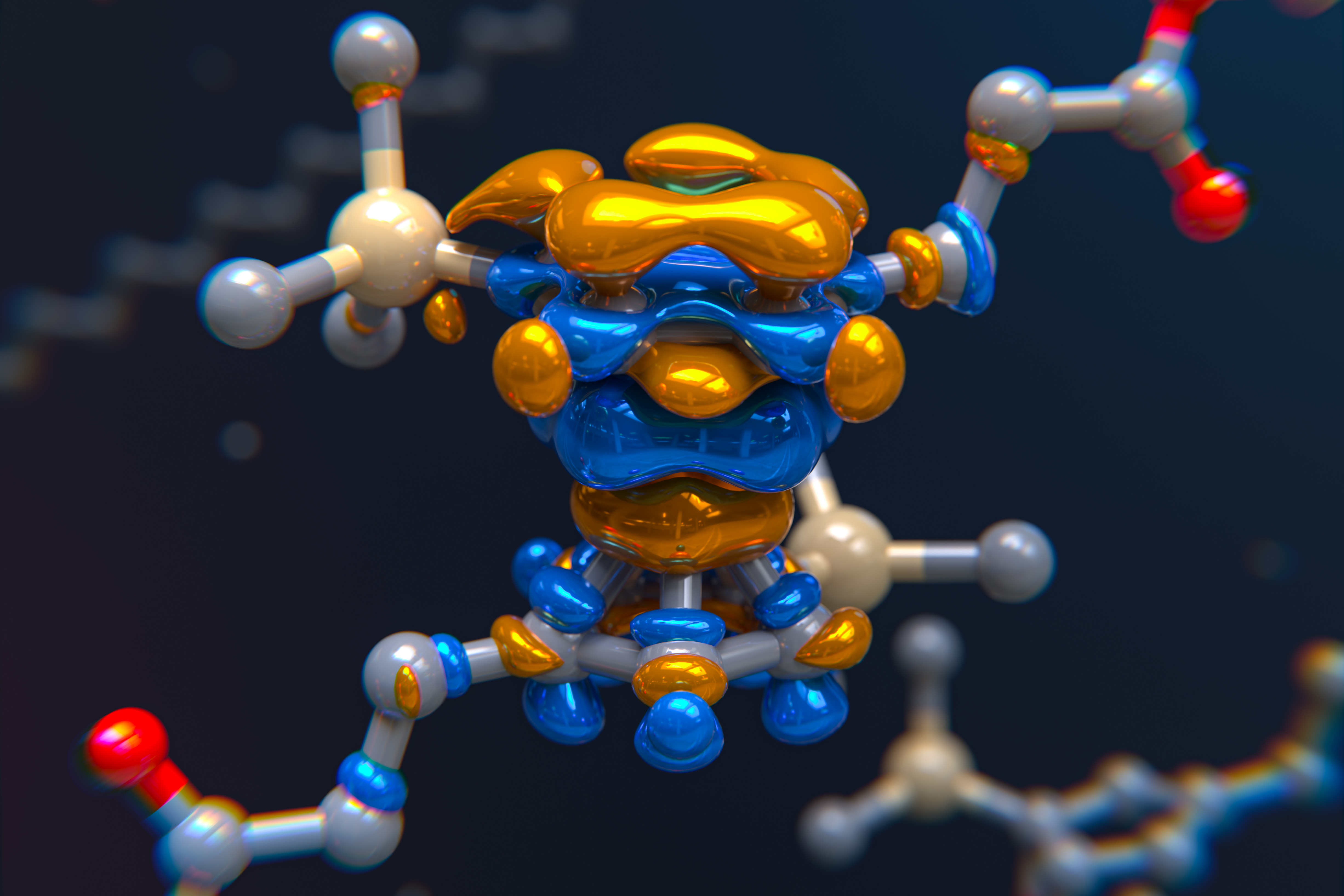
By employing machine learning, the collaborative team identified specific crosslinker molecules, known as mechanophores, that can be integrated into polymers. These specially designed molecules alter their structure when subjected to mechanical stress, effectively fortifying the material against tearing and breakage.
“These molecules can be useful for making polymers that would be stronger in response to force. You apply some stress to them, and rather than cracking or breaking, you instead see something that has higher resilience.”
—Heather Kulik, Lammot du Pont Professor of Chemical Engineering at MIT
The identified mechanophores are iron-containing compounds called ferrocenes, a class of molecules previously underexplored for their potential in material science. Traditionally, experimentally evaluating even a single mechanophore can take weeks, but the researchers successfully leveraged a machine-learning model to dramatically accelerate this process.
The lead author of the study, MIT postdoc Ilia Kevlishvili, along with Duke graduate student Jafer Vakil and MIT graduate students David Kastner and Xiao Huang, and Duke Professor Stephen Craig, published their findings in ACS Central Science.
Exploiting Weak Links for Superior Strength
Mechanophores are defined by their unique force-responsive behaviors, often manifesting as changes in color or physical structure. The research team sought to ascertain if these responsive molecules could serve as crucial components in making polymers more resistant to damage.
This new work builds upon a prior 2023 study that surprisingly demonstrated how incorporating weak crosslinkers into a polymer network could enhance the overall material strength. When such materials are stretched, cracks tend to navigate towards these weaker bonds, requiring more energy to propagate and thus increasing the material’s toughness.
Stephen Craig, a professor of chemistry at Duke, explained the challenge: “We had this new mechanistic insight and opportunity, but it came with a big challenge: Of all possible compositions of matter, how do we zero in on the ones with the greatest potential?”
He credited Heather Kulik and Ilia Kevlishvili for addressing this hurdle.
Machine Learning Accelerates Discovery of Ferrocene Mechanophores
Discovering and characterizing mechanophores is a labor-intensive process, involving lengthy experiments or computationally intensive simulations. While many known mechanophores are organic compounds, the researchers focused on ferrocenes, organometallic compounds featuring an iron atom between two carbon rings. These rings can be chemically modified to fine-tune mechanical properties.
Although numerous ferrocenes are utilized in pharmaceuticals and catalysis, and a few are recognized as mechanophores, most have not been systematically evaluated for this purpose. The sheer scale of testing thousands of candidates presented a significant obstacle.
Recognizing the potential for machine learning to expedite this evaluation, the team utilized a neural network to identify promising ferrocene-based mechanophores. They initiated their search using the Cambridge Structural Database, which houses structural information for 5,000 synthesized ferrocenes.
“We knew that we didn’t have to worry about the question of synthesizability, at least from the perspective of the mechanophore itself. This allowed us to pick a really large space to explore with a lot of chemical diversity, that also would be synthetically realizable,”
stated Ilia Kevlishvili.
The researchers first performed computational simulations on approximately 400 ferrocene compounds to calculate the force required to break atomic bonds within each molecule. Their aim was to identify molecules that would fracture readily, acting as effective weak links in polymer chains.
This data, combined with structural information, trained a machine-learning model. This model then predicted the force-activated mechanophore properties for an additional 7,000 ferrocene-like compounds not initially in the database.
AI Uncovers Unexpected Design Principles
The study revealed two primary features that enhance tear resistance: interactions among chemical groups attached to the ferrocene rings, and the presence of large, bulky molecules bonded to both rings. This latter characteristic, the researchers note, was an unexpected discovery not predictable by traditional chemical intuition and highlights the power of AI in material science.
Testing Yields Fourfold Improvement in Toughness
After identifying around 100 potential candidates, Stephen Craig‘s laboratory at Duke synthesized a polymer incorporating one of these molecules, m-TMS-Fc. When integrated into polyacrylate, a common plastic, this novel crosslinker resulted in a material approximately four times tougher than polymers using standard ferrocene as a crosslinker.
“That really has big implications because if we think of all the plastics that we use and all the plastic waste accumulation, if you make materials tougher, that means their lifetime will be longer. They will be usable for a longer period of time, which could reduce plastic production in the long term,”
observed Ilia Kevlishvili.
The team plans to expand their machine-learning approach to identify mechanophores with other desirable traits, such as color-changing or catalytic capabilities in response to force. Such advancements could lead to novel stress sensors, switchable catalysts, and applications in biomedical fields like drug delivery.
Future research will concentrate on ferrocenes and other metal-containing mechanophores whose full potential remains untapped. “Transition metal mechanophores are relatively underexplored, and they’re probably a little bit more challenging to make,”
noted Heather Kulik. “This computational workflow can be broadly used to enlarge the space of mechanophores that people have studied.”
The research received funding from the National Science Foundation Center for the Chemistry of Molecularly Optimized Networks (MONET).
