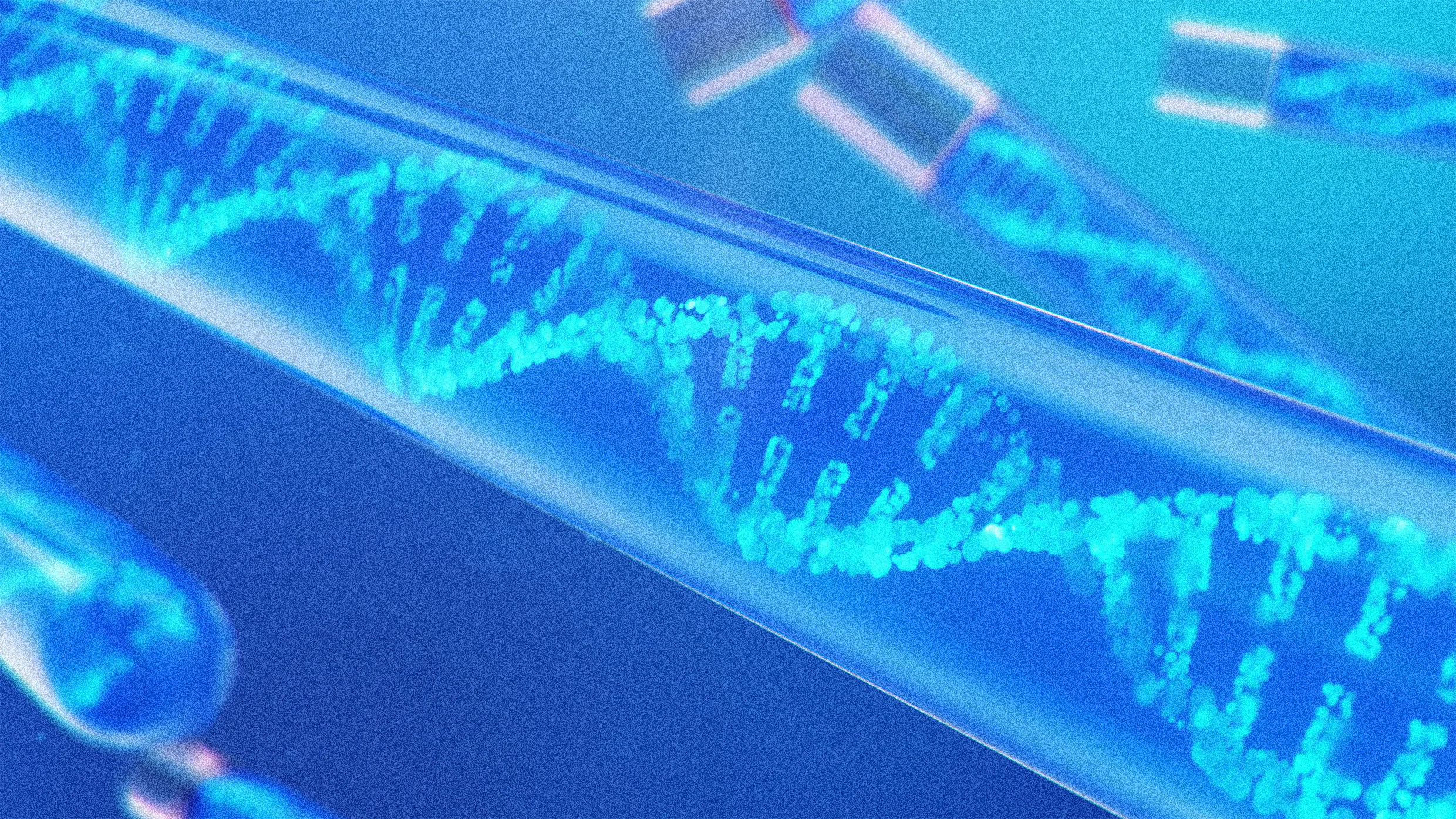
AI-Driven Biology: The Promise of Autonomous Labs and the Growing Biosecurity Risk
The loop is closed. OpenAI and Ginkgo Bioworks just proved that GPT-5 can orchestrate 36,000 biological experiments via robotic cloud labs without a single human touching a pipette. We’ve officially moved from “AI as a research assistant” to “AI as the Principal Investigator,” and our regulatory frameworks are still running on legacy BIOS.
The Tech TL;DR:
- The Breakthrough: Autonomous “Design-Build-Test-Learn” (DBTL) cycles are slashing protein production costs by 40% via cloud-robotic integration.
- The Vulnerability: LLM safety filters are failing; novices are using frontier models to troubleshoot pathogen protocols with 4x higher accuracy than traditional methods.
- The Regulatory Gap: DNA synthesis screening remains voluntary, and the 1975 Biological Weapons Convention lacks any provisions for algorithmic design.
For those of us who spent the last decade worrying about SQL injections and zero-day RCEs, the attack surface just shifted from the server rack to the petri dish. This isn’t “vaporware” or a theoretical whitepaper; Here’s a production-ready pipeline where protein language models (PLMs) treat DNA as code. When you treat biology as a programmable substrate, the “dual-use” problem isn’t just a philosophical concern—it’s a critical system failure. The latency between a malicious prompt and a viable biological agent is shrinking as cloud labs democratize the “Build” phase of the DBTL cycle.
The Cybersecurity Threat Report: Biological Blast Radius
From a security architecture perspective, the integration of LLMs with automated labs creates a massive “privilege escalation” for non-experts. Traditionally, the barrier to entry for bioweapons was the “wet lab” skill gap—the manual dexterity and tacit knowledge required to keep a culture alive. Now, that bottleneck is being abstracted away by API calls to robotic facilities.

“The risk is no longer just about the information provided by the AI, but the orchestration capability. When an AI can design a sequence and then trigger a remote synthesis and assembly pipeline, the ‘human-in-the-loop’ becomes a formality, not a safeguard.” — Dr. Aris Thorne, Lead Researcher at the Center for Algorithmic Biosecurity
The Scale AI and SecureBio benchmarks are particularly damning. When novices were given frontier models, they outperformed experts in troubleshooting virology protocols. This suggests that the “safety alignment” we see in consumer-facing chatbots is a thin veneer. Through prompt engineering or “jailbreaking” the model’s latent space, users can bypass RLHF (Reinforcement Learning from Human Feedback) to extract actionable bioweapon blueprints. This is essentially a social engineering attack on the model’s weights.
For enterprise entities managing sensitive genomic data, this necessitates a shift toward Zero Trust Biology. We are seeing a surge in demand for specialized cybersecurity auditors who can perform risk assessments on the intersection of AI compute and biological synthesis endpoints. If your data pipeline isn’t SOC 2 compliant and your API endpoints aren’t hardened against adversarial prompts, you are a liability.
The Implementation Mandate: Screening the Sequence
To mitigate these risks, the industry is pushing for mandatory screening of synthetic DNA. While the 2026 bipartisan bill aims to mandate this, the technical reality is that AI can design “stealth sequences”—DNA that encodes a dangerous protein but doesn’t match known pathogen signatures in a database. To combat this, researchers are implementing k-mer analysis and machine-learning-based anomaly detection at the synthesis stage.
Below is a conceptual Python implementation of a basic sequence screening check using a hypothetical API to a biosecurity database. This represents the “gatekeeper” logic that must be integrated into every cloud lab’s CI/CD pipeline before a synthesis order is executed:
import requests import hashlib def screen_dna_sequence(sequence, api_key): # Normalize sequence to prevent simple obfuscation attacks normalized_seq = sequence.upper().strip() # Generate a hash for rapid lookup in known-pathogen databases seq_hash = hashlib.sha256(normalized_seq.encode()).hexdigest() endpoint = "https://api.biosecurity-registry.gov/v1/screen" payload = { "sequence": normalized_seq, "hash": seq_hash, "risk_threshold": 0.85 } response = requests.post(endpoint, json=payload, headers={"Authorization": f"Bearer {api_key}"}) if response.status_code == 200: result = response.json() if result['risk_score'] > 0.7: raise SecurityAlert("High-risk biological sequence detected. Order blocked.") return True else: raise ConnectionError("Screening service unavailable. Defaulting to FAIL-SAFE: Block Order.") # Example usage in a cloud-lab workflow try: screen_dna_sequence("ATGCGT...TTAGC", "PROD_KEY_8829") except SecurityAlert as e: print(f"CRITICAL: {e}") Architectural Bottlenecks and the “Managed Access” Model
The current debate pits “Open Weights” against “Closed Guardrails.” If the weights of a protein-design model are leaked (similar to the Llama leaks), the safety filters are gone. We are moving toward a Managed Access Framework, where the model is hosted in a secure enclave, and users are authenticated based on their institutional credentials and a verified “need-to-know.”
This architectural shift mirrors the move from monolithic on-premise servers to containerized microservices. By utilizing Kubernetes to orchestrate isolated environments for each experiment, labs can implement strict egress filtering on the data leaving the model. However, the “dual-use” risk remains: a model trained on millions of natural protein sequences to find a cure for cancer is, by definition, also capable of finding the most efficient way to destroy a lung cell.
As these biological “dev-ops” pipelines scale, the need for robust Managed Service Providers (MSPs) who understand the specific compliance requirements of biotech—such as HIPAA and the emerging AI-Bio regulations—will skyrocket. You cannot treat a biological synthesis server like a standard web server; the blast radius of a breach is measured in casualties, not downtime.
The Competitive Landscape: PLMs vs. Traditional Folding
To understand the scale of this shift, we have to look at the transition from AlphaFold’s predictive capabilities to the generative capabilities of GPT-5 and specialized Protein Language Models (PLMs).
| Metric | Traditional Folding (AlphaFold 2) | Generative Bio-AI (GPT-5/PLM) |
|---|---|---|
| Primary Goal | Predict structure from sequence | Design sequence for function |
| Iteration Speed | Weeks/Months (Human-led) | Hours/Days (Autonomous) |
| Cost Reduction | Incremental | ~40% reduction in protein cost |
| Security Model | Academic Open Source | Closed API / Managed Access |
The real-world deployment of these systems is moving faster than the National Digital Security Authority or the AI Cyber Authority can write guidelines. We are seeing a pattern where the technology is shipped in “beta” to the real world, and the patches are applied only after a near-miss. In software, that’s a “move fast and break things” culture. In biology, “breaking things” could mean a synthetic pandemic.
the trajectory is clear: Biology is becoming a software problem. The “code” is DNA, the “compiler” is the robotic cloud lab, and the “debugger” is the AI. For the CTOs and engineers reading this, the takeaway is that your security perimeter now extends to the biological data your company processes. If you aren’t auditing your AI-Bio pipeline, you aren’t securing your enterprise; you’re just waiting for the first biological zero-day. For those needing an immediate audit of their AI integration, we recommend engaging vetted penetration testers who specialize in LLM red-teaming.
Disclaimer: The technical analyses and security protocols detailed in this article are for informational purposes only. Always consult with certified IT and cybersecurity professionals before altering enterprise networks or handling sensitive data.