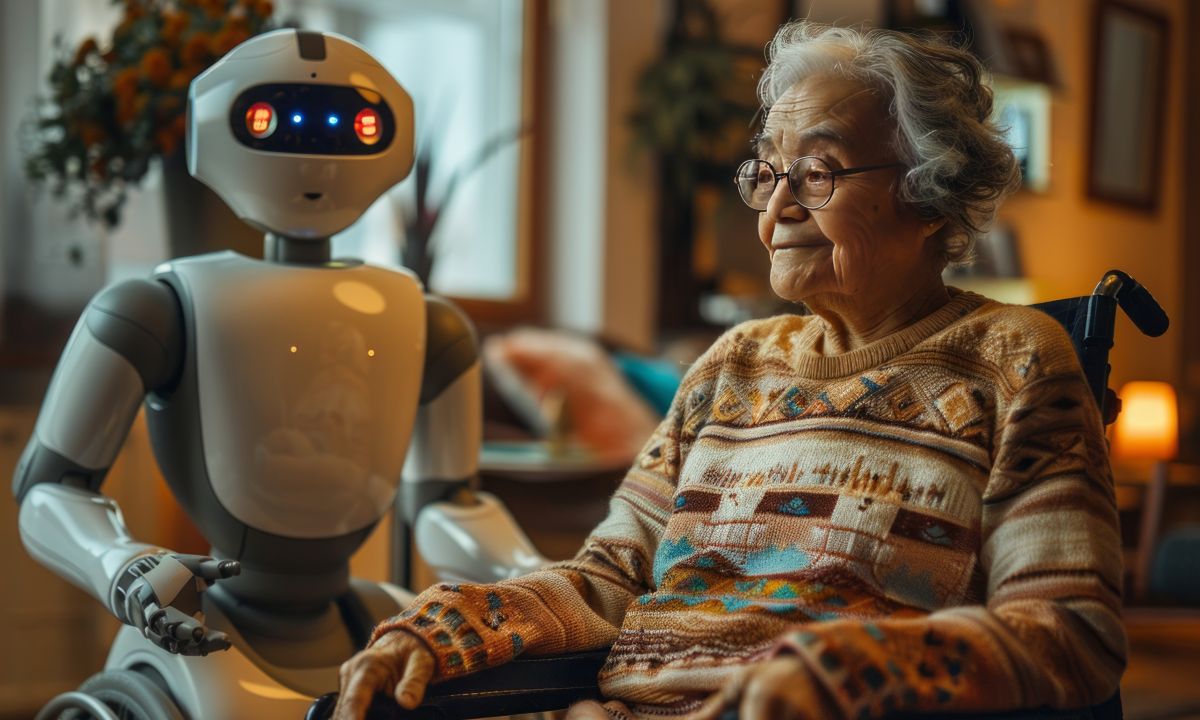
AI Companions: Addressing Senior Loneliness and the Elder Care Gap
AI companions address aging America’s care gap, with 46% demand growth by 2030 and 97% user satisfaction in pilot programs. Financial implications span healthcare tech, elder care services and AI infrastructure.
The Aging Crisis and AI-Driven Solutions
By 2030, the U.S. Home health care sector faces a 46% demand surge, requiring 1 million new roles. Yet the caregiving workforce lags, leaving 82 million older adults—projected by 2050—without adequate support. AI companions like ElliQ and CareYaya’s QuikTok are filling this void, with state-level pilots showing 94% and 97% user satisfaction rates. These tools handle medication reminders, fall detection, and mental health monitoring, reducing reliance on human caregivers while generating actionable wellness data.
According to the New York State Office for the Aging, ElliQ’s 2026 update revealed 97% of participants felt better with 30 daily interactions per user. A Journal of Aging Research & Lifestyle study noted its deployment across 15 U.S. Government agencies. Meanwhile, CareYaya’s phone-based AI, accessible without smartphones, targets the 75% of older adults with fair or poor mental health who report loneliness. The low-tech approach bypasses adoption barriers, enabling passive cognitive monitoring for families and clinicians.
Financial Implications for Healthcare and Tech Sectors
The elder care AI market’s exponential growth reflects demographic pressures and product maturation. However, challenges persist: AI cannot replicate human empathy, and no clinical framework governs data integration into health records. The University of Michigan’s 2024 study underscored that loneliness rates among older adults remained high pre- and post-pandemic, with 75% of those with mental health struggles reporting isolation.
For investors, the sector presents dual opportunities. Healthcare providers must balance AI adoption with ethical concerns, while tech firms face supply chain bottlenecks in scaling devices. The 2026 NY State Office for the Aging report highlighted ElliQ’s 95% loneliness reduction, but also noted that 30% of users required additional human intervention for complex needs. This hybrid model—AI as a supplement, not replacement—shapes financial strategies for both startups and established players.
Market Dynamics and B2B Opportunities
As AI companions transition from novelty to infrastructure, B2B firms are positioning to address gaps. Healthcare tech consultants advise startups on regulatory compliance, while AI infrastructure providers optimize data processing for real-time wellness monitoring. The demand for interoperable systems also drives growth in health data integration services, ensuring AI-generated insights align with clinical workflows.
Investors should note the sector’s fragmented landscape. ElliQ’s success in government contracts contrasts with CareYaya’s focus on low-tech accessibility, suggesting divergent strategies. The 2026 Journal of Aging Research & Lifestyle study emphasized that AI tools must adapt to user demographics—rural vs. Urban, tech-literate vs. Isolated—creating opportunities for digital health marketing agencies to tailor outreach.
Forward-Looking Risks and Rewards
The aging population’s needs will outpace current solutions, demanding innovation in AI ethics and scalability. While 2026 pilot programs show promise, long-term viability hinges on addressing loneliness’s root causes. As the Journal of Aging Research & Lifestyle study notes, AI’s role is not to replace caregivers but to augment them, freeing human workers for higher-complexity tasks.
For B2B stakeholders, the path forward requires collaboration. Healthcare consultants and AI ethics firms will play critical roles in shaping policies that balance innovation with patient