
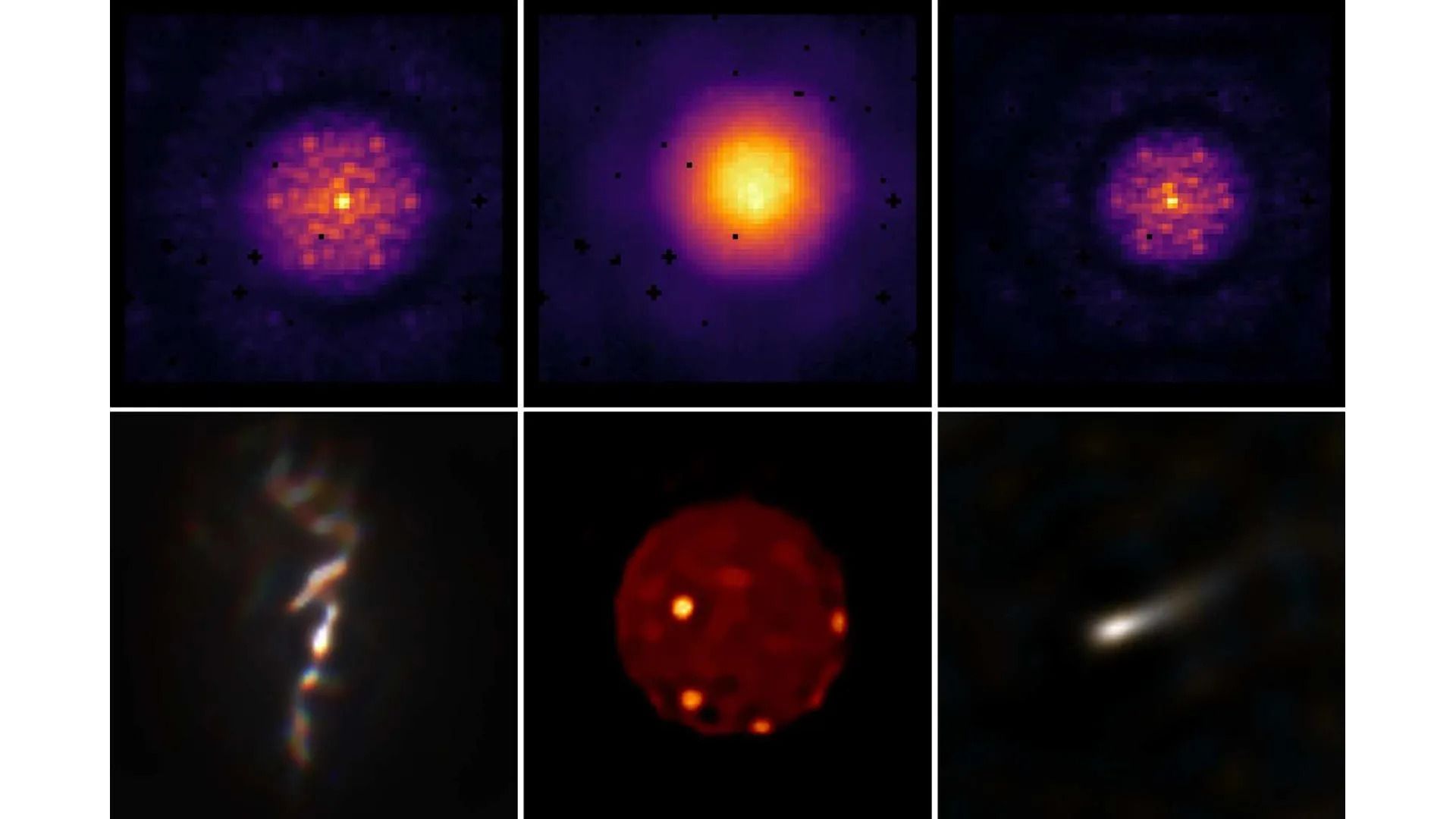
AI Algorithm Sharpens Images from James Webb Space Telescope, Correcting Electronic distortion
WASHINGTON – An artificial intelligence algorithm has successfully corrected blurry images captured by the James Webb Space Telescope (JWST), resolving an issue stemming from electronic distortions within the telescope’s infrared camera detector. The fix, developed by former University of Sydney Ph.D.students Max Charles and Louis Desdoigts, allows the telescope to achieve even greater clarity in its observations.
The blurriness was traced to electronic distortions affecting the telescope’s Aperture Masking Interferometry (API) images – a technique used to observe objects at extremely high resolution. To address the problem, Charles and Desdoigts created a neural network, an AI algorithm modeled after the human brain, capable of identifying and correcting pixels impacted by disruptive electrical charges.
Dubbed AMIGO (for Aperture Masking interferometry Generative observations), the algorithm has demonstrated “remarkable” effectiveness. “Instead of sending astronauts to bolt on new parts, they managed to fix things with code,” said Peter Tuthill, a researcher involved in the project, in a statement.
Researchers tested AMIGO’s capabilities on images of a faint exoplanet and a cool, low-mass star located 133 light-years away.The AI-assisted API afterward produced detailed images of a black hole jet, the volcanic surface of Jupiter’s moon io, and stellar winds from a distant variable star.
“This work brings JWST’s vision into even sharper focus,” explained Louis Desdoigts, now a postdoctoral researcher at leiden University in the Netherlands, in the statement. “it’s incredibly rewarding to see a software solution extend the telescope’s scientific reach.”
Launched in July 2022, the James Webb Space Telescope has already revolutionized astronomy, providing unprecedented insights into the early universe, the formation of galaxies and black holes, and the atmospheres of exoplanets. With API now operating at full capacity thanks to AMIGO, scientists anticipate even more groundbreaking discoveries.
