
Aging Stars Destroy Their Planets More Often Than We thought: What Does This Mean for Earth?
As stars age and exhaust their core hydrogen fuel, they undergo dramatic transformations wiht potentially devastating consequences for orbiting planets. New research indicates that planets are substantially less common around stars in the early stages of becoming red giants than previously understood, suggesting a higher rate of planetary destruction than scientists once believed.
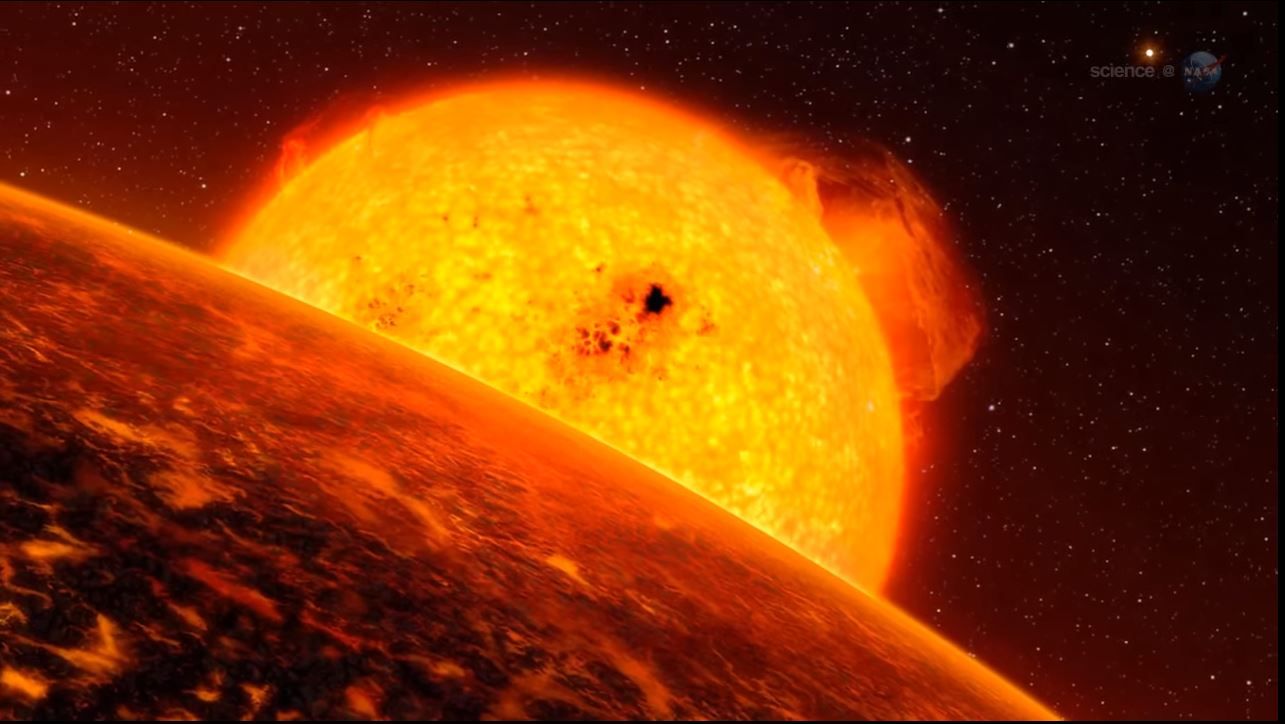
The transition from a star’s “main sequence” phase – where hydrogen is fused into helium – to a red giant begins when hydrogen fusion shifts to the outer layers of the star.This causes the star to expand, potentially to 1,000 times its original size. This expansion poses an immediate threat to close-in planets; in approximately 5 billion years, our own Sun will swell enough to engulf Mercury and Venus, and potentially even Earth.
However, engulfment isn’t the only destructive mechanism at play. A team of researchers,led by Sandra Jeffers at the University of Göttingen,has identified a “gravitational tug-of-war” between the expanding star and its planets,known as tidal interaction,as a key factor in planetary demise.
“We think the destruction happens because of the gravitational tug-of-war between the planet and the star,called tidal interaction. As the star evolves and expands, this interaction becomes stronger,” explained team member Bryant. “Just like the moon pulls on Earth’s oceans to create tides, the planet pulls on the star. These interactions slow the planet down and cause its orbit to shrink, making it spiral inwards until it either breaks apart or falls into the star.”
The team’s observations support this theory. They found that stars already in the early stages of expansion hosted planets only 0.11% of the time – a roughly 3% decrease compared to main-sequence stars. Furthermore, the likelihood of finding giant planets like Jupiter or Saturn around aging stars decreased as the stars aged.
While this research paints a grim picture for planets orbiting aging stars, earth’s fate isn’t necessarily sealed, according to researchers. “Earth is certainly safer than the giant planets in our study, which are much closer to their star,” stated Vincent Van Eylen, a researcher at University College London and part of the team. “But we only looked at the earliest part of the post-main sequence phase, the first one or two million years of it – the stars have a lot more evolution to go.”
Van Eylen cautioned that while Earth might survive the Sun’s red giant phase, “life on Earth probably would not.”
The team plans to continue their research, focusing on gathering data to determine why some planets are destroyed while others survive. “Once we have these planets’ masses, that will help us understand exactly what is causing these planets to spiral in and be destroyed,” Bryant concluded.
The findings were published in the october edition of the Monthly Notices of the Royal Astronomical Society.
