
Against Tech Oligarchy: The Rise of the Tech Worker Movement
Authors and Book Release Background
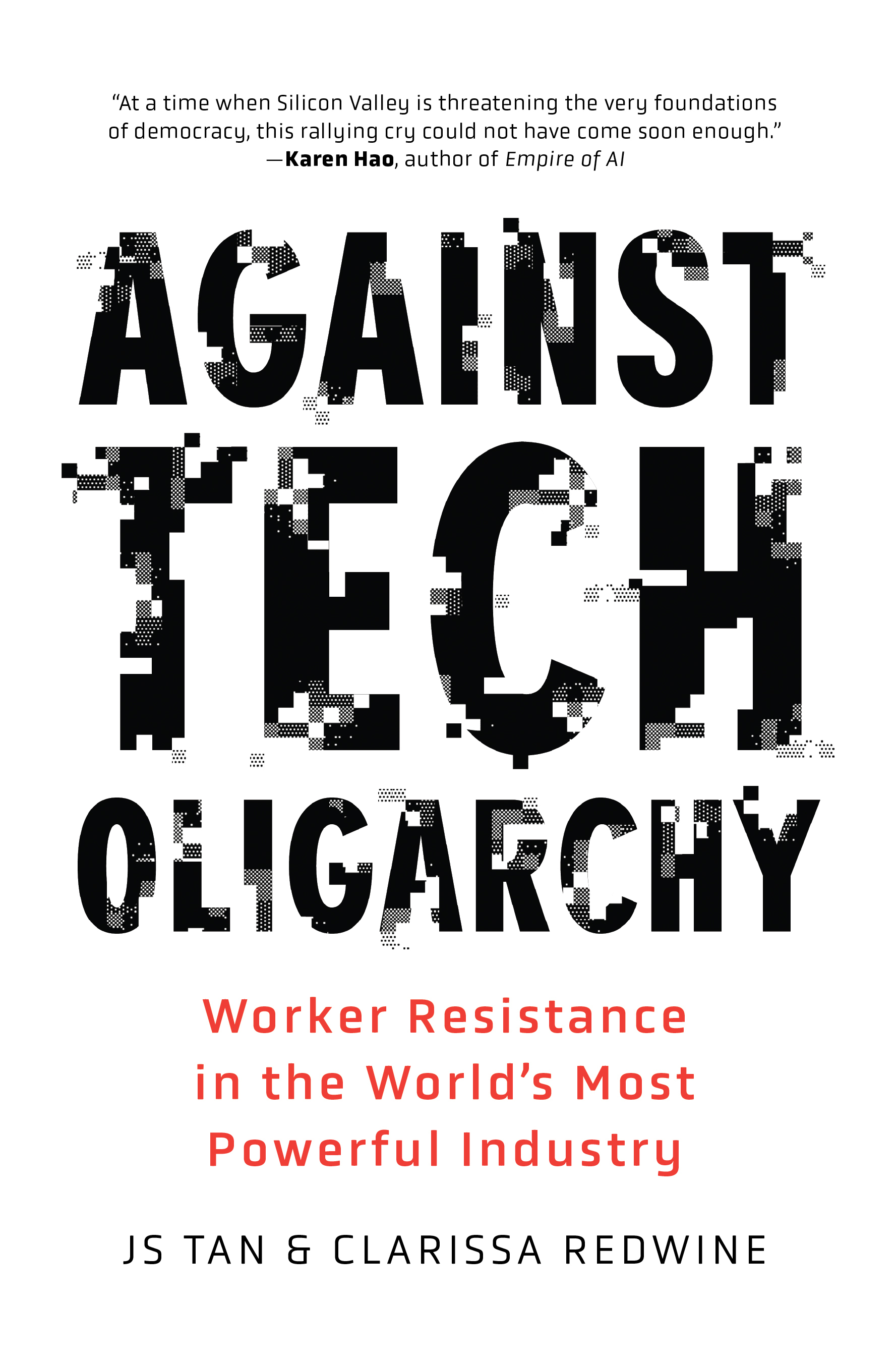
In a new book titled Against Tech Oligarchy: Worker Resistance in the World’s Most Powerful Industry, published by Haymarket Books, longtime tech organizers Clarissa Redwine and JS Tan chronicle the rise of the tech worker movement, its early victories, and the challenges it faces as tech titans consolidate economic and political power while workers face mass layoffs.
democracynow.org reported that the book draws on the authors’ own experiences organizing at high-tech companies. Clarissa Redwine helped unionize Kickstarter, where she was fired during a union-busting campaign before workers successfully won union recognition. JS Tan is a former Microsoft software engineer who publicly challenged the company’s work with the Pentagon, ICE, and fossil fuel companies, including cloud and artificial intelligence technologies utilized by Chevron to expand oil extraction.
Tech Industry Unity Eroded as Companies Capitulated
Following Donald Trump’s election in 2016, the tech industry sprang into action to oppose his right-wing agenda, with workers and executives alike joining mass mobilizations against anti-immigrant policies, according to againsttecholigarchy.com. Redwine recalled joining the industry during a moment of high optimism in 2016 when tech management and workers felt aligned against the Trump administration.
That unity eroded as tech companies capitulated to the alt-right. Redwine recounted a moment at Kickstarter when Breitbart published an article criticizing a comic book project titled Always Punch Nazis for allegedly inciting violence. Management decided to cancel the project rather than stand up to the pressure, prompting workers to demand that the project remain on the site.
At Microsoft, JS Tan noted that the company promoted a corporate agenda of sustainability and green technology while simultaneously collaborating with oil and gas companies to intensify drilling operations. After traveling to Kazakhstan and observing how Chevron utilized Microsoft cloud and AI technologies for oil extraction, Tan wrote an essay about the experience and was subsequently pushed out of the company.
Meta Workers Protest AI Surveillance and Data Collection
The release of the book coincides with an industry-wide pivot toward artificial intelligence, increased automation, and workplace surveillance. At Meta, a new initiative collects workers’ mouse movements, keystrokes, and screenshots to train AI models capable of replacing software engineers. Redwine stated that workers discovered management was implementing the data collection in an insecure manner without following proper internal procedures.
In response, Meta workers drafted an open letter that gained thousands of signatures overnight, pushing back against management behind the scenes. Silicon Valley’s image as a worker’s paradise with generous salaries and perks has given way to grinding hours, mass layoffs, and extractive labor practices.
Class Struggle Drives Silicon Valley Political Shifts
The book attributes the shifting politics of Silicon Valley not solely to right-wing ideology or regulatory pressure from the Biden administration, but fundamentally to class struggle. JS Tan explained that the activism of the late 2010s had a progressive backing, with workers fighting against military contracts, Big Oil collaborations, and rampant workplace sexism under the #MeToo movement.
According to haymarketbooks.org, tech executives grew tired of employee dissent, fired organizers, and ultimately embraced Trumpism while eliminating DEI initiatives and cracking down on the industry’s open culture. Recent reporting revealed that tech giants Nvidia and Apple each donated $25 million toward a $330 million fund for a new White House ballroom, with Amazon and Microsoft also contributing.