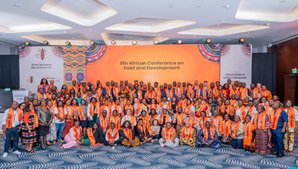
Afrodad Urges Global Financial Reform to Cut African Debt Burden
Low-income African nations are spending up to 14 percent of public revenues on debt servicing, prompting the African Forum on Debt and Development to demand an overhaul of the global financial architecture during the International Monetary Fund and World Bank annual meetings on October 25, 2026.
Debt Costs Surge Despite Declining Totals
Global financial systems continue to squeeze developing economies even as overall indebtedness decreases across the continent. Janet Zhao, executive director of the African Forum on Debt and Development, stated that public resources are increasingly diverted toward creditor payments at the direct expense of domestic health and education budgets. Over the past decade, the average cost of servicing public debt in low-income countries climbed from six percent to fourteen percent of total government revenue. High risk premiums and sluggish restructuring mechanisms drive these escalating costs.

Discussions held during the international financial meetings failed to yield the structural changes required by developing economies. Dr. Yungong Theophilus, policy, advocacy, and research manager at Afrodad, criticized the institutional response from major lenders. He noted that the International Monetary Fund and the World Bank continue to push narrow structural reforms that resemble traditional austerity measures. These policy prescriptions risk shrinking national fiscal space precisely when governments need to protect vulnerable populations.
Afrodad Recommends Binding Safeguards for Social Spending
Afrodad has tabled specific corrective recommendations to protect social expenditures across the region. The organization calls for binding safeguards for social spending, faster debt restructuring timelines for unsustainable liabilities, and the establishment of a United Nations framework convention on sovereign debt. Proponents argue that a UN-backed convention would give borrowing nations a stronger voice in global financial governance.
#Bangkok2026🟢 At the @IMFNews , @WorldBankGroup Annual Meetings, during the @_AfricanUnion side session on "Towards an Effective Debt Resolution Mechanism for Africa", AFRODAD's Executive Director Janet Zhou highlighted the critical role of CSOs in safeguarding social… pic.twitter.com/t50FKXWtgf
Current debt treatment mechanisms face heavy criticism from civil society groups. Catherine Mithia, sovereign debt management policy officer at Afrodad, pointed to the limitations of the Group of Twenty Common Framework, citing its non-binding nature and lengthy negotiation periods. Amid these institutional bottlenecks, developing nations increasingly rely on collective bargaining tools. The organization voiced support for the newly formed Borrowers Platform, which coordinates positions among developing economies, while urging stronger African participation through the African Union.
Advocacy groups look to the United Kingdom’s presidency of the Group of Twenty in 2027 to elevate debt restructuring and sovereign refinancing on the global policy agenda.