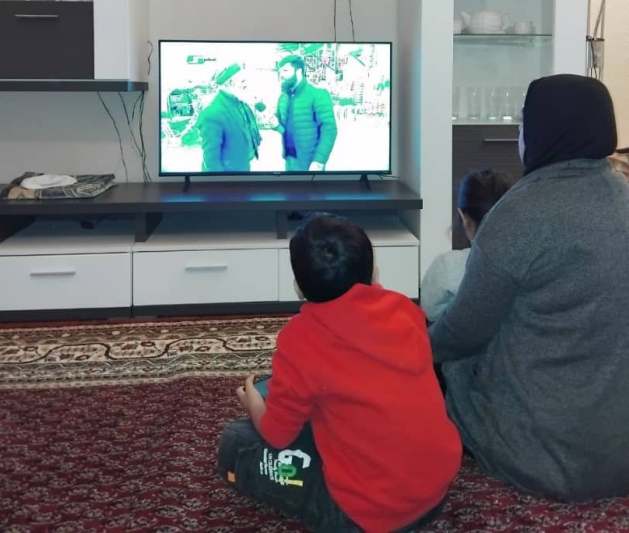
Afghanistan’s Female Journalists Face Total Media Ban Under Taliban Rule: Press Freedom Plummets to Historic Low
Female journalists in Afghanistan face systemic bans on questioning sources or appearing on screen, according to a 2026 report by Reporters Without Borders, which ranks the country 175th in press freedom out of 180 nations. The restrictions, enforced under Taliban governance since 2021, have erased women’s visibility in public discourse, exacerbating global concerns over gender-based censorship.
The Escalation of Censorship in Kabul
Since the Taliban’s takeover of Afghanistan in August 2021, female journalists have been barred from conducting interviews or appearing on television, effectively silencing their voices in national media. A 2026 report by the NGO Afghan Women’s Network confirmed that women working for state-run and independent outlets face immediate termination if they attempt to ask questions during press briefings or appear in broadcast segments. “This is not just a professional restriction—it’s a cultural erasure,” said Dr. Ayesha Karimi, a political analyst based in Kabul. “When women are excluded from public dialogue, the entire society loses a critical perspective.”

The 2026 Press Freedom Index by Reporters Without Borders places Afghanistan below Iran, Syria, China, North Korea, and Eritrea, highlighting the country’s deteriorating media environment. The index measures factors such as self-censorship, legal frameworks, and physical safety for journalists. In Afghanistan, these metrics have collapsed, with 87% of female journalists surveyed by the Afghanistan Journalists’ Association reporting “severe psychological stress” due to the lack of professional opportunities.
Historical Context and Regional Implications
The current restrictions build on pre-2021 policies that already limited women’s roles in journalism. Under the previous Afghan government, women composed 30% of the country’s media workforce, according to the United Nations. However, the Taliban’s resurgence has reversed this progress, with female journalists now confined to non-public roles such as editing or administrative tasks. “This is a regression to the 1990s,” said Dr. Omar Farhad, a historian at the University of Kabul. “The Taliban’s ideology prioritizes male authority in all public spheres, including media.”

The impact extends beyond Afghanistan’s borders. Neighboring countries like Pakistan and Iran have seen increased pressure on female journalists to align with conservative narratives, according to a 2025 study by the South Asian Media Observatory. In Pakistan, for example, female reporters covering political issues report higher rates of harassment, with 62% citing “institutional bias” from male colleagues. The study links this trend to regional ideological shifts.
Expert Analysis and Legal Frameworks
Legal experts in Afghanistan describe the restrictions as a violation of both national and international law. “The Taliban’s policies contravene the Afghan Constitution’s Article 25, which guarantees freedom of expression,” said Naserullah Qazim, a constitutional lawyer based in Herat. “However, the current regime has dismantled judicial oversight, leaving no avenue for legal redress.”
“This is not just a professional restriction—it’s a cultural erasure.”
Dr. Ayesha Karimi, Afghan political analyst
The United Nations has repeatedly condemned the bans, with a 2026 statement from the Office of the High Commissioner for Human Rights (OHCHR) calling for “immediate action to protect women’s rights to participate in public life.” The OHCHR report notes that Afghanistan’s media landscape has become “one of the most restricted in the world,” with female journalists facing “systemic exclusion from all forms of public communication.”
Economic and Social Consequences
The exclusion of women from media roles has broader economic implications. A 2025 World Bank study found that Afghanistan’s media sector lost 40% of its workforce between 2021 and 2026, with female journalists disproportionately affected. “When women are sidelined, the entire economy suffers,” said Dr. Laila Safi, an economist at the Afghanistan Institute of Economic Research. “Media is not just a platform for information—it’s a driver of economic activity and social cohesion.”
The restrictions also hinder international aid efforts. Organizations like the International Committee of the Red Cross (ICRC) rely on local journalists to disseminate information about humanitarian crises. “Without female journalists, we lose a vital link to communities that trust women reporters,” said ICRC spokesperson Maria Gonzalez. The ICRC’s 2026 report on Afghanistan highlights this challenge.
The Role of Global Advocacy
International advocacy groups are pushing for accountability. The Committee to Protect Journalists (CPJ) has called on the Taliban to “repeal all policies that silence women in media.” The CPJ’s 2026 report on gender-based censorship notes that Afghanistan is now “the only country where women are entirely excluded from on-air media roles.”

“The Taliban’s policies contravene the Afghan Constitution’s Article 25, which guarantees freedom of expression.”
Naserullah Qazim, Afghan constitutional lawyer
Locally, women’s rights organizations are adapting to the restrictions. The Afghan Women’s Association (AWA) has shifted focus to digital platforms, where female journalists can operate under pseudonyms. “We’re finding ways to continue our work, but the risks are immense,” said AWA director Fatima Azimi. “Every post we publish could lead to detention or worse.”
Directory Bridge: Supporting Press Freedom and Women’s Rights
The crisis in Afghanistan underscores the need for global and local interventions. Law firms specializing in human