
Afghanistan Earthquake: Humanitarian Response Hampered by Restrictions, Leaving Women Vulnerable
Following a 6.0 magnitude earthquake that struck eastern Afghanistan on August 31st, rescue efforts continue in the remote Kunar province, battling challenging terrain to reach affected communities. The quake, which occurred around midnight, resulted in at least 2,200 deaths as homes collapsed on steep hillsides. Survivors are facing increasingly urgent needs as temperatures begin to fall.
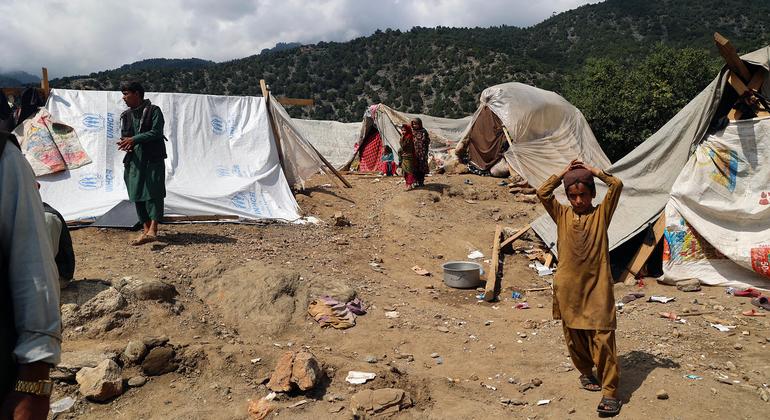
UN Women representative, Alison Ferguson, recently visited women survivors in Chawkay district, Kunar province, finding them living in temporary tent shelters. Thes women described fleeing their villages during the earthquake,walking for hours to find safety,and suffering devastating losses – relatives,homes,and livelihoods. One woman poignantly stated, “now we have nothing.”
the humanitarian response is considerably complicated by a recent ban imposed by the Taliban leadership, effective September 5th, prohibiting Afghan women staff and contractors from entering UN compounds in Kabul. While this ban restricts the ability of UN Women staff to work from the office, women are still able to operate in the earthquake-affected areas, a necessity recognized by authorities.
The earthquake disproportionately impacted women and girls, who comprised over half of those killed and injured, and account for 60% of those currently missing. Manny survivors are currently living in tents or exposed to the elements.
Cultural sensitivities are also presenting challenges. Reports from health workers and survivors indicate that in some areas, both men and women are hesitant about physical contact during rescue and medical assistance due to deeply held cultural norms.This underscores the critical need for female healthcare providers.
Beyond immediate shelter and medical needs, the destruction of infrastructure has increased the risk of violence against women and girls.Longer journeys to access essential resources like bathrooms and water expose them to increased dangers, including the threat of violence and landmines. Ferguson emphasized that these women already faced notable daily challenges, and the earthquake has exponentially worsened their situation, making it harder to provide for their families and secure safe shelter.
Analysis by the UN Progress Program (UNDP) reveals the scale of the destruction: over 649,000 tonnes of debris - equivalent to 40,500 truckloads – require clearing. The UNDP estimates at least 23,000 people have been displaced from their homes.
