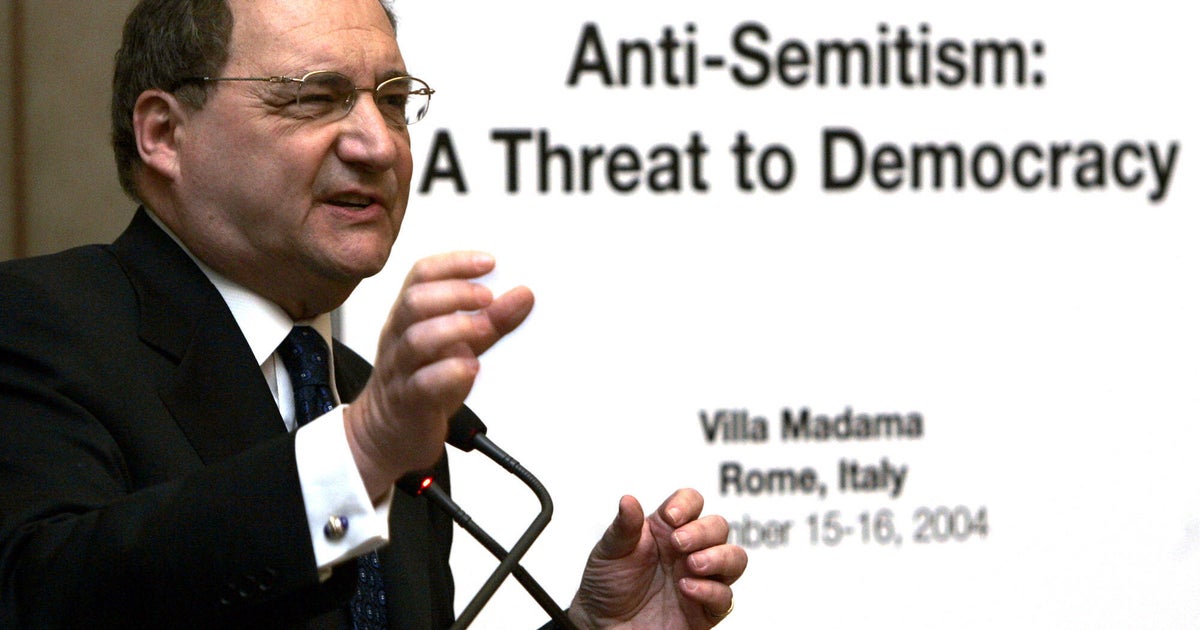
ADL Mourns Death of Longtime National Director Abraham Foxman
Abraham H. Foxman, the Holocaust survivor who became America’s most prominent voice against antisemitism as the Anti-Defamation League’s national director for nearly three decades, has died at 86. His passing leaves a void in the fight against hate, marking the end of an era for civil rights advocacy and Jewish leadership in the U.S. Foxman’s legacy—rooted in his childhood as a hidden child during the Holocaust—will shape how future generations confront extremism, both domestically, and globally.
The Man Who Defined a Movement
Foxman’s life was a study in resilience and moral urgency. Born in 1940 in Poland, he survived the Holocaust hidden by a Catholic nanny who baptized him to evade Nazi persecution. Reunited with his parents after the war, he emigrated to the U.S. And joined the Anti-Defamation League (ADL) in 1965, rising to national director in 1987—a role he held until his retirement in 2015. Under his leadership, the ADL became a global force in monitoring hate groups, lobbying for civil rights, and shaping policy on antisemitism, Islamophobia, and extremism.
“Abe Foxman helped build the modern liberal era of America. He was a voice of the generation rebuilding in the shadow of the Shoah, and a tireless advisor to presidents and world leaders.”
His influence extended beyond advocacy. Foxman was a frequent commentator on Fox News and MSNBC, a trusted advisor to U.S. Presidents from Reagan to Obama, and a global ambassador for Jewish rights. His death on May 10, 2026, was announced by the ADL without details on the circumstances, but his absence will be felt in boardrooms, legislatures, and grassroots movements alike.
The Problem: A Leadership Void in the Fight Against Hate
Foxman’s retirement in 2015 didn’t diminish his impact—if anything, his post-ADL career as a public intellectual amplified his reach. But his death exposes a critical gap: Who will now fill the role of unifying voice against antisemitism in an era of rising far-right movements, online hate, and geopolitical tensions? The ADL, under current CEO Jonathan Greenblatt, faces the immediate challenge of maintaining Foxman’s legacy while navigating a landscape where antisemitic incidents have surged by over 38% since 2017, according to their own data.
Regional disparities further complicate the picture. Cities like New York, Los Angeles, and Miami—historical hubs for Jewish communities—are now grappling with localized spikes in hate crimes. In New York alone, antisemitic incidents rose by 22% in 2025, prompting municipal officials to reexamine public safety strategies. Meanwhile, smaller cities with growing far-right networks lack the resources to combat organized hate.
“The loss of Abe Foxman is a reminder that leadership against hate isn’t just about policy—it’s about moral courage. Communities need local partners to step up, whether that’s legal aid for victims or media literacy programs to counter disinformation.”
Geopolitical and Domestic Ripples
Foxman’s death coincides with a broader reckoning on extremism. The U.S. Congress is currently debating the Combating Antisemitism Act, a bill aimed at standardizing hate crime reporting and funding counterextremism programs. Without a unifying figure like Foxman, the bill’s passage faces uncertainty. Internationally, his absence weakens the ADL’s diplomatic efforts, particularly in Europe, where far-right parties are gaining traction.
Economically, the impact is less direct but no less significant. Jewish-owned businesses, particularly in finance and tech, have long been targets of boycotts and cyberattacks. The FBI’s 2025 Hate Crime Statistics highlight a 15% increase in attacks on religious institutions, disproportionately affecting Jewish synagogues and community centers. For these entities, the loss of Foxman’s high-profile advocacy means higher costs for security and legal defense.
The Solution: Who Steps Up Now?
In the wake of Foxman’s death, three critical sectors are poised to fill the void—but only if they act decisively.
- Civil Rights Organizations: Groups like the nonprofit civil rights sector must expand their hate crime monitoring networks. The ADL’s Center on Extremism has been a gold standard, but local affiliates now need funding and training to replicate its success. Municipalities should prioritize partnerships with civil rights law firms to prosecute hate crimes under enhanced penalties.
- Media and Education: Foxman’s ability to shape public discourse through media was unmatched. Universities and educational nonprofits must invest in Holocaust education and counter-hate rhetoric programs. The U.S. Holocaust Memorial Museum’s “Facing History” initiative is a model, but scaling it requires philanthropic support.
- Corporate Alliances: Tech companies, under pressure to curb online hate, must adopt Foxman’s proactive stance. Platforms like Meta and X have faced criticism for gradual responses to antisemitic content. Corporate ESG (Environmental, Social, Governance) consultants can help businesses align their diversity initiatives with counter-hate strategies, ensuring compliance with emerging regulations.
A Legacy of Unfinished Work
Foxman’s final years were marked by warnings about the “normalization of antisemitism.” His death forces a reckoning: Has his generation’s fight been institutionalized enough to survive him? The answer lies in the actions of today’s leaders. For communities, businesses, and policymakers, the time to act is now.
To explore verified professionals and organizations equipped to address the challenges ahead, visit our Global Directory. Whether you need legal counsel for hate crime cases, media training for counter-hate campaigns, or security assessments for at-risk institutions, the resources are available—but the urgency is undeniable.
Abe Foxman once said, “Hate doesn’t go away unless someone stands up to it.” In his absence, the question remains: Who will stand?