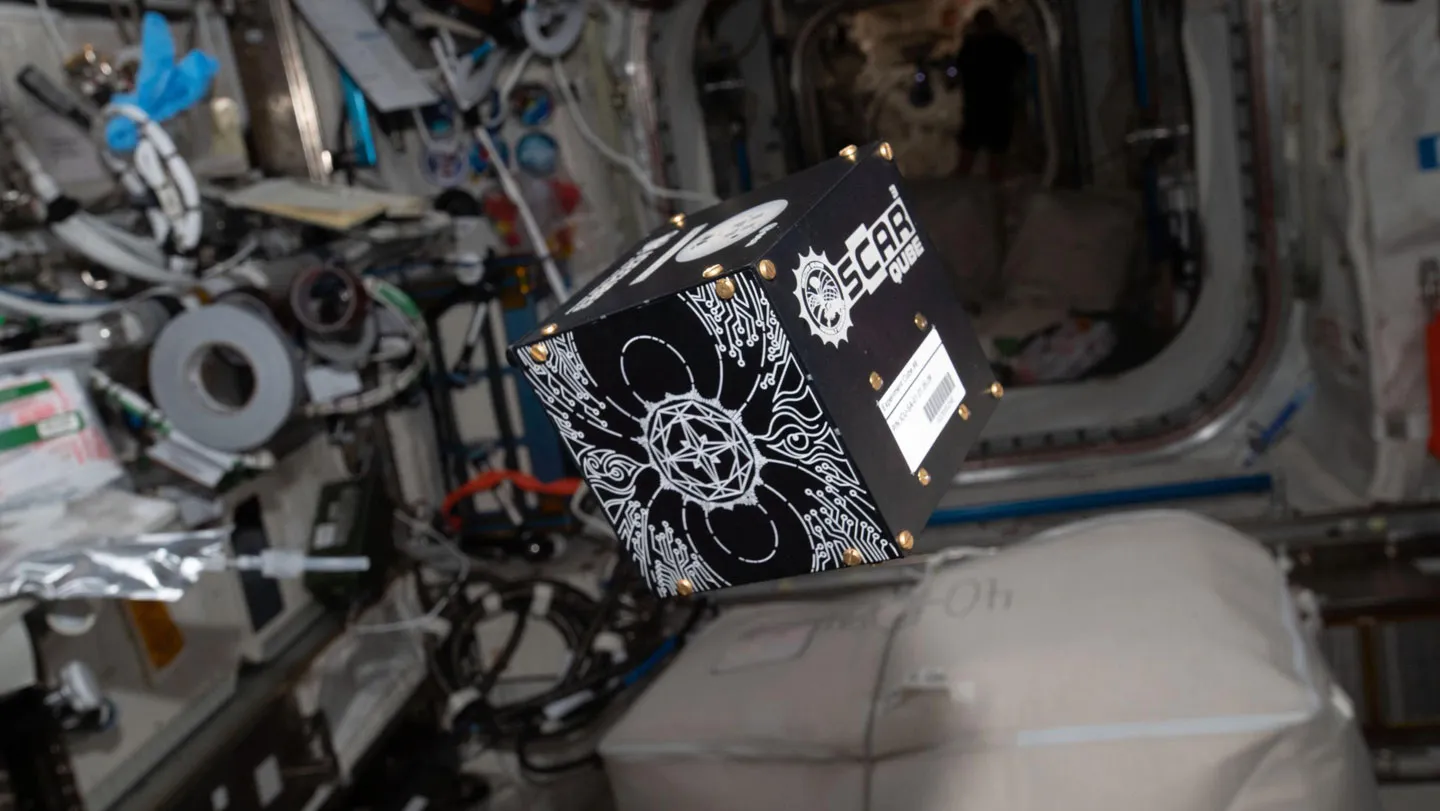
A grapefruit-sized quantum device mapped Earth’s magnetic field from space
The deployment of the OSCAR-QUBE on the International Space Station marks a pivotal shift in our ability to measure the invisible forces shaping our planet. By utilizing a diamond-based quantum sensor to map Earth’s magnetic field, researchers have demonstrated that extreme precision no longer requires extreme bulk, opening a gateway for high-sensitivity sensing in environments previously deemed inaccessible.
Key Clinical Takeaways:
- The OSCAR-QUBE device, measuring only 10 centimeters per side, successfully mapped Earth’s magnetic field using a quantum sensor based on diamond lattice defects.
- The technology utilizes nitrogen-vacancy centers in diamonds, where laser light and microwaves detect energy level shifts caused by magnetic variations.
- This breakthrough in miniaturized, stable quantum magnetometry has direct implications for non-invasive medical diagnostics, specifically in mapping biomagnetic fields in the human brain and heart.
For decades, the gold standard for space-based magnetic measurements has relied on bulky satellites, which, while effective, are costly to launch and rigid in their deployment. The clinical gap here is not merely one of aerospace engineering, but of sensitivity and scale. In the medical realm, the same limitation has plagued biomagnetic imaging. Technologies such as Magnetoencephalography (MEG) typically require massive, liquid-helium-cooled superconducting sensors to detect the faint magnetic signals produced by neural activity. The success of the OSCAR-QUBE suggests a future where the “bulky satellite” equivalent in the clinic—the massive MEG scanner—could be replaced by compact, room-temperature quantum sensors.
The Quantum Mechanism: Engineering the Perfect Imperfection
At the heart of the OSCAR-QUBE is a lentil-sized piece of diamond. While diamonds are prized for their purity, this sensor relies on specific, engineered defects within the carbon lattice. In these defects, a carbon atom is missing and is replaced by a neighboring nitrogen atom. These nitrogen-vacancy centers act as quantum particles with energy levels similar to those of a single atom.
The sensing process is a masterclass in quantum coherence. When the diamond is hit with a combination of laser light and microwaves, the energy levels of these defects shift in response to the surrounding magnetic field. By measuring the light emitted during this process, researchers can detect minute variations in magnetic strength. This method allows the device to capture data on the molten outer core of the Earth, crustal rocks, and the influence of ocean tides and space weather with a stability that traditional sensors struggle to maintain.
“Earth’s magnetic field is actually very fascinating to measure, because it contains a lot of information,” says Jaroslav Hruby of Hasselt University in Belgium, one of the lead researchers on the project.
According to the study published May 7, 2026, in Physical Review Applied, the device performed consistently over a 10-month data collection period across 2021 and 2022. The measurements aligned with previous estimates of the magnetic field, proving that a grapefruit-sized device could achieve the same reliability as its much larger predecessors.
Translating Orbital Success to Clinical Diagnostics
The transition from mapping a planet to mapping a patient is a matter of scale and signal-to-noise ratio. The human body generates its own subtle magnetic fields—biomagnetism—which are indicators of physiological health and dysfunction. The pathogenesis of many neurological disorders, including epilepsy and certain neurodegenerative diseases, is often hidden in the timing and location of these magnetic pulses.
Current standard-of-care diagnostics often rely on electrical signals (EEG), which can be distorted by the skull’s thickness. Magnetic fields, however, pass through biological tissue virtually unimpeded. By applying the nitrogen-vacancy center technology used in the OSCAR-QUBE, clinicians could theoretically develop wearable “quantum caps” that map brain activity in real-time without the need for cryogenic cooling. This would drastically reduce diagnostic latency and improve the spatial resolution of neural mapping.
For patients experiencing complex neurological symptoms or those requiring precise localization of epileptic foci, the current limitations of EEG can be a significant hurdle. To ensure the highest standard of care during this transitional period of diagnostic technology, it is essential to consult with board-certified neurologists who specialize in advanced neuro-imaging and electrophysiology.
The Impact on Cardiovascular Monitoring
The implications extend beyond the brain to the heart. Magnetocardiography (MCG) measures the magnetic fields produced by the electrical activity of the heart. Like MEG, MCG is currently limited by the size and cost of the equipment. A miniaturized quantum sensor, similar to the one developed by the Hasselt University team, could allow for more frequent, non-invasive monitoring of cardiac arrhythmias and ischemic heart disease.
The ability to detect these minute fluctuations without the need for invasive electrodes reduces the risk of infection and patient discomfort, shifting the diagnostic paradigm from reactive to proactive. This represents particularly critical for patients with high cardiovascular morbidity who require continuous monitoring but cannot tolerate invasive implants. Patients seeking the most advanced non-invasive cardiac screenings should engage with specialized cardiology centers that are integrating high-sensitivity diagnostic tools into their protocols.
Navigating the Path to Clinical Integration
While the OSCAR-QUBE has proven its efficacy in the vacuum of space, the path to bedside application involves navigating rigorous regulatory hurdles. The transition from a physics experiment to a medical device requires extensive validation of signal stability in noisy clinical environments. However, the stability demonstrated over the 10-month ISS mission provides a strong foundation for this transition.
From a B2B perspective, the shift toward quantum sensing will require a complete overhaul of diagnostic infrastructure. Healthcare facilities will need to upgrade their shielding and data processing capabilities to handle the high-resolution data streams generated by quantum magnetometers. As these technologies move toward FDA and EMA approval, medical facility administrators are increasingly retaining healthcare compliance attorneys to ensure that the adoption of these emerging diagnostic tools meets stringent patient privacy and safety standards.
The success of the OSCAR-QUBE is a reminder that the most profound medical breakthroughs often originate far from the clinic. By mastering the “imperfect” diamond, we are gaining the tools to see the invisible, whether that is the churning core of our planet or the silent electrical storms of the human mind. As we refine these quantum sensors, the boundary between complex physics and practical medicine will continue to dissolve, leading to a new era of precision diagnostics.
Disclaimer: The information provided in this article is for educational and scientific communication purposes only and does not constitute medical advice. Always consult with a qualified healthcare provider regarding any medical condition, diagnosis, or treatment plan.