
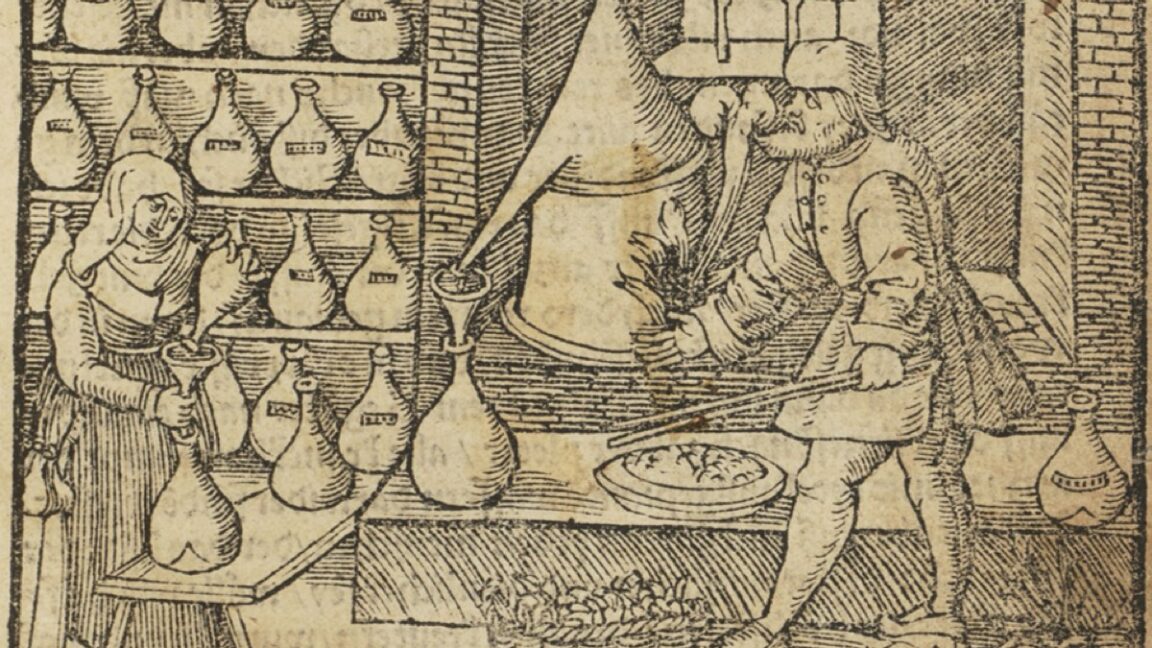
Proteomic analysis of Renaissance-era medical manuscripts has revealed a surprising array of ingredients used in remedies, including human feces, lizard components and traces of hippopotamus, according to research published in the American Historical Review in 2025.
The study, led by Dr. Susanna Hanss, involved the chemical analysis of recipes found within the pages of these historical texts. Researchers identified remnants of commonly used ingredients like beech, watercress, and rosemary, particularly near prescriptions for hair loss – a condition at the time believed to stem from an “overheated brain.” More startlingly, traces of cabbage, radish oil, chicory, lizards, and human feces were also detected. The manuscripts also contained recipes for hair dyes, with analysis revealing traces of plants bearing vibrant yellow flowers, aligning with the period’s belief in mirroring desired outcomes in treatments.
Perhaps the most unexpected finding was the detection of collagen peptides originating from hippopotamus teeth or bone. This suggests a far-reaching trade network capable of delivering exotic ingredients across considerable distances during the 16th century. Historical texts indicate hippo teeth were employed to treat kidney stones, alleviate toothache, and even serve as a base for dentures.
Beyond identifying ingredients, the analysis also provided insights into the biological effects of these remedies. The presence of proteins with antimicrobial properties, such as dermcidin – a peptide derived from human sweat glands known to combat E. Coli and yeast infections – suggests some level of efficacy in certain treatments. Traces of immunoglobulin, lipocalin, and lysozyme indicate that the body mounted an immune response to these concoctions, offering a glimpse into how Renaissance individuals physiologically reacted to these medical interventions.
Dr. Hanss expressed enthusiasm about the initial results, indicating plans to expand the research to encompass a broader range of medical manuals. She also highlighted the necessitate for refined dating methodologies to further contextualize the findings. “The ingredients for success are there,” Dr. Hanss stated. “It’s not only that we found new answers to ancient questions, but we are now in a position to ask completely new questions.”
Recent reporting by Smithsonian Magazine highlighted similar investigations into the chemical clues left behind by Renaissance readers, focusing on the unusual ingredients found within medical manuals. A report from Ars Technica detailed the scientific analysis of Renaissance recipes, emphasizing the insights gained from proteomics. Further research, as reported by Futura, Le média qui explore le monde, has revealed the specific potions readers were actually creating, adding another layer to our understanding of historical medical practices. The Conversation also published findings on haircare books from the Renaissance, revealing similar traces of ingredients, and practices.
