
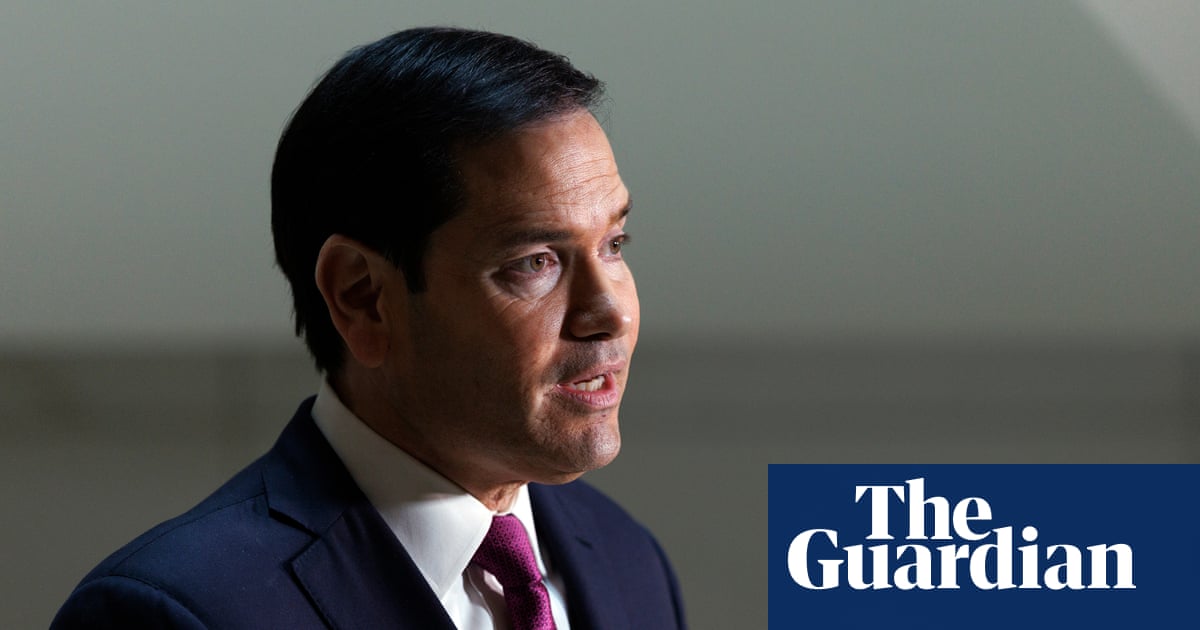
WASHINGTON — Secretary of State Marco Rubio asserted that Israel’s anticipated military action against Iran, and the certainty of retaliatory strikes targeting U.S. Troops, compelled the Trump administration to launch pre-emptive strikes, offering a new justification for the escalating conflict. The explanation followed a closed-door briefing Monday evening for members of Congress, the first since the U.S. Air campaign began over the weekend.
Rubio, alongside CIA Director John Ratcliffe and Chairman of the Joint Chiefs of Staff Dan Caine, addressed lawmakers on Capitol Hill ahead of a planned vote later this week on a war powers resolution. The resolution aims to force President Trump to halt hostilities against Iran. “It was abundantly clear that if Iran came under attack by anyone – the United States or Israel or anyone – they were going to respond, and respond against the United States,” Rubio told reporters. “We knew that there was going to be an Israeli action. We knew that that would precipitate an attack against American forces, and we knew that if we didn’t pre-emptively go after them before they launched those attacks, we would suffer higher casualties.”
JD Vance, speaking on Fox News, stated the U.S. Objective was to prevent Iran from acquiring a nuclear weapon. “The president wants to make it clear to the Iranians and to the world that he is not going to rest until he accomplishes that all-important objective of ensuring that Iran can’t have a nuclear weapon,” Vance said.
Since the commencement of the conflict, the United States and Israel have conducted multiple airstrikes across Iran, prompting retaliatory drone and missile attacks by Tehran against U.S.-aligned nations in the Middle East. The air campaign has resulted in the deaths of several high-ranking Iranian military and political figures, including Supreme Leader Ayatollah Ali Khamenei. The U.S. Military has confirmed the deaths of six service members, while the Iranian Red Crescent Society reports over 500 fatalities within Iran.
Reactions to the administration’s rationale were largely divided along party lines. Republicans largely defended Trump’s actions, while Democrats criticized what they characterized as an unnecessary conflict lacking clear objectives. Senate Minority Leader Chuck Schumer, before attending the briefing, described the war as “Trump’s war. What we have is a war of choice. He has no strategy, he has no endgame.” Emerging from the briefing, Schumer stated that the information provided was “completely and totally insufficient” and “raised many more questions than it answered.”
Senator Mark Warner, the Democratic vice-chair of the Senate intelligence committee, expressed concern over the implications of the U.S. Appearing to allow Israel to instigate a new war. “There was no imminent threat to the United States of America by the Iranians. There was a threat to Israel. If we equate a threat to Israel as the equivalent of an imminent threat to the United States, then we are in uncharted territory,” Warner said.
Israeli Prime Minister Benjamin Netanyahu, in an interview with Fox News, claimed Iran was constructing new underground facilities intended to shield its ballistic missile and nuclear programs. “If no action was taken now, no action could be taken in the future,” Netanyahu stated. Iran continues to deny seeking a nuclear weapon.
President Trump, in recent interviews, has articulated various goals for the war, including the destruction of Iran’s ballistic missile capabilities and navy, preventing the development of a nuclear weapon, and disrupting Tehran’s support for proxy forces throughout the Middle East. Rubio, however, limited the stated goals to destroying Iran’s ballistic missile capability and navy.
Following the briefing, Warner questioned the clarity of Trump’s overall objective. “I think the president needs to arrive before the Congress, for that matter, the American people, and decide amongst these four or five goals that have been laid out, what is the real goal? What is the objective? What is our exit plan? What obligation do we have now to the Iranian people if they do rise up, based upon his call for them to go to the streets? And what is the imminent threat to the United States’s interest to cause this conflict?”
House Speaker Mike Johnson, a Republican and close ally of Trump, defended the president’s actions as a “defensive operation.” “Israel was determined to act in their own defense here, with or without American support. Why? Because Israel faced what they deem to be an existential threat,” Johnson said. He also welcomed the death of Ayatollah Ali Khamenei, stating it was “a great development for freedom loving people around the world.” Johnson indicated that lawmakers may soon be asked to approve additional defense funding due to the war.
Trump initiated the attack on Iran without seeking prior congressional approval, though Rubio noted that the “Gang of Eight” – comprising the Democratic and Republican leaders in both chambers, along with the top lawmakers from the House and Senate intelligence committees – were informed before the attack commenced.
The House is scheduled to vote later this week on the war powers resolution, which, if passed, would require Trump to complete hostilities against Iran. However, its passage is considered unlikely, given Republican control of both chambers and their general reluctance to oppose Trump. Johnson expressed confidence that the resolution would be defeated, stating that restricting the president’s authority “is a frightening prospect to me. It’s dangerous.”
