
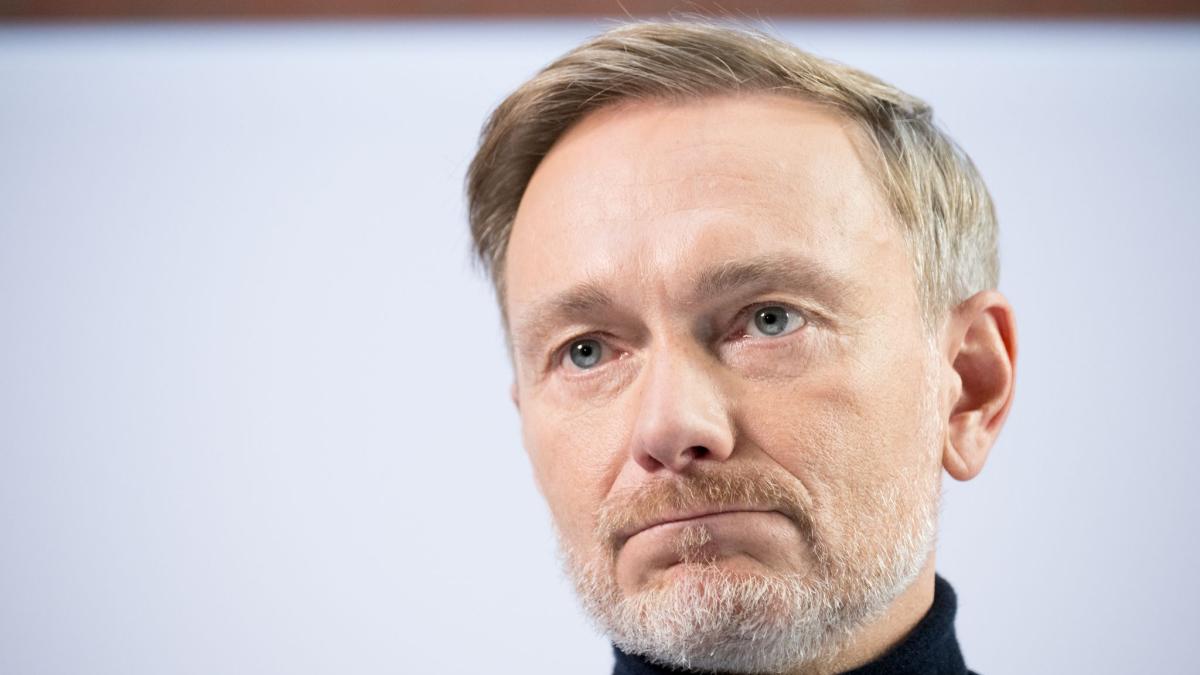
Christian Lindner, the former German Finance Minister, is navigating a new chapter, leading the sales and digital divisions of Autoland AG, a major automotive retailer. The shift comes after nearly two decades in politics, culminating in his role as head of the Free Democratic Party (FDP) and a key figure in the country’s governing coalition.
Lindner, 47, became a father in April 2025, a development he says fundamentally altered his perspective. “You are no longer a consumer of your life chances once you have children,” he told “Bunte” magazine, adding that questions of purpose no longer occupy his thoughts. The arrival of his daughter with journalist Franca Lehfeldt prompted a reassessment of priorities, though not a complete severing of ties with a demanding professional life.
While acknowledging the challenges of balancing a full-time career with parenthood – both he and Lehfeldt are fully employed – Lindner emphasized their commitment to shared responsibility. “We are both trying to take care of our daughter to the same extent,” he said. However, he conceded that achieving a seamless balance is “not always smooth, not always conflict-free.”
The transition to the private sector has offered a different dynamic than his years in government. “In a company, if the owner approves the decision, action can be taken,” Lindner explained, contrasting this with the consensus-building required in coalition politics. He highlighted his success in conceptualizing the “Altersvorsorgedepot” (retirement savings plan) during his time as Finance Minister and implementing tax relief measures, but acknowledged the inherent compromises of political office.
Lindner’s new role at Autoland AG, described as “Ikea for cars” – offering a wide selection of vehicles at discounted prices – represents a significant departure from his political career. The company, founded by Wilfried Wilhelm Anclam, aims to expand westward and strengthen its online presence, currently operating 30 brands with 15,000 vehicles in stock. Lindner’s mandate is to orchestrate this growth, with a goal of doubling revenue to two billion euros.
Despite concerns about the health of the German automotive industry, Lindner remains optimistic, pointing to Autoland’s diversified brand portfolio and its focus on customer demand. He argued that the company’s success lies in offering affordable mobility, a principle he championed during his time in the FDP. He also noted the automotive market’s substantial size, exceeding 200 billion euros in annual turnover.
Lindner also weighed in on the ongoing debate surrounding the phasing out of internal combustion engines. He recalled facing resistance from German automakers when he advocated for technology neutrality during his time in office, noting their initial preference for an all-electric approach. He maintained his stance that the climate neutrality of vehicles should be assessed holistically, considering the energy source used to power them. He criticized a recent decision by the governing coalition to effectively ban combustion engine vehicles for government fleets by 2030, arguing it was premature.
Regarding government subsidies for electric vehicles, Lindner expressed reservations about past programs, citing instances of vehicles being purchased solely to claim the incentive and then exported. While acknowledging improvements in the current subsidy scheme, he cautioned that it only applies to new vehicles, potentially depressing the resale value of used electric cars. He suggested extending the program to include younger used vehicles to mitigate this effect.
On the topic of potential tariffs on Chinese-made cars, Lindner advocated for maintaining a competitive market, emphasizing the importance of technological innovation. He also pointed out that the competitive pricing of Chinese manufacturers is partly driven by intense competition within their domestic market, a situation he believes may not be sustainable in the long term.
Lindner urged the German government to reduce regulatory burdens on businesses, echoing familiar themes from his political career. He argued that excessive bureaucracy, high energy prices, and a rigid labor market hinder economic growth. He also alluded to a potential parallel with Argentine President Javier Milei, whose ambitious reforms were rewarded with gains for his party in recent elections, suggesting that bold policy changes could be politically viable in Germany.
He was critical of the current governing coalition’s fiscal policies, warning that increasing debt without corresponding economic growth could jeopardize Germany’s credit rating and necessitate tax increases or spending cuts. He also questioned the direction of the Christian Democratic Union (CDU), suggesting a shift towards the left in economic policy and a willingness to accommodate the Social Democratic Party (SPD) at the expense of substantive reform.
Looking ahead to the Baden-Württemberg state election, Lindner acknowledged that the FDP has lost some of its profile within the governing coalition. He expressed confidence that the party’s current leadership can restore its distinct identity, but stopped short of predicting a specific outcome. He indicated that his own political career is likely over, stating that he is content to observe and offer insights when asked, but has no plans to seek public office again.
