
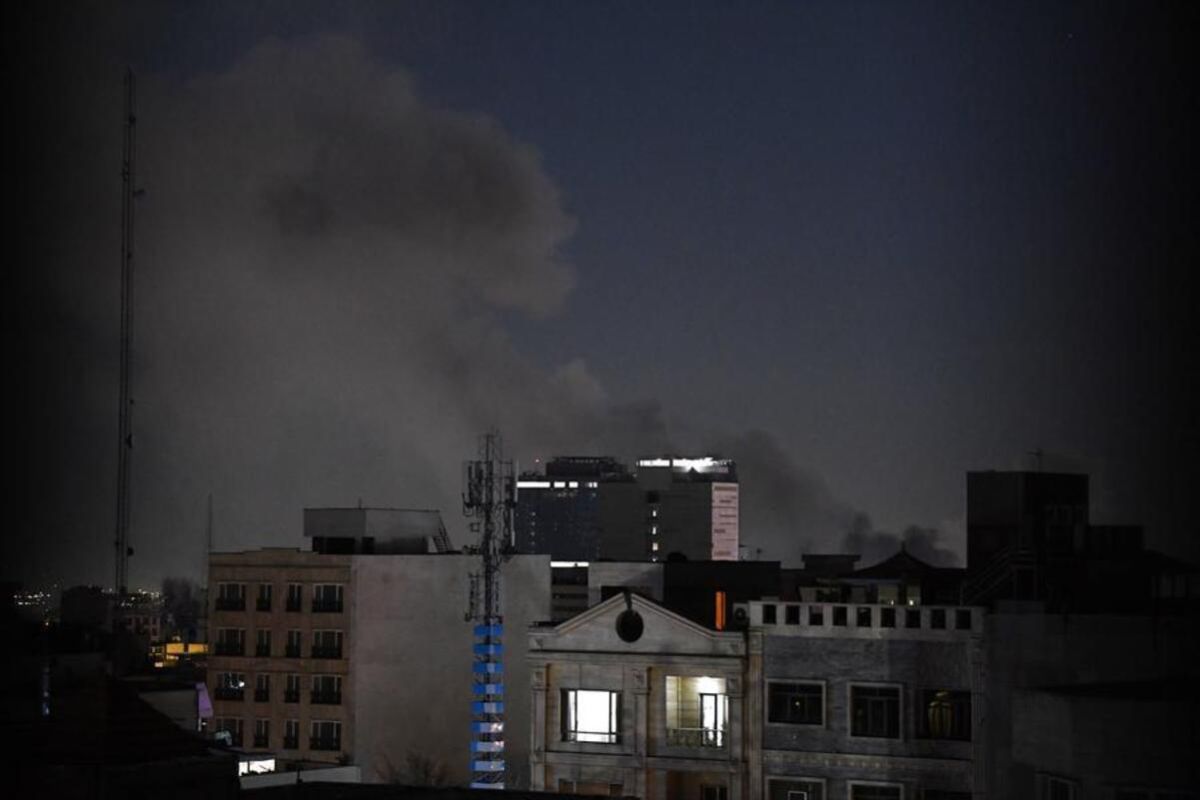
Explosions rocked Tehran early Saturday as the United States and Israel launched a major joint military strike against Iran, triggering a rapid escalation of conflict across the Middle East. The strikes, confirmed by Israel’s Defense Minister Israel Katz, came after weeks of escalating regional tensions and followed assessments by both Washington and Israel that negotiations with Iran were no longer viable.
Initial reports from Xinhua reporters in Tehran indicated explosions in the Iranian capital around 0620 GMT on February 28th. Further strikes were reported in Isfahan, Qom and Kermanshah, with some targeting areas near the office of Supreme Leader Ali Khamenei, according to Iranian media. Israeli media, citing security sources, confirmed the operation was a joint effort with the U.S.
In response, Iran initiated a wave of missile and drone attacks targeting Israel, and U.S. Military installations across the region. Explosions were reported in Bahrain, the United Arab Emirates, Qatar, Saudi Arabia, Kuwait, and Jordan, according to Iranian media reports. The Islamic Revolution Guard Corps (IRGC) announced large-scale retaliatory attacks.
The conflict quickly resulted in significant casualties. Iranian state news agency IRNA reported on Sunday that a strike on a girls’ elementary school in southern Iran had killed 165 people, most of whom were schoolchildren. The Iranian Red Crescent reported a total of 201 deaths and 747 injuries across 24 provinces as of February 28th. The Pentagon confirmed the deaths of three U.S. Troops in the operations against Iran, marking the first American casualties of the conflict.
U.S. President Donald Trump stated that Washington had launched a large-scale campaign to dismantle Iran’s missile industry, naval forces, and nuclear capabilities. An Israeli source indicated the initial phase of the operation would last four days and target senior leadership, including Khamenei. Trump later announced on social media that Khamenei was “dead,” a claim confirmed by Iranian media on March 1st, prompting the declaration of 40 days of national mourning.
Following Khamenei’s death, an interim leadership council was formed, according to Ali Larijani, secretary of Iran’s Supreme National Security Council, with plans to select a new supreme leader. The IRGC claimed to have launched four ballistic missiles at the U.S. Aircraft carrier USS Abraham Lincoln, signaling a “new phase” in its retaliatory strikes. The IRGC also claimed responsibility for striking three oil tankers belonging to the United States and Britain in the Gulf and the Strait of Hormuz, reporting the vessels were on fire.
The Israeli military asserted it had achieved “air superiority in the skies over Tehran” following a wave of airstrikes targeting the Iranian capital. CBS News, citing U.S. Officials, reported that approximately 40 Iranian officials, including Defense Minister Aziz Nasirzadeh and IRGC commander Mohammad Pakpour, were killed in the initial strikes.
The United Nations Security Council held an emergency session on February 28th to address the escalating conflict. UN Secretary-General Antonio Guterres reportedly told the emergency meeting that U.S. And Israeli airstrikes had killed Khamenei, according to the Associated Press. Iran called on the UN to respond to what it described as U.S.-Israeli aggression.
As of March 1st, Ali Larijani, secretary of Iran’s Supreme National Security Council, vowed “we will not negotiate with the United States,” despite President Trump’s assertion that Iranian officials were seeking talks. The situation remains fluid, with no immediate indication of de-escalation and the IRGC claiming its retaliatory strikes had entered a “new phase.”
