
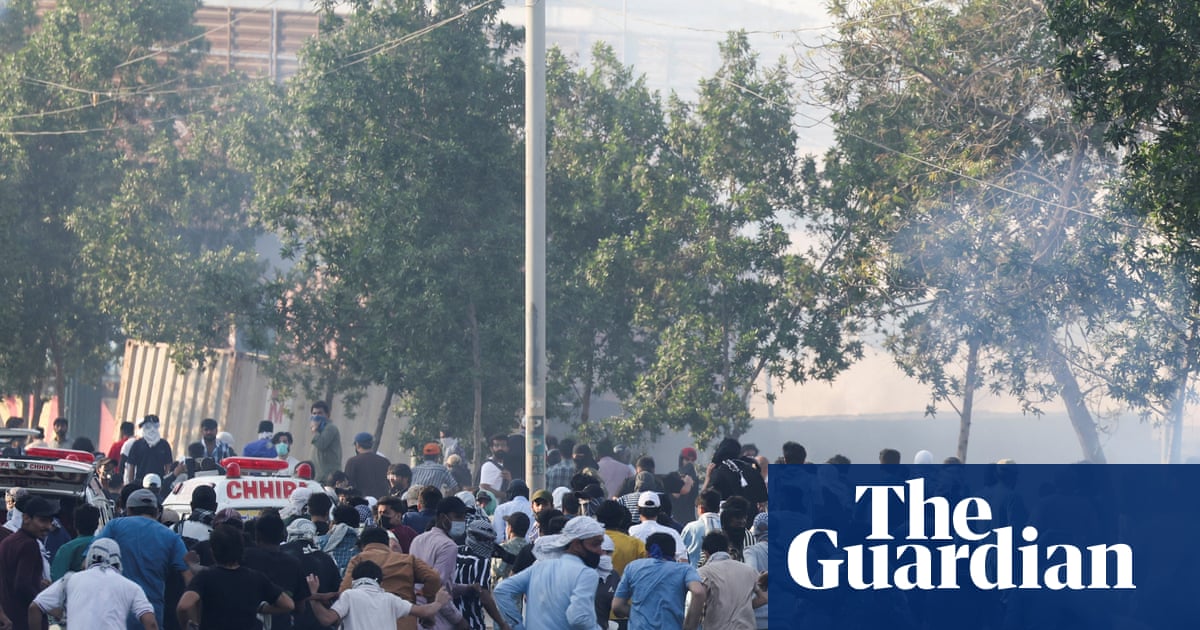
At least 22 people are dead following pro-Iran demonstrations in Pakistan, sparked by the killing of Iran’s Supreme Leader Ayatollah Ali Khamenei in a joint US-Israeli strike. Hundreds of protesters marched on the US consulate in Karachi, with reports of clashes with security forces and attempts to storm the building.
In Karachi, demonstrators chanted against the offensive before entering the reception hall of the US consulate and setting a small fire, according to reports. A video circulating on social media showed a man proclaiming, “The death of the leader has been avenged.” Local medical officials reported ten fatalities and more than 30 injuries resulting from clashes with security forces. Violence connected to the protests also claimed lives elsewhere in Pakistan, with ten deaths reported in Gilgit-Baltistan and two in Islamabad.
The unrest is not confined to Pakistan. In Iraq, security forces deployed tear gas against hundreds of pro-Iran protesters attempting to breach Baghdad’s Green Zone, which houses the US embassy. These demonstrations follow recent US-Israeli strikes targeting Iran-backed armed groups within the country, resulting in casualties.
Ayatollah Ali Khamenei, 86, had served as Iran’s head of state for 36 years, shaping the nation’s security policy and fostering a network of Iranian-backed militias throughout the region. His death has sent shockwaves across the Middle East and the wider Islamic world.
Iran-aligned groups, including Hamas, the Houthis, Iraqi militias and Hezbollah, have issued statements of condolence and solidarity. Naim Qassem, the secretary general of Hezbollah, described Khamenei as “leading the march of jihad and resistance against the tyrannical and oppressive American and Israeli forces, enemies of religion and humanity.” Under Khamenei’s leadership, Iran invested heavily in groups like Hezbollah, creating what it termed an “axis of resistance” to counter US and Israeli influence.
Demonstrations of mourning for Khamenei were also reported in Lebanon, where tens of thousands of Hezbollah supporters and Shia Muslims gathered in the southern suburbs of Beirut, waving Iranian and Hezbollah flags. In Yemen, pro-Houthi media claimed a “million-person march” in support of Iran and commemoration of Khamenei.
The death of Khamenei represents a significant blow to this “axis of resistance,” already weakened by Israeli actions over the past two-and-a-half years. It also follows the death of Hassan Nasrallah, the former leader of Hezbollah, who was killed in an Israeli airstrike in 2024. Both Khamenei and Nasrallah were viewed as key figures in resisting Western influence.
Reactions to Khamenei’s death have been mixed. In Syria, where Iran was a major supporter of Bashar al-Assad’s regime until its overthrow in 2024, some Syrians celebrated the news, honking car horns and chanting revolutionary slogans. Celebrations also occurred privately in Lebanon among opponents of Hezbollah, who feared retaliation.
Official responses from governments across the Middle East have been largely muted, with most foreign ministries refraining from commenting on Khamenei’s death despite the unprecedented nature of the assassination of a sitting head of state by a foreign power. A transcription of a call between the foreign ministers of Oman and Iran on Sunday made no mention of the killing.
