
Oil prices surged and global stock markets faced pressure Monday as escalating tensions in the Middle East following US-Israeli strikes on Iran raised fears of significant economic disruption. Brent crude jumped as much as 13% in early trading, reaching $82 per barrel – a 14-month high – driven by concerns over potential supply disruptions as the Strait of Hormuz, a critical global trade route, faced increasing restrictions.
The Nikkei 225 in Tokyo fell nearly 2.4% as Asian traders reacted to the weekend’s developments, later moderating to a 1.5% decline. Pre-market trading indicated a lower open for Wall Street. The ASX 200 in Sydney initially dropped sharply before partially recovering to trade about 0.4% lower, while the CSI 300 in Shanghai fell 0.6%. Gold, considered a safe-haven asset, rose 2.8% to $5,397.10 per ounce.
While the military strikes continued, former US President Donald Trump suggested the conflict could last for four more weeks, stating that attacks would continue until US objectives were met. Despite a slight pullback from initial highs, Brent crude remained up 4% in early trading.
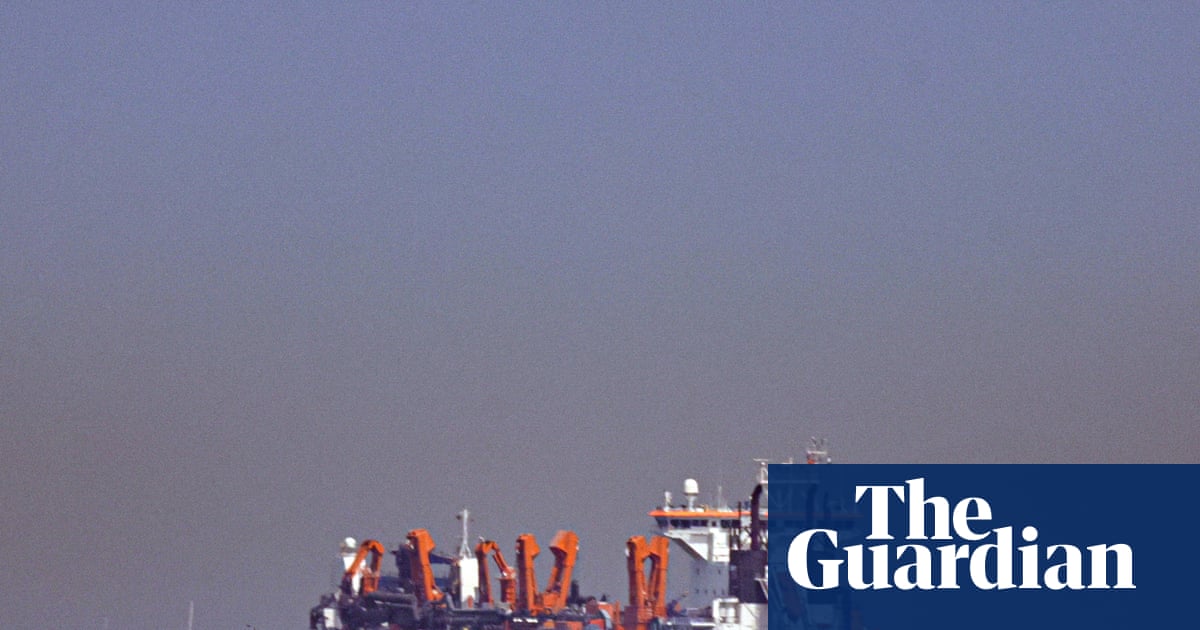
Focus centered on the Strait of Hormuz, through which approximately 20% of the world’s oil supply and seaborne gas tankers pass daily. Within hours of Saturday’s US-Israeli strikes, Iranian Revolutionary Guards reportedly warned tankers in the strait that no ship would be allowed to pass.
Reports from the United Kingdom Maritime Trade Operations (UKMTO), the British maritime security agency, indicated attacks on two ships in the strait – one off Oman and another off the UAE. While Iran has not formally confirmed a blockade of the waterway, marine tracking sites showed a buildup of tankers on either side of the strait, potentially due to safety concerns or difficulties securing insurance for passage.
The International Maritime Organization (IMO) urged ships to avoid the Strait of Hormuz. IMO Secretary-General Arsenio Dominguez expressed deep concern over reports of injuries to seafarers in attacks, stating, “I urge all shipping companies to exercise maximum caution. Where possible, vessels should avoid transiting the affected region until conditions improve.”
Maersk, the global shipping company, announced Sunday it was halting passage through the Strait of Hormuz and the Suez Canal, citing “safety” reasons. The move underscores the growing anxiety surrounding the security of vital shipping lanes.
The Opec+ cartel of producing nations agreed to a modest oil output boost of 206,000 barrels per day for April on Sunday. While, the ability to deliver that increased output remains contingent on secure passage through the Strait of Hormuz. Iran, a significant producer within the cartel, accounts for 4.5% of global oil supplies, meaning any disruption to its shipments could significantly impact the wider market.
Jorge León, head of geopolitical analysis at Rystad Energy, stated, “The most immediate and tangible development affecting oil markets is the effective halt of traffic through the strait of Hormuz, preventing 15m barrels per day of crude oil from reaching markets.” He added, “Unless de-escalation signals emerge swiftly, we expect a significant upward repricing of oil.”
