
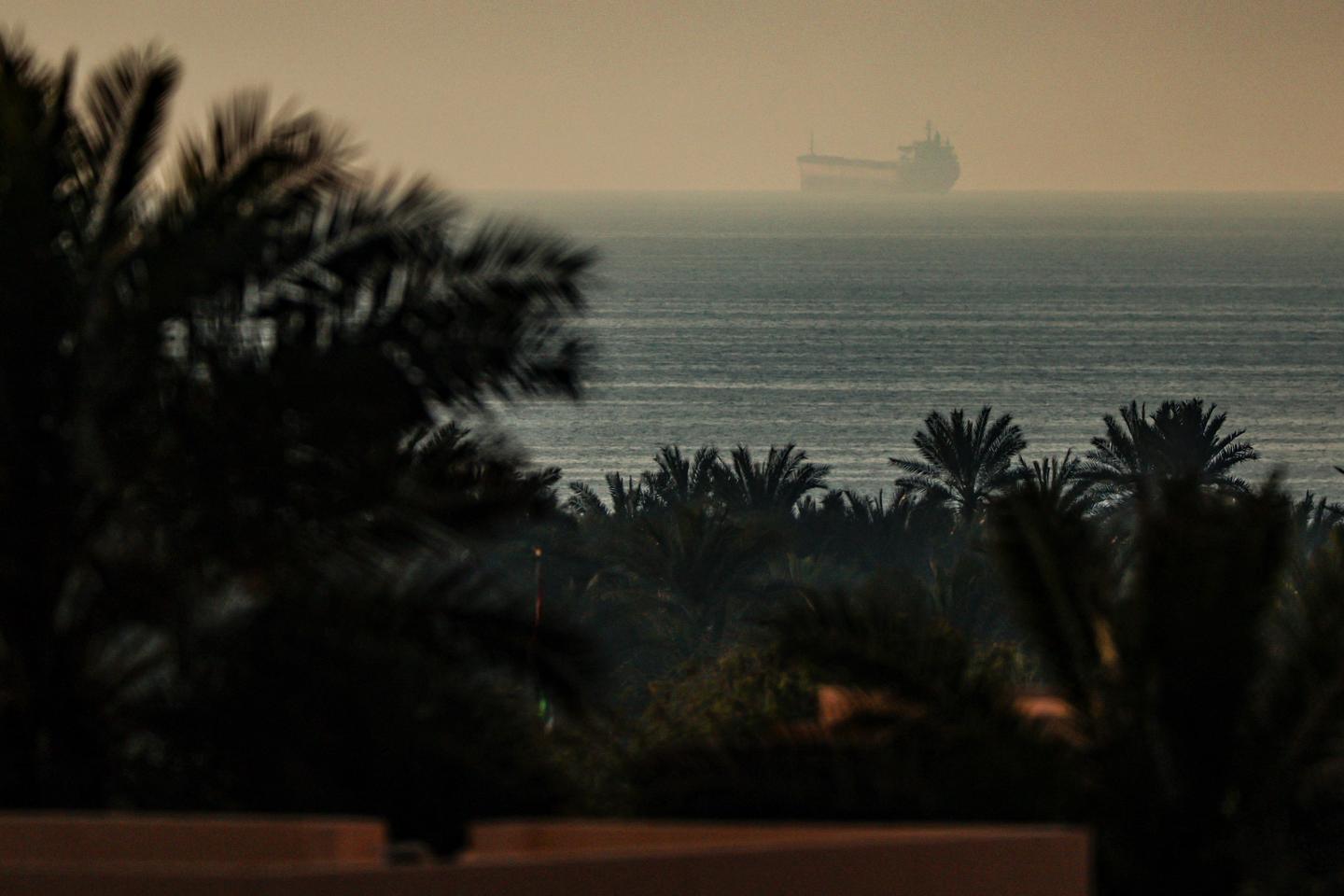
Iran’s Islamic Revolutionary Guard Corps (IRGC) Navy issued a radio warning on Saturday, February 28, 2026, stating that no vessels would be permitted to cross the Strait of Hormuz, a critical waterway for global oil shipments. The announcement followed a joint military operation by the United States and Israel targeting Iranian assets, prompting fears of a significant disruption to energy markets and a potential oil shock.
Whereas Iran has not officially confirmed a full closure of the Strait, multiple tanker owners have already suspended oil and gas shipments as a precautionary measure. According to Reuters, one executive at a major trading desk stated, “Our ships will stay position for several days.” Satellite imagery indicates vessels are congregating near ports such as Fujairah in the United Arab Emirates, awaiting further developments. The U.S. Navy has also cautioned against navigation in the Gulf, Gulf of Oman, North Arabian Sea, and the Strait of Hormuz, citing safety concerns.
The Strait of Hormuz, a narrow passage between Iran and Oman, is a vital chokepoint for global energy supplies. Approximately 20% of the world’s oil, originating from producers including Saudi Arabia, the UAE, Iraq, Kuwait, and Iran, transits through the strait, along with substantial volumes of liquefied natural gas (LNG) from Qatar. Fourteen LNG tankers have already slowed down, altered course, or stopped in and around the Strait, according to consultancy Kpler, potentially impacting Qatari LNG exports.
Oil prices had already been climbing prior to the recent attacks, reaching $73 per barrel of Brent crude – the European benchmark – on Friday, February 27, 2026. Bloomberg forecasts suggest that while the economic damage from oil prices exceeding $100 per barrel would be less severe than in past oil shocks, due in part to increased U.S. Shale production, a prolonged blockade of the Strait of Hormuz could push prices beyond $108 per barrel. This would still fall short of the price tripling experienced during the 1973 oil crisis.
The UK Navy has acknowledged Iran’s orders but stated they are not legally binding, advising vessels to proceed with caution. Greece’s shipping ministry issued an advisory on Saturday urging its vessels to avoid the Persian Gulf, the Gulf of Oman, and the Strait of Hormuz. An official with the European Union’s naval mission, Aspides, confirmed to Reuters that vessels in the area have received VHF transmissions from the IRGC stating “no ship is allowed to pass the Strait of Hormuz.”
Iran has previously issued similar warnings during periods of heightened tension, threatening to block the waterway if faced with attack. The IRGC Navy controls operations in the Gulf and around the Strait, and possesses strategic positions on nearby islands, including Hormuz, Qeshm, and Larak, as well as the disputed Greater Tunb, Lesser Tunb, and Abu Musa, giving it significant control over the region’s waterways.
As of Sunday, March 1, 2026, Iranian officials have not issued a formal announcement confirming the closure of the Strait of Hormuz, and the situation remains fluid.
