
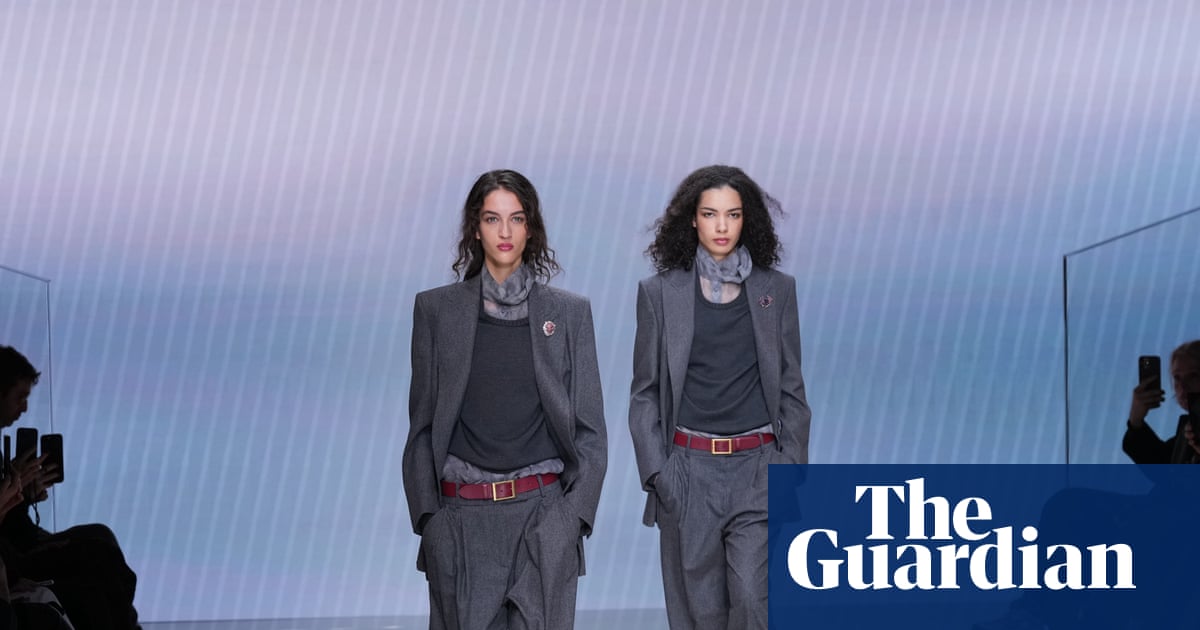
Milan, Italy – Silvana Armani presented her first solo collection for the Giorgio Armani brand on Sunday, marking a significant moment for the fashion house and prompting discussion about the role of gender in design. The Fall/Winter 2026-2027 women’s collection, shown on the final day of Milan Fashion Week, was conceived entirely under Armani’s direction, a departure following decades of creative input from her uncle, the late Giorgio Armani.
The collection emphasized softness and wearability, featuring loose blazers with dropped shoulders, wide-legged trousers, and floor-sweeping coats in a palette of navy, white, khaki, and greige. Notably, Armani opted against the use of hats – a signature element favored by her uncle – and limited the inclusion of skirts. “I design with my own wardrobe in mind,” Armani stated, explaining her focus on simplifying silhouettes for both elegance and practicality. She added that her aim was to create pieces that reflected a woman’s perspective.
This emphasis on a female perspective in design is gaining traction within the industry. Chioma Nnadi, head of editorial content for British Vogue, noted anecdotal evidence suggesting that collections designed by women tend to perform better in retail. “They’re designing for their own bodies,” Nnadi said, adding that “wearability can get lost in the fitting process with male designers.”
The presentation of the Armani collection comes six months after the death of Giorgio Armani, and as the future ownership of the brand remains uncertain. The world’s largest private luxury fashion brand is reportedly for sale, with LVMH, Luxottica, and L’Oréal identified as potential buyers. Silvana Armani, who has worked at the company for 40 years, expressed confidence in the brand’s resilience, describing the company as a “gym” that had prepared her for this moment. “He knew my point of view,” she said of her uncle, suggesting a natural transition had been anticipated.
The Armani show offered a contrast to other presentations during Milan Fashion Week, particularly those from Gucci and Dolce & Gabbana, which featured more revealing designs. Giorgio Armani was known for creating glamorous clothing that prioritized elegance over overt exposure, a sensibility that appears to be continuing under his niece’s direction.
The broader fashion landscape is also witnessing a shift in leadership. The appointment of Louise Trotter as creative director of Bottega Veneta, showcased the day prior, marked another instance of a woman taking the helm of a major fashion house. Trotter’s debut collection focused on size and texture, featuring oversized suits and coats crafted from materials like faux fur and recycled fibreglass. Bottega Veneta has recently gained attention for its accessories, including a large pink handbag carried by actor Jacob Elordi, highlighting the brand’s continued influence.
Despite these appointments, women remain underrepresented in top design positions. More than 20 leadership changes have occurred in fashion over the past year, with the majority of those roles filled by men. Trotter’s appointment at Bottega Veneta, the first female leader in over two decades, and Silvana Armani’s solo debut, signal a potential, though gradual, shift in the industry’s power dynamics. Sales at Bottega Veneta have increased by 1% since Trotter took over in December 2024.
