
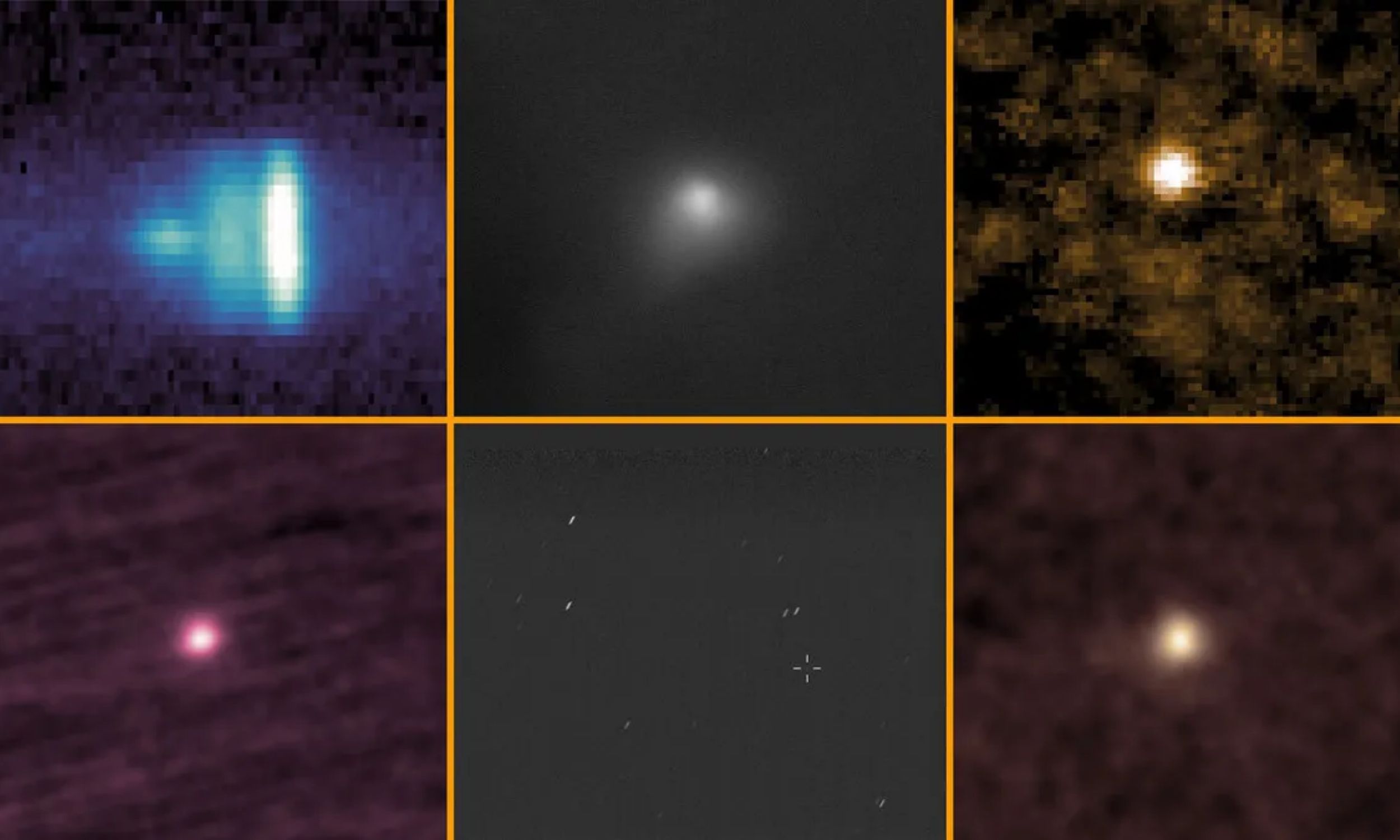
Astronomers have identified Comet C/2025 R3 (PanSTARRS), a newly discovered celestial body that could become visible to the naked eye in April 2026. The comet, first detected in September 2025 by the Pan-STARRS telescope system in Hawaii, is currently being monitored to determine if it will exhibit sufficient brightness for observation without optical aid.
The initial detection came as a faint, glowing blur with a developing tail, prompting official confirmation by the Minor Planet Center on September 8, 2025. Reports indicated the presence of a visible cloud surrounding the comet’s core, with a tail observed in three instances. This early activity is considered a positive indicator, as comets that demonstrate activity early in their journey have a greater potential to brighten significantly as they approach the sun.
Analysis of the comet’s trajectory reveals it is a long-period comet, requiring over 200 years to complete a single orbit around the sun. Its steep orbital path, significantly tilted relative to the planets’ orbital plane, suggests an origin in the Oort cloud – a distant reservoir of icy objects surrounding the solar system. Due to limited observational data, the comet’s complete orbital period could span thousands of years.
Key dates in April 2026 will determine the comet’s visibility. On April 20th, C/2025 R3 will reach perihelion, its closest approach to the sun, at a distance of 47.4 million miles (76.3 million kilometers). Seven days later, on April 27th, it will pass within 44 million miles (70.8 million kilometers) of Earth. However, its proximity to the sun may produce observation challenging, positioning it low on the horizon. A new moon on or around April 17th will provide darker skies, potentially aiding visibility if the comet is favorably positioned.
Current brightness predictions vary considerably, ranging from an apparent magnitude of 8 to 2.5. A magnitude of 8 would require binoculars for observation, while a magnitude of 2.5 would place the comet among the brighter objects visible in the night sky. These estimates are contingent on the amount of dust and gas the comet releases as it approaches the sun, and are subject to change.
As the comet nears the sun, solar heat will cause its icy components to sublimate – transitioning directly from solid to gas – releasing dust and gas that reflect sunlight. This process can create a visible head and tail. However, if the comet’s nucleus cracks or depletes its readily vaporizable ice, the brightening effect could diminish prematurely.
A potential “forward scattering boost” late in April could enhance the comet’s brightness if its tail aligns roughly towards Earth. This phenomenon occurs when dust particles scatter sunlight preferentially in a forward direction, making the tail appear brighter from Earth’s perspective. The timing and positioning of this effect, however, remain uncertain.
In late April, the comet will be located in the constellation Pisces, which lies beneath the Great Square of Pegasus. Observers in the Northern Hemisphere may find it low on the eastern horizon before dawn, while those south of the equator may have a better viewing angle after sunset in early May. Observing plans must account for the comet’s elongation – the angle between it and the sun – which will decrease as it approaches perihelion.
Binoculars are likely to be useful for observing the comet, particularly if its brightness remains near the threshold of naked-eye visibility. A tiny telescope can help distinguish the comet from background stars, but may also narrow the field of view. Sky map apps or charts can assist in locating the comet, and observers should avoid looking directly at the sun.
While some observers have already dubbed C/2025 R3 the “Great Comet of 2026,” the designation remains informal and subject to change. Historical records indicate that many comets initially hailed as “great” ultimately fail to live up to expectations. The comet’s behavior in the coming months will determine whether it earns the title.
Further observations in March and early April are expected to refine brightness estimates, providing a clearer indication of whether C/2025 R3 will become a prominent naked-eye object. The comet’s performance as it interacts with solar heat, geometry, and moonlight will ultimately decide its fate.
