
Researchers have demonstrated the influence of “virtual photons” – particles that don’t technically exist – on the behavior of a superconductor, a finding that could refine understanding of quantum mechanics, though practical applications remain distant. The work, centered on the material boron nitride, reveals how these fleeting electromagnetic fluctuations can degrade superconductivity.
The study doesn’t address the high-profile quest for room-temperature superconductivity, but rather utilizes superconductivity as a sensitive testing ground for fundamental principles of quantum field theory. This theory posits that even seemingly empty space isn’t truly void, but is instead filled with quantum fields capable of generating particles. While some particles, like photons emitted from a laser, are “real” and directly detectable, others are “virtual,” existing only for a fleeting moment as disturbances in these fields.
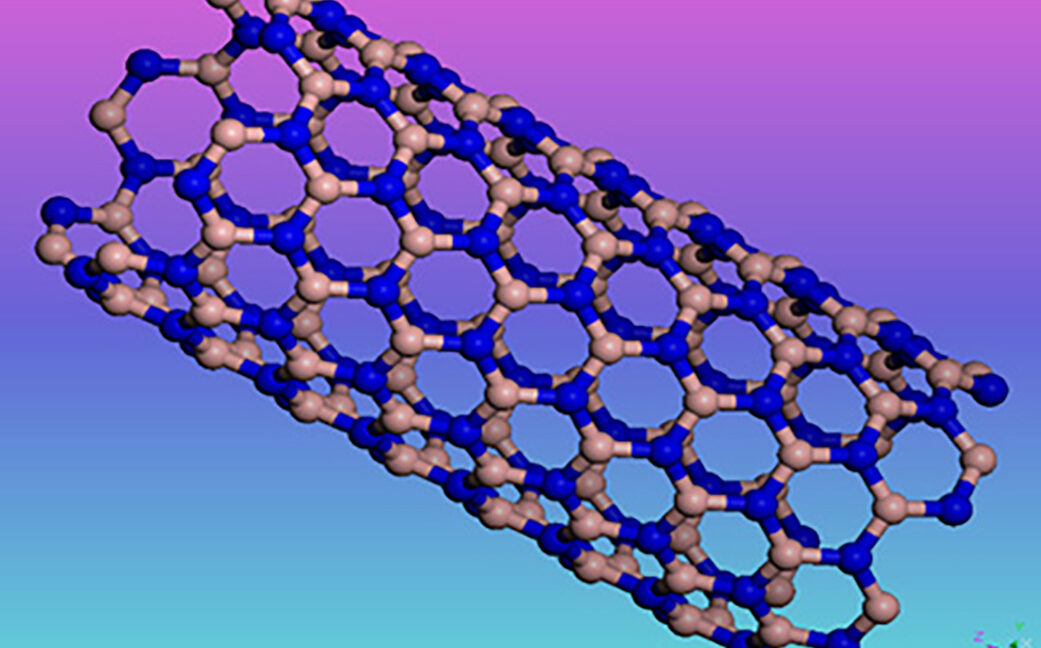
Virtual photons are understood to mediate the electromagnetic force between particles. Though they cannot be directly observed, their effects are measurable. The research team, focusing on boron nitride – a material structurally similar to graphene – created conditions where these virtual photons demonstrably impacted a superconducting state, reducing its effectiveness. Boron nitride’s unique layered structure allows light to propagate within the spaces between its atoms when oriented in a specific direction, a property crucial to the experiment.
The findings, published in February 2026, build on the established understanding of quantum phase transitions, which are typically assumed to be continuous and gradual. Recent research, however, suggests that these transitions can too occur abruptly, a phenomenon known as a first-order quantum breakdown, as reported in Nature. This abrupt shift in superconducting behavior, influenced by virtual photons, provides a new avenue for exploring these transitions.
Scientists at Caltech have recently uncovered a previously unknown superconducting state, offering further insight into the mechanisms that enable superconductivity. Their work, also published in Nature, utilized scanning tunneling microscopy to map the superconducting gap, revealing hidden magnetic order within the material’s “pseudogap” – a region where superconductivity is suppressed. This discovery brings researchers closer to developing high-temperature superconductors, though the connection to the virtual photon research remains indirect.
Superconductivity, the ability of a material to conduct electricity with zero resistance, currently requires extremely low temperatures, limiting its widespread application. The potential for room-temperature superconductivity remains a major goal, promising revolutions in fields like medicine, computing, and energy transmission. However, the latest research emphasizes the fundamental challenges in understanding and controlling the quantum phenomena underlying this property.
The implications of influencing superconductivity with virtual photons are not immediately clear. Researchers acknowledge that further investigation is needed to fully understand the relationship and its potential for practical applications. The work serves as a demonstration of the complex interplay between quantum mechanics and material properties, offering a new tool for probing the boundaries of our understanding of the universe.
