
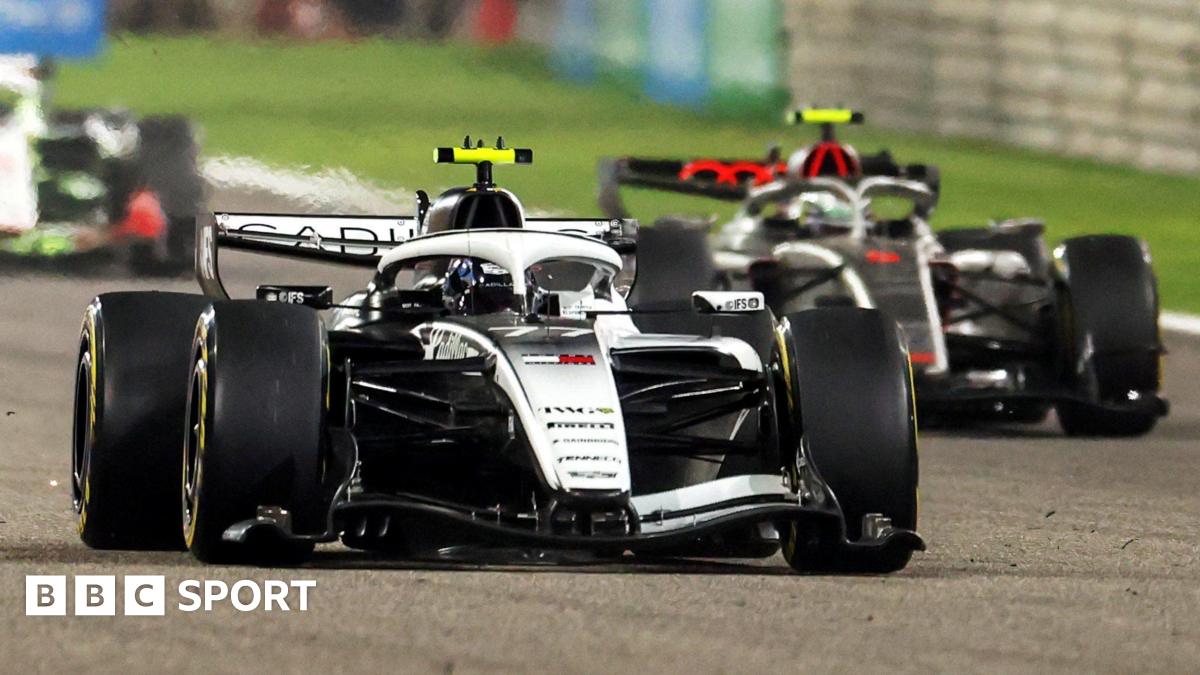
Audi’s Formula 1 project gained momentum with a promising start to the 2026 season, despite a turbulent recent history marked by management upheaval and initial underinvestment. The team, powered by a new Audi engine, participated in the final pre-season test in Bahrain last week, implementing a first aerodynamic upgrade to a car that was the first to run to this year’s new regulations in January.
Jonathan Wheatley, Audi’s team principal who joined from Red Bull last March, articulated the team’s ambition upon its launch this year: “We’re not here to mess around. It’s an ambitious project. We’re humble. We know where we’re starting from and we know where we want to proceed.” He added, “We want to make Audi the most successful F1 team in history. There are milestones on that journey and we are starting it today.”
Audi’s entry into F1 represents a return to top-level motorsport for the German manufacturer, building on a storied past. The company previously competed in the European Grand Prix Championship of the 1930s, where Auto Union, with drivers like Bernd Rosemeyer and Tazio Nuvolari, challenged Mercedes-Benz. Auto Union secured the title in 1936, and enjoyed competitive success against Mercedes until the outbreak of World War II.
The modern Audi brand likewise boasts a formidable racing pedigree, having won the Le Mans 24 Hours 13 times between 1999 and 2016, and pioneering four-wheel drive technology in rallying with the Quattro in the early 1980s. The current F1 venture rekindles the historic rivalry with Mercedes, a competition that flared up even before the season began with a pre-season dispute over engine compression ratio rules, with Audi reportedly leading calls for a change due to concerns Mercedes had exploited a loophole.
However, the path to the grid has not been without its challenges. Following the announcement of Audi’s F1 entry in August 2022, initial investment was deemed insufficient, and Sauber, the team Audi partnered with, showed little progress throughout 2023 and into 2024. This led to the removal of Andreas Seidl, who had previously served as team principal at McLaren, in mid-2024.
Seidl was replaced by a dual leadership structure, with former Ferrari team principal Mattia Binotto overseeing factory operations in Switzerland and Germany, and Wheatley taking charge of trackside activities. Further management changes followed, with Binotto later becoming head of the entire Audi F1 project and Adam Baker departing as chief executive officer. The arrival of Binotto and Wheatley appeared to stabilize the program, with Sauber demonstrating improved performance in 2025, culminating in a podium finish for veteran driver Nico Hulkenberg at the British Grand Prix – his first in 16 years.
For 2026, Audi retains the driver pairing of Hulkenberg and Gabriel Bortoleto. While acknowledging the promising start to the season, Hulkenberg cautioned against premature optimism. “It’s just speculation right now still,” he said last week. “We really don’t know until Melbourne and even a few races in, because I perceive at the moment it can be quite track dependent on how your package feels on different circuits.”
Hulkenberg added, “The team’s been working hard over the winter, pushing all the areas, doing the power-unit side for the first time. It’s been busy and a challenge, and I reckon we’re OK. But there’s still a lot of work and a lot of room for improvement on that side and a lot to come.” Current assessments place Audi in the midfield battle alongside Haas, Alpine, and Racing Bulls, ahead of Williams.
