
A U.S. Customs and Border Protection (CBP) drone was shot down by a laser system operated by the Department of War in Texas on Thursday, prompting the Federal Aviation Administration (FAA) to expand temporary flight restrictions near Fort Hancock. The incident, confirmed by multiple government agencies, has drawn criticism from Democratic members of Congress who allege a pattern of “incompetence” and lack of coordination.
The Department of War, CBP and the FAA released a joint statement acknowledging the event. They stated the Department of War utilized a counter-unmanned aircraft system to respond to “a seemingly threatening unmanned aerial system operating within military airspace.” The statement emphasized the engagement occurred “far away from populated areas and there were no commercial aircraft in the vicinity,” and pledged increased cooperation to prevent future occurrences. The statement did not identify the downed drone as belonging to CBP.
According to reports from The New York Times and Bloomberg, a high-energy laser was used to disable the drone. Four sources familiar with the matter, who were not authorized to speak publicly, confirmed this detail to both publications.
U.S. Representatives Rick Larsen, Bennie Thompson, and André Carson, leading Democrats on the House Transportation and Infrastructure and Homeland Security committees, issued a joint statement expressing their concern. “Our heads are exploding over the news that DoD reportedly shot down a Customs and Border Protection drone using a high risk counter-unmanned aircraft system,” they said. The lawmakers further criticized the administration for bypassing a bipartisan bill intended to improve training for counter-drone operators and enhance interagency communication. “Now, we’re seeing the result of its incompetence,” they added.
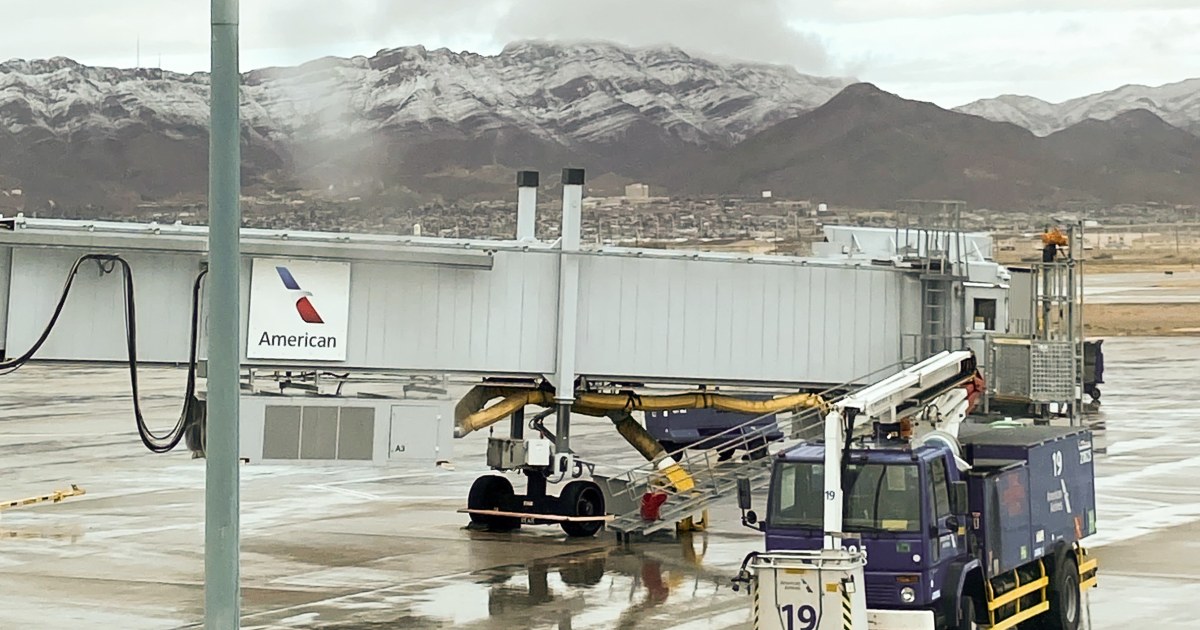
This incident follows a similar event earlier this month near Fort Bliss, approximately 50 miles northwest of Fort Hancock. In that instance, CBP officials used a military-provided anti-drone laser to target what were later identified as party balloons, leading to a temporary closure of El Paso’s airspace. The FAA shut down the airspace after CBP’s actions, and the incident prompted scrutiny of interagency coordination.
The FAA expanded a temporary flight restriction around Fort Hancock following Thursday’s incident. Although the initial closure near El Paso lasted several hours and resulted in flight cancellations, officials stated the latest restrictions did not impact commercial flights.
Senator Tammy Duckworth, the ranking member on the Senate’s Aviation Subcommittee, described the situation as “alarming” and called for independent investigations. She echoed the criticism of the administration, stating, “The Trump administration’s incompetence continues to cause chaos in our skies.”
The incident highlights ongoing challenges in coordinating drone defense efforts between different government agencies. A previous investigation into a mid-air collision near Washington, D.C., revealed a lack of data sharing and risk assessment between the FAA and the Army, contributing to a series of near misses around Reagan National Airport.
Transportation Secretary Sean Duffy indicated plans to brief members of Congress on the matter this week, though he previously defended the FAA’s decision to close the airspace in El Paso, asserting it was not a communication failure.
