
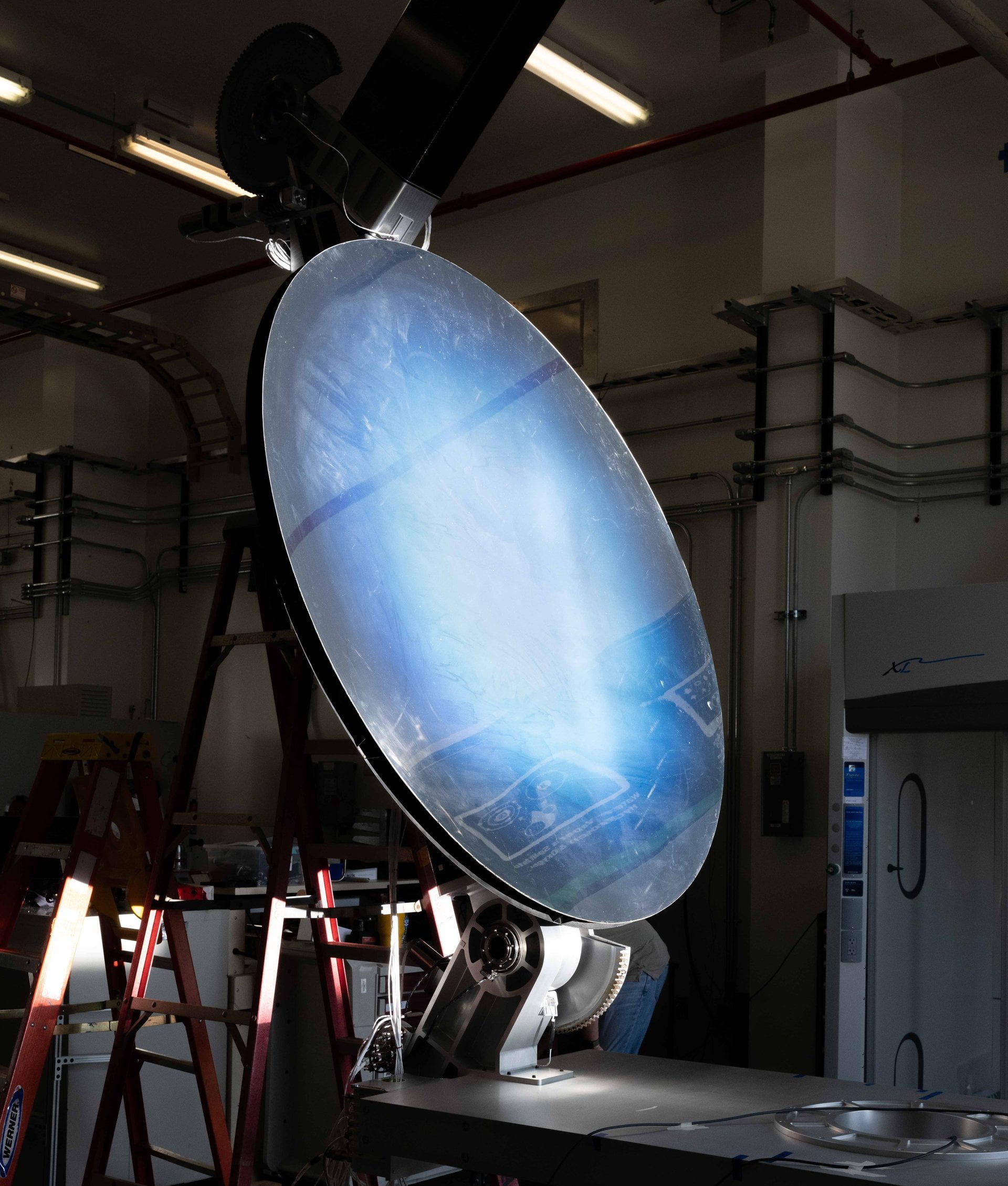
A recent integrated test completed by NASA’s Carbothermal Reduction Demonstration (CaRD) team has confirmed the production of carbon monoxide through a solar-driven chemical reaction using lunar regolith simulant, bringing the agency closer to establishing a sustainable oxygen supply for long-duration missions on the Moon.
The CaRD experiment, funded by NASA’s Game Changing Development program, aims to utilize In-Situ Resource Utilization (ISRU) – a method of using local resources to create essential supplies like air, water, and building materials – to reduce reliance on costly and complex resupply missions from Earth. According to NASA, lunar regolith is approximately 45% oxygen by mass, though that oxygen is chemically bound within silicate minerals.
The experiment leverages carbothermal reduction, an industrial process commonly used to extract oxygen from minerals, but uniquely relies on concentrated sunlight as its energy source. The CaRD prototype integrates a carbothermal oxygen production reactor developed by Sierra Space, a solar concentrator designed by NASA’s Glenn Research Center, precision mirrors produced by Composite Mirror Applications, and avionics, software, and gas analysis systems from NASA’s Kennedy Space Center. Systems engineering, testing, and development of key hardware and ground support systems are managed by NASA’s Johnson Space Center.
The successful test combined the solar concentrator, mirrors, and control software, demonstrating the feasibility of extracting oxygen from lunar regolith using only solar energy. The resulting carbon monoxide can then be converted into oxygen gas using downstream technologies, potentially providing a continuous supply of breathable air for astronauts and a critical component for a future lunar base as envisioned by NASA’s Artemis Program.
Beyond oxygen production, the technology could be adapted to convert carbon dioxide into oxygen and methane, offering a potential method for refueling spacecraft on the lunar surface. This capability would significantly reduce the logistical challenges and expenses associated with long-term lunar habitation. NASA also anticipates the technology could be adapted for use with Martian regolith, supporting its broader Moon to Mars architecture.
NASA has identified Mars as a key destination for human exploration, believing it may hold evidence of past life and provide insights into the future of our own planet. According to NASA, Mars has two moons, Phobos and Deimos, both thought to be captured asteroids. The agency is currently developing technologies to send astronauts to Mars as early as the 2030s, with a roundtrip mission estimated to cover over one billion miles.
The CaRD project represents a significant step towards realizing ISRU capabilities, which are considered paramount for establishing a sustainable human presence beyond Earth. NASA has not yet announced a timeline for deploying the technology on the Moon or Mars.
