
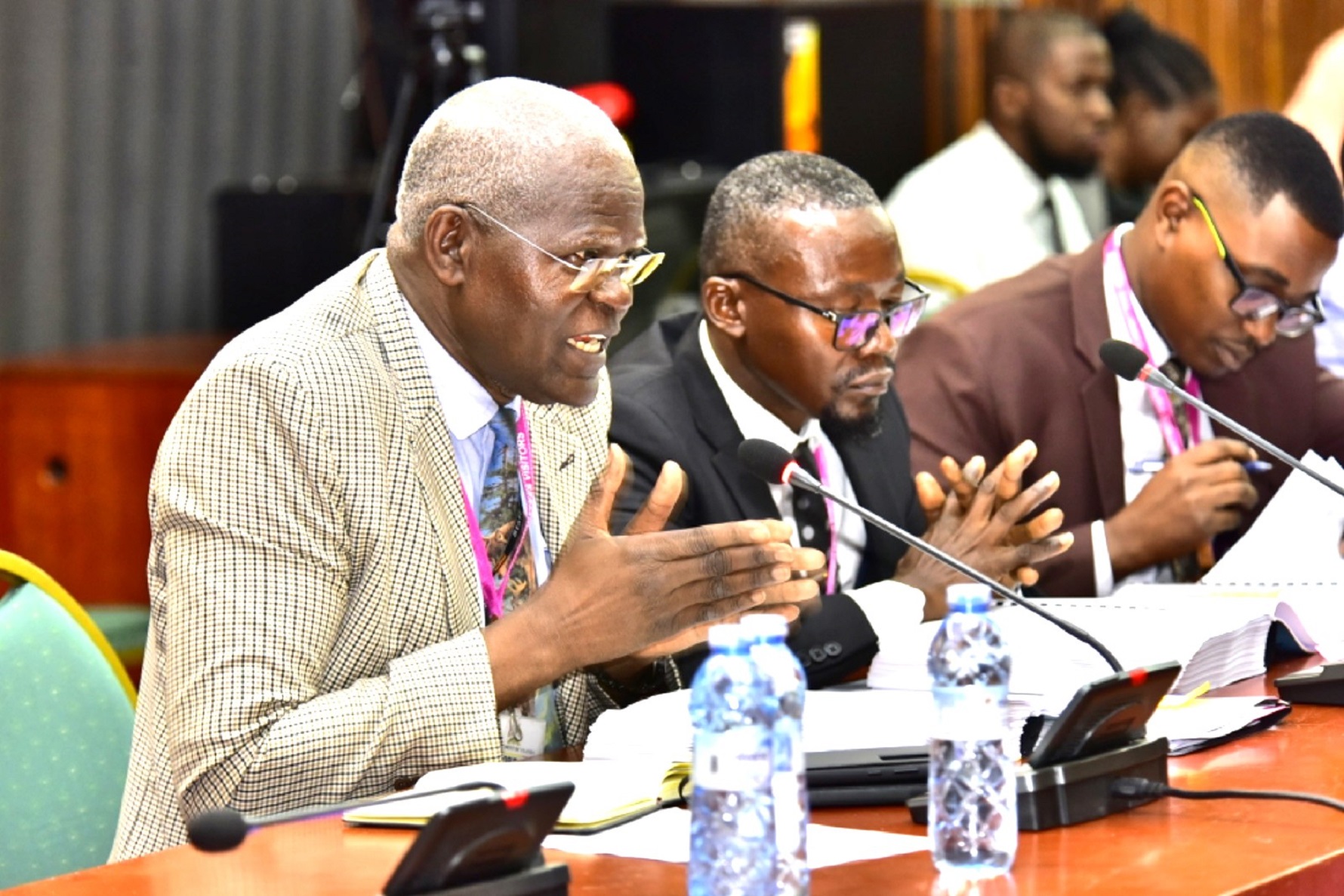
Ugandan officials are urging lawmakers to swiftly approve legislation intended to bolster the country’s forensic capabilities, citing delays in criminal prosecutions due to evidentiary bottlenecks. The call for expedited passage of the Forensic and Scientific Analytical Service Bill, 2025, came during a Wednesday, February 25, 2026, appearance by Directorate of Government Analytical Laboratory (DGAL) representatives before the Public Accounts Committee (Central Government).
Commissioner of Criminalistics and Laboratory Services, Tarsisius Byamugisha, told the committee that the bill would provide a legal framework for the acceptance of forensic data as evidence in national investigations. He explained that current practices often lead to the arrest of numerous suspects in connection with a single crime, creating a backlog in the judicial system. “With the database, instead of Police arresting 50 people over the same crime, they can search the crime scene and give us the exhibits. We will test them and search through the database to point out the actual people who were at the scene. That is why we are pushing this Bill,” Byamugisha stated.
DGAL has already begun developing in-house databases for DNA and ballistics analysis, utilizing these resources for quality control purposes, according to officials. The proposed legislation would formalize and expand these efforts.
The need for greater oversight of private forensic testing services was also highlighted during the committee hearing. Hon. Joseph Ssewungu (NUP, Kalungu West County) emphasized the growing prevalence of individuals seeking private DNA testing, even in sensitive situations. “We find so many challenges happening now with families where many people are taking their children for DNA testing. I also recently got samples before burial of somebody, from a nun. All these are issues that must be addressed by the Bill, especially how evidence is produced, used and kept,” Ssewungu said.
Lawmakers also inquired about the progress of a national forensic database, for which Parliament previously allocated Shs178.66 billion. Hon. Hope Nakazibwe (NUP, Mubende District Woman Representative) pressed DGAL officials for an update on the use of these funds.
Kepher Kuchana Kateu, DGAL’s Chief Chemist, reported that a study on “allele frequency database for 21 autosomal short tandem repeats in the Ugandan population” had been completed. “We carried out this study across the Ugandan population from the east, west, south and central regions. We have generated the genetic profiles of our population which can be used in the future. Presently, we have been using databases generated by other people,” Kateu explained. He further stated that the laboratory has established databases related to toxicology, poisons, and pesticide residue, aiding in the investigation of various crimes.
The Forensic and Scientific Analytical Services Bill, 2025, was initially introduced in Parliament on July 16, 2025, and is currently under consideration by the Committee on Defence and Internal Affairs. The bill aims to establish the Government Analytical Laboratory as the national referral center for forensic and analytic services and designate the Department of inspection and legal services at the Ministry of Internal Affairs as the regulator of forensic and scientific analytical services. A previous version of the legislation, the Forensic Evidence Bill, 2024, was withdrawn from consideration on February 12, 2025.
