
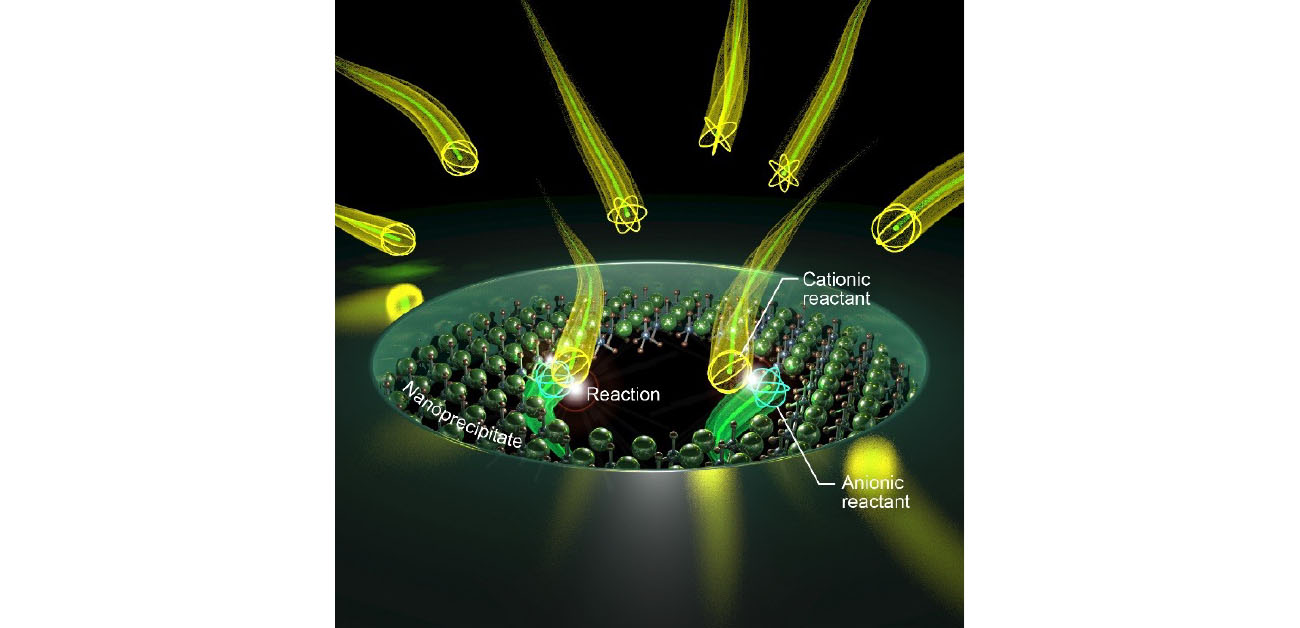
Osaka, Japan – Researchers at The University of Osaka have created nanoscale pores that mimic the function of biological ion channels, offering a potential breakthrough for advancements in single-molecule sensing, neuromorphic computing, and nanoreactor design. The findings, published this week in Nature Communications, detail a chemically-driven method for repeatedly opening and closing pores at the atomic scale.
Ion channels are essential passageways in biological systems, regulating the flow of ions across cell membranes and enabling crucial processes like nerve impulses and muscle contraction. Replicating these structures, which can be just a few angstroms wide, has proven a significant challenge in nanotechnology due to the require for precise and reproducible fabrication.
The Osaka team’s approach utilizes a miniature electrochemical reactor to form pores in a silicon nitride membrane. By applying a negative voltage, a reaction within the pore induces the formation of a precipitate, effectively blocking the channel. Reversing the voltage to positive dissolves the precipitate, reopening the pathway for ion flow. “We were able to repeat this opening and closing process hundreds of times over several hours,” explained lead author Makusu Tsutsui. “This demonstrates that the reaction scheme is robust and controllable.”
Measurements of the ion current passing through the membrane revealed spikes consistent with those observed in natural ion channels. Analysis suggests the precipitate forms not as a single blockage, but as a collection of numerous subnanometer pores within the larger nanopore. Senior author Tomoji Kawai noted that the behavior and size of these ultra-small pores can be adjusted by altering the composition and pH of the solutions used in the process. “This enabled selective transport of ions of different effective sizes through the membrane by tuning the ultrasmall pore sizes,” Kawai said.
The research builds on previous work in the field, including studies focused on generating nanopores in materials like molybdenum disulfide for ion-selective transport, and voltage-gated nanopores controlled by electrical stimuli. The University of Osaka team’s method distinguishes itself through its chemical control and the ability to create multiple, tunable pores within a single nanopore structure.
The implications of this technology extend beyond fundamental research into ion transport and fluid dynamics. The ability to precisely control the flow of ions at the nanoscale could lead to more sensitive single-molecule sensors, potentially revolutionizing DNA sequencing. The creation of artificial ion channels could contribute to the development of neuromorphic computing systems, which aim to mimic the structure and function of the human brain. The team also envisions applications in nanoreactors, where the confined space within the pores could create unique chemical environments.
Researchers at the University of Osaka have not yet announced plans for commercialization or further development of the technology, but continue to investigate the fundamental properties of ion transport within these chemically-driven nanopores.
