
Mexico City – Climate change may imperil the monarch butterfly’s remarkable annual migration, potentially disrupting a natural phenomenon that spans thousands of kilometers across North America, according to latest research published Monday in PLOS Climate.
The study, conducted by biologists at the National Autonomous University of Mexico, utilized computer simulations to project the future availability of suitable habitat for the monarch butterfly in Mexico. Researchers found that by 2070, the area of ideal overwintering habitat could shrink from approximately 19,500 square kilometers to around 8,000 square kilometers. This reduction is driven by shifting climate patterns that could push the necessary conditions for milkweed growth – the sole food source for monarch caterpillars – further south.
“That extra distance might push some individuals to stay in Mexico instead of continuing north,” said Carolina Ureta, a biologist at the National Autonomous University of Mexico in Mexico City, and a co-author of the study. “In this case, the species is not in danger because of climate change, but the migration might be.”
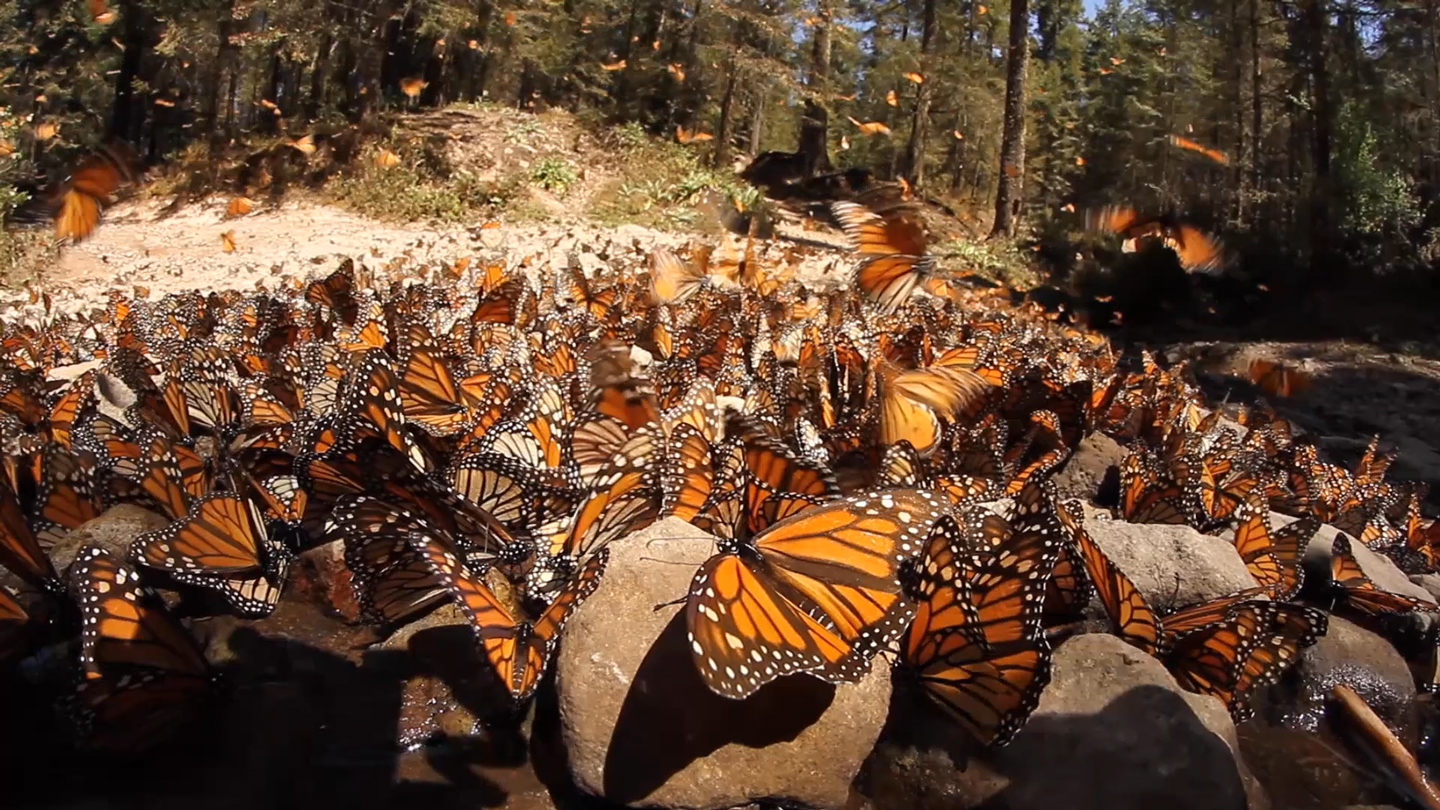
The monarch butterfly is unique in its multi-generational, two-way migration, comparable to that of birds. Unlike other butterfly species, monarchs cannot survive the cold winters of northern climates and must travel south to warmer regions for the winter months. Eastern North American monarchs overwinter in the oyamel fir forests of the Sierra Madre Mountains in Mexico, while those in the western part of the continent overwinter in California.
The potential loss of habitat isn’t the only threat facing the iconic insect. Monarch populations have already declined by more than 80 percent since the 1990s, falling from nearly 700 million to significantly lower numbers. Habitat loss, extreme weather events, pesticide use, and parasitic infections are all contributing factors to this decline, according to researchers.
Citizen scientists have observed a trend of monarchs remaining in central and northeastern Mexico, rather than completing the full migratory cycle, according to Víctor Sánchez Cordero, a conservation biologist also at the National Autonomous University of Mexico. This behavior, he noted, is not uncommon among butterfly populations globally, as some species do not undertake long-distance migrations.
The simulations suggest that climate change could not only reduce the overall habitat area but also fragment it, creating a more challenging and energy-intensive journey for the butterflies. The increased distance could lead some monarchs to forgo the return flight north, potentially establishing resident populations within Mexico. Researchers suggest that wing size could be a key indicator of whether butterflies are completing the migration or remaining in Mexico, as resident populations tend to have smaller wingspans than migratory ones.
The overwintering sites in Mexico, located at elevations between 2,400 and 3,600 meters, provide a specific microclimate crucial for the butterflies’ survival. Temperatures in these oyamel fir forests typically range from 0 to 15 degrees Celsius, allowing the monarchs to conserve energy. Still, shifting climate patterns could alter these conditions, making the existing overwintering sites less hospitable.
