
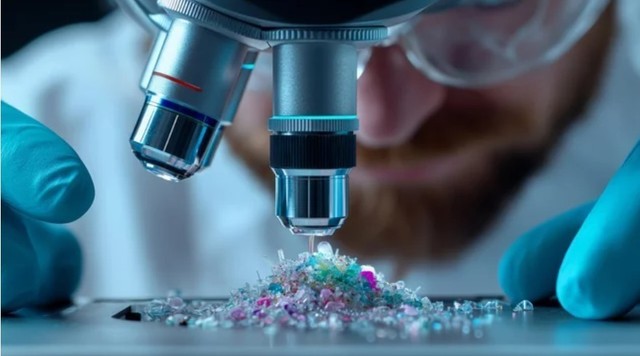
Microplastics were detected in 90% of prostate tumor samples examined in a latest study, at levels significantly higher than in surrounding healthy prostate tissue, researchers at NYU Langone Health announced Wednesday. The findings offer new data regarding the potential link between microplastic exposure and prostate cancer risk.
The study, conducted at NYU Langone Health’s Perlmutter Cancer Center and the Center for the Investigation of Environmental Hazards, sought to evaluate whether exposure to microplastics could play a role in the development of prostate cancer, the most commonly diagnosed cancer among men in the United States, according to the American Cancer Society.
Plastics used in food containers, packaging, and cosmetics can fragment into microscopic particles through heat, wear, or chemical changes. These particles can enter the human body through ingestion, inhalation, or skin absorption.
Previous studies have identified microplastics in multiple human organs and bodily fluids, including the placenta. The effects of this exposure on human health remain largely unknown.
In the NYU Langone Health study, researchers analyzed tissue samples from 10 patients undergoing prostatectomy, the surgical removal of the prostate. Microplastics were identified in 90% of the tumor samples and in 70% of the healthy tissue samples.
Notably, tumor tissue contained substantially higher concentrations of plastic. On average, tumor samples showed a concentration of approximately 2.5 times greater than healthy tissue, roughly 40 micrograms of plastic per gram of tissue compared to 16 micrograms per gram. Twelve common types of plastic molecules were analyzed.
“This is crucial initial evidence suggesting that exposure to microplastics may be a risk factor for prostate cancer,” said Dr. Stacy Loeb, the lead author of the study and a professor at the Departments of Urology and Population Health at NYU Grossman School of Medicine. She noted that while prior research has suggested possible links between microplastics and conditions like cardiovascular disease or dementia, direct data regarding prostate cancer has been limited.
Researchers initially examined the samples visually before utilizing specialized instruments to determine the quantity, chemical composition, and structural characteristics of the particles. To mitigate the risk of contamination, given the widespread use of plastics in medical and laboratory equipment, the team replaced plastic equipment with alternatives made of aluminum, cotton, and other plastic-free materials. Testing was conducted in clean, controlled rooms specifically designed for microplastic analysis.
Dr. Vittorio Albergamo, a senior author of the study and a research assistant professor at the Department of Pediatrics at NYU Grossman School of Medicine, emphasized the need for stricter regulations to limit population exposure to these widespread environmental contaminants.
The next phase of research will focus on evaluating how microplastics behave within the body and whether they directly contribute to cancer development. The team intends to investigate the hypothesis that these particles may trigger a persistent immune response, specifically inflammation within the prostate tissue. Chronic inflammation can affect cells and promote genetic changes associated with cancer development.
The authors noted that the study included a small number of patients and that further research is needed to confirm the findings. The research was funded by the United States Department of Defense.
The study’s findings will be presented on February 26th at the American Society of Clinical Oncology Genitourinary Cancers Symposium.
