
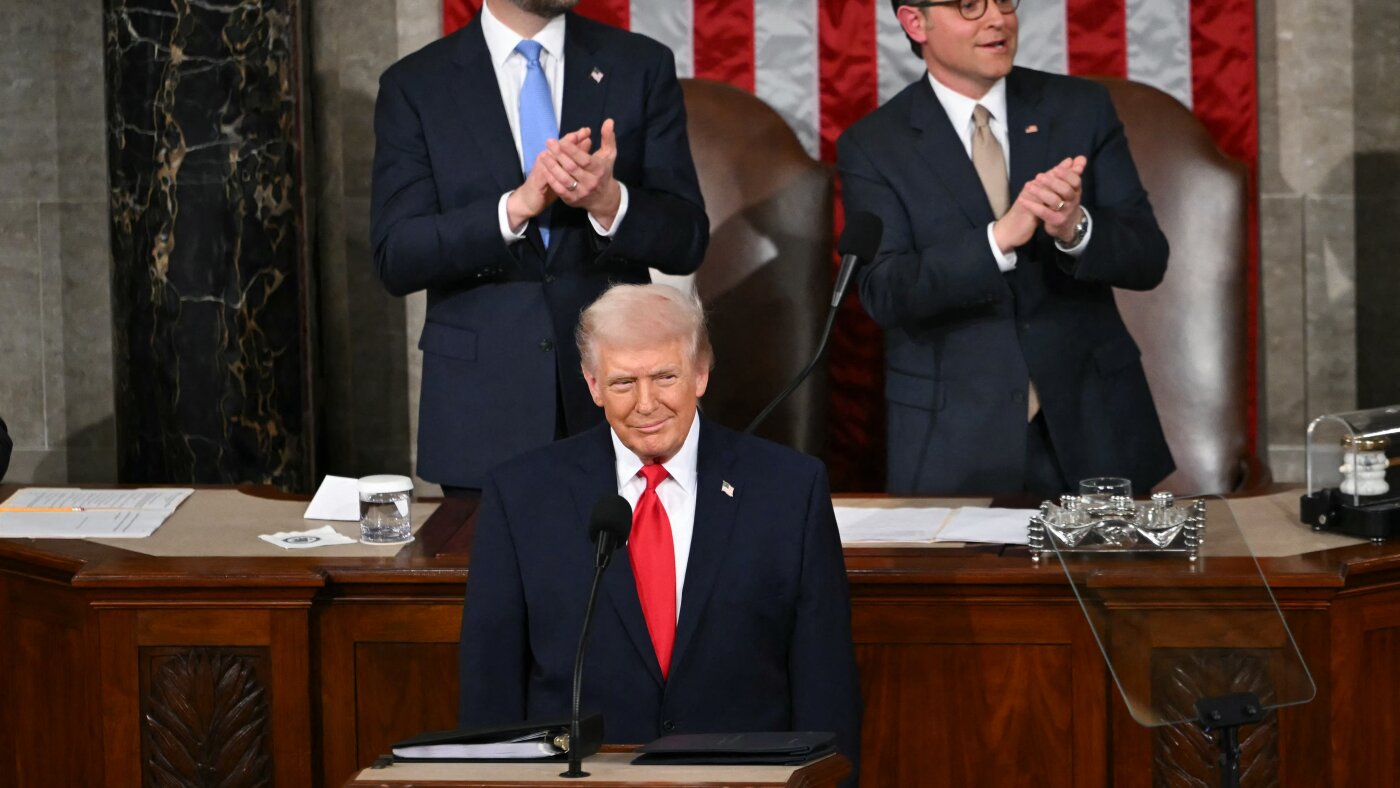
WASHINGTON — President Donald Trump delivered the longest State of the Union address in at least 60 years on Tuesday night, speaking for approximately one hour and 48 minutes before a joint session of Congress. The extended address, punctuated by frequent applause and disruptions, came as the latest NPR/PBS News/Marist poll indicates a majority of Americans believe the country is worse off than it was a year ago.
The American Presidency Project, which tracks the length of State of the Union addresses since 1964, confirmed the record-breaking runtime. Trump surpassed his own previous record set last year – a speech of one hour and 39 minutes that was not officially designated a State of the Union due to it occurring in the first year of his second nonconsecutive term. Prior to that, the longest address was delivered by President Bill Clinton in 2000, lasting one hour and 28 minutes. In contrast, President Richard Nixon’s 1972 address remains the shortest in the past six decades, clocking in at just 28 minutes, according to CNBC.
The extended duration of Tuesday’s speech included numerous pauses for applause, recognition of guests in the gallery, and a sustained ovation for the U.S. Men’s Olympic hockey team. Trump used the platform to highlight what he characterized as economic gains and his administration’s role in addressing international conflicts, as reported by The Guardian. He also leveled criticism at the Supreme Court and Democrats throughout the address.
Following the President’s speech, Virginia Governor Abigail Spanberger delivered the Democratic response, according to NPR. The response is expected to outline the Democratic party’s vision for the coming year and challenge the assertions made by President Trump during his address.
The White House has not yet released a full transcript of the speech, but officials indicated that it will be made available on the White House website later this week. The length of the address has already prompted debate among political analysts regarding its effectiveness in conveying the President’s message and its potential impact on public opinion.
