
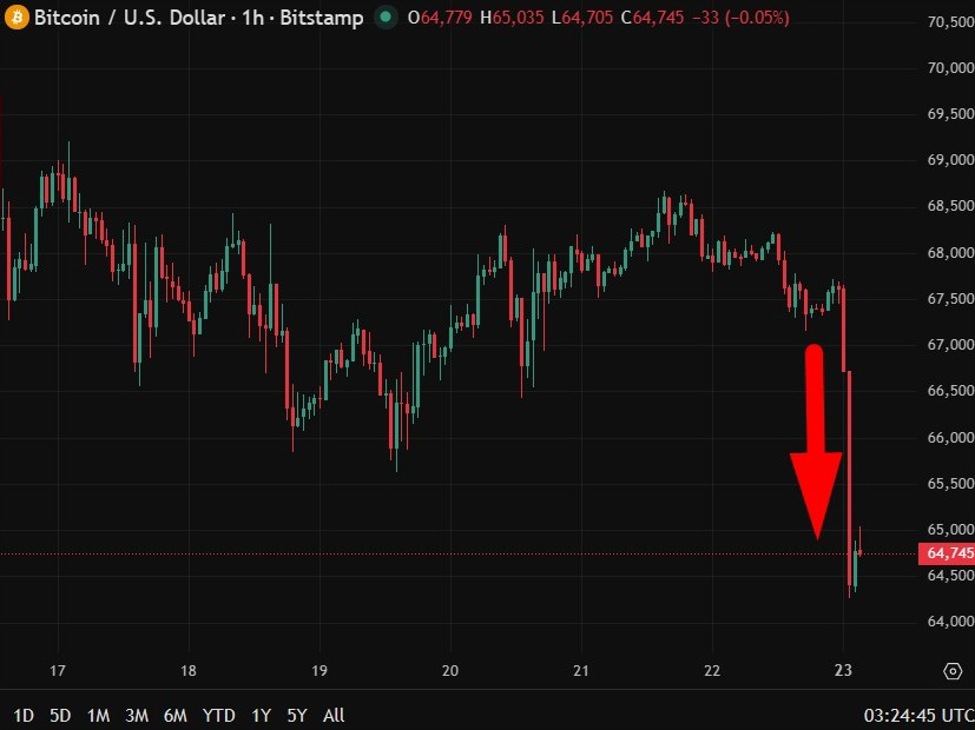
Bitcoin’s price fell sharply on Monday, dropping roughly 5% and slipping below the US$65,000 level in a swift sell-off, according to market analysis. The decline was triggered by large-scale liquidation and exacerbated by a break of key technical support, prompting a cascade of stop-loss orders and momentum selling.
The US$65,000 price point had been a visible support zone after a period of market consolidation. Once breached, the resulting pressure accelerated as liquidity thinned, a common dynamic in cryptocurrency markets. Data indicates increased selling activity from larger bitcoin holders, with elevated inflows to exchanges suggesting a potential distribution of holdings. This represents a shift from recent weeks, which had seen a pattern of accumulation supporting price stability.
Even as no single regulatory event or systemic shock within the crypto space appears to have directly caused the drop, broader macroeconomic factors are contributing to the downward pressure. Renewed uncertainty surrounding US tariff policy and escalating geopolitical risks have dampened global risk appetite, leading investors to de-risk their portfolios. Crypto assets, often considered high-beta investments, are particularly vulnerable in such environments.
Equity volatility is also edging higher, and oil markets remain sensitive to geopolitical headlines, further contributing to a cautious cross-asset environment that has spilled over into digital assets.
Recent market activity shows whales—large bitcoin holders—have been adding to their holdings, with approximately 200,000 BTC accumulated over the past month. This accumulation occurred even as other investors reacted with fear during the price decline.
Traders are now focused on whether Bitcoin can stabilize below US$65,000 or attempt a quick recovery. A failure to regain this level could expose further support zones, while a rapid bounce might indicate the move was primarily a result of positioning adjustments rather than the beginning of a more substantial downward trend.
