
Brasília, Brazil – On February 2, 2026, Brazilian President Luiz Inácio Lula da Silva appeared at a carnival celebration in Brasilia, a symbolic gesture of stability as his administration grapples with a surge in public concern over security across Latin America. This concern, however, is manifesting in support for increasingly authoritarian approaches to law and order, even as traditional methods prove ineffective.
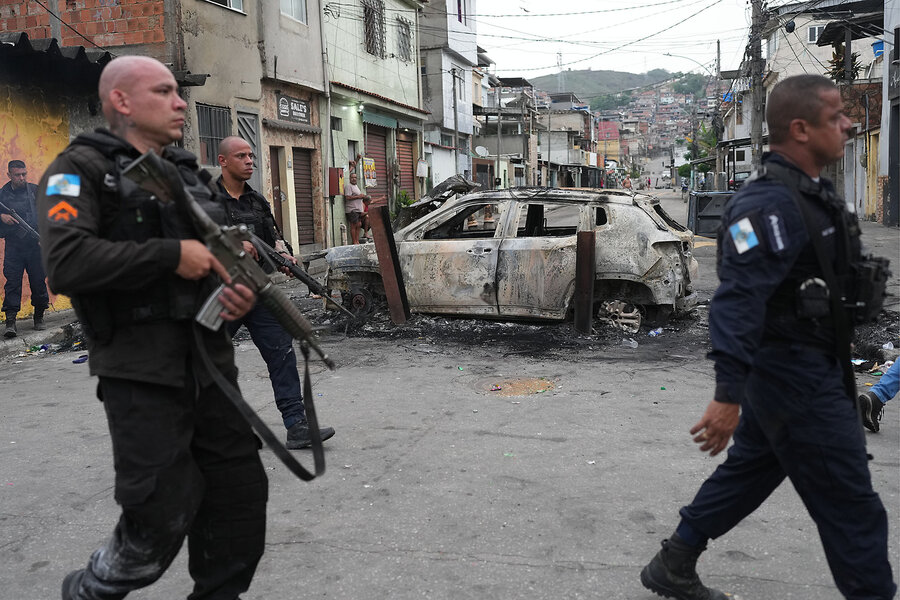
Last fall, a police operation in Rio de Janeiro’s Penha favela left over 120 people dead, many allegedly executed, in what became Brazil’s deadliest police raid on record. Despite condemnation from the United Nations calling for security policy reform, a poll conducted shortly after the October 28 operation revealed that 55% of Rio de Janeiro residents approved of the action, rising to 81% among residents of the favelas themselves, according to reporting by The Christian Science Monitor.
This apparent paradox – approval of lethal force despite its failure to deliver lasting security – underscores a growing trend across Latin America. As voters head to the polls in countries like Peru, Colombia and Brazil, security has emerged as a dominant issue, fueling support for “mano dura” – or “iron fist” – policies reminiscent of those implemented by El Salvador’s President Nayib Bukele. Ecuador and Chile have already elected conservative leaders prioritizing law and order, and Costa Rica followed suit this month.
Bukele’s approach, characterized by mass incarcerations and the construction of a 40,000-capacity prison known as the Centro de Confinamiento del Terrorismo (CECOT), has demonstrably reduced El Salvador’s homicide rate, from 51 per 100,000 people in 2018 to 1.9 per 100,000 in 2024 – a rate comparable to Canada’s. However, this success has come at a steep human rights cost, with widespread arbitrary arrests and the suspension of judicial guarantees under a state of emergency implemented in 2022. Despite these concerns, Bukele maintains approval ratings consistently above 80% and is widely admired throughout the region, as reported by the BBC.
“You hear people in a remote area of Ecuador or Colombia saying that maybe a Bukele model will work for them,” says Angélica Durán-Martínez, an associate professor at the University of Massachusetts Lowell who studies violence and criminal dynamics in Latin America.
The appeal of such policies stems from a changing criminal landscape. While drug trafficking remains a significant driver of crime in Latin America, gangs are increasingly diversifying into extortion, migrant smuggling, cyber scams, and environmental crimes like illegal mining, according to Robert Muggah, co-founder of the Igarapé Institute, a Brazilian think tank. These gangs are also becoming more sophisticated in their financial operations, using “business fronts” to launder money and grow their wealth in the legal economy.
“Mano dura can deliver immediate optics, sometimes short-term drops in visible violence,” Muggah explains, “But, it often fails to tackle the root causes of organized crime.”
The limitations of a purely repressive approach were evident in the aftermath of the Penha favela raid. Despite the high death toll, traffickers resumed operations within days, and the community faced continued disruption. “Nothing improves, things just obtain worse,” says Elisabete Sulino, a Penha resident whose daughter found a stray bullet in her bedroom following a subsequent police operation in January. “I’m not for or against” police operations, she says, “But [the police] enter the favela as if there weren’t families here, as if there weren’t children. They come to kill.”
Experts like Will Freeman, a fellow for Latin American studies at the Council on Foreign Relations, argue that dismantling gang control requires a combination of force and targeted efforts to disrupt their financial networks. He points to President Lula’s government’s success in dismantling a nearly $10 billion money-laundering scheme last August as an example of a more effective, long-term strategy. Rebuilding rule-of-law capacity and focusing policing efforts on key areas like ports, borders, and prisons are also crucial, he suggests.
However, these long-term solutions are often overshadowed by the political appeal of quick fixes. Governments often resort to mass detentions and visible policing to demonstrate their commitment to combating crime, even if these tactics fail to address the underlying issues, according to Dr. Durán-Martínez. She argues, the consequences of organized crime are most acutely felt by poor and marginalized communities.
In Penha, residents like Sulino express a desire for alternatives – better access to education and opportunities for economic advancement. “We need more things that give low-income Brazilians a way of succeeding,” she says, as armed traffickers pass by during an afternoon food donation drive.
