
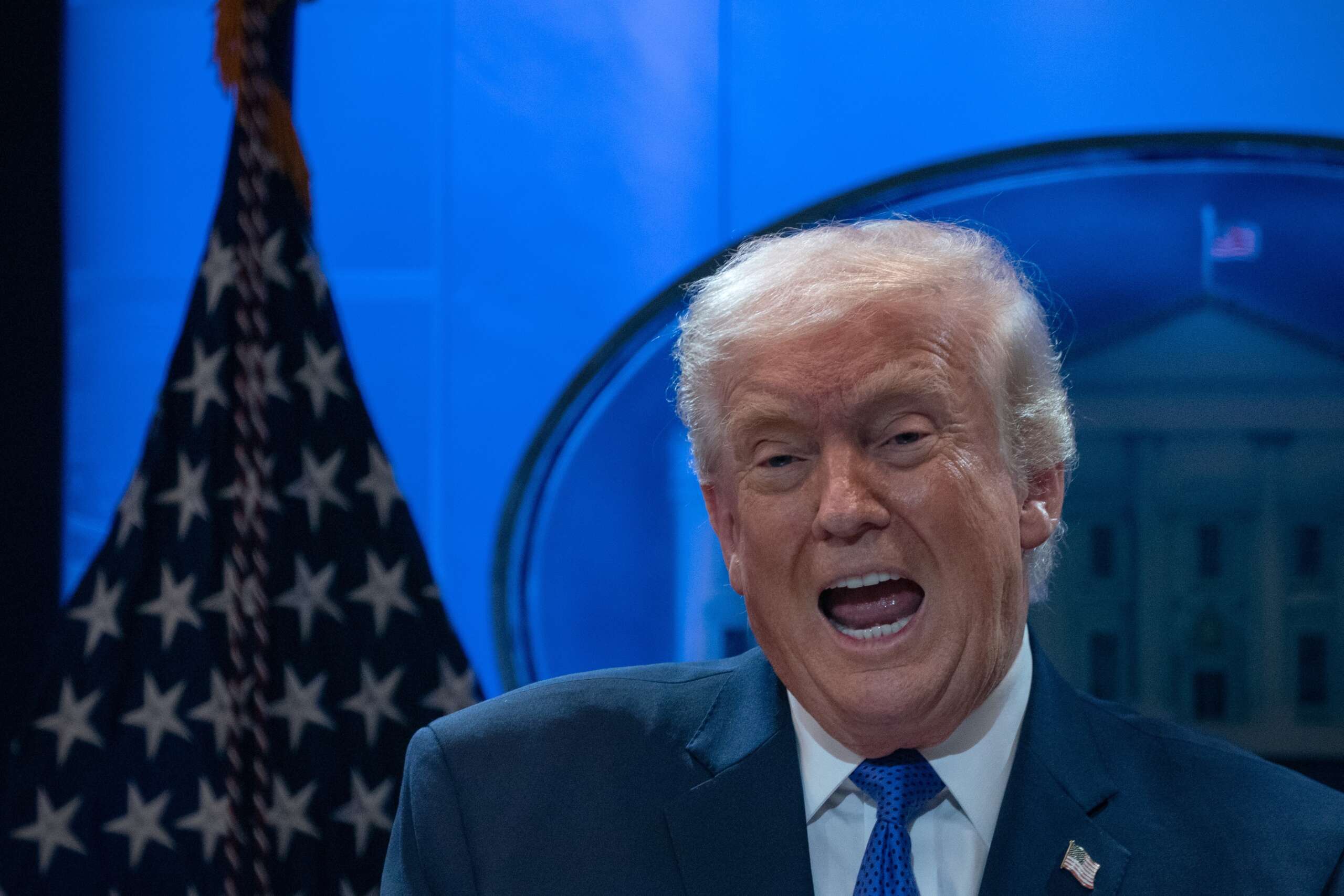
WASHINGTON — Former President Donald Trump escalated a dispute with the Supreme Court on Saturday, announcing a hike in proposed tariffs to 15% on all imports, just one day after the high court struck down his previous attempt to impose tariffs using emergency powers. The move, revealed in a post on Truth Social, represents a direct challenge to the court’s authority and a renewed threat of economic disruption.
The Supreme Court, in a 6-3 ruling on Friday, determined that the 1977 International Emergency Economic Powers Act (IEEPA) does not authorize the president to unilaterally impose tariffs. Chief Justice John Roberts authored the opinion, which stated that allowing the tariffs to stand would represent a “transformative expansion” of unchecked presidential power. NPR reported on the ruling.
Trump initially responded by invoking Section 122 of the Trade Act of 1974, proposing a 10% global tariff set to begin February 24. However, in his Saturday post, Trump announced an immediate increase to 15%, stating that the decision followed a “thorough, detailed and complete review” of the court’s decision. He accused the justices of issuing a “ridiculous, poorly written, and extraordinarily anti-American” ruling and vowed to implement “new and legally permissible Tariffs” to continue his “Making America Great Again” agenda.
The announcement drew swift condemnation from Democrats. Democratic strategist Jon Cooper argued that Trump’s invocation of Section 122 is as well likely to face legal challenges, stating that the U.S. Does not meet the “clear emergency economic conditions” envisioned by the law. CNN reported on the legal concerns surrounding the tariff.
Former Democratic presidential candidate Tom Steyer labeled Trump a “gangster with no respect for the rule of law,” characterizing the tariffs as a “15% tax out of YOUR pockets to feed HIS deranged ego.” California Governor Gavin Newsom echoed this sentiment, stating that Trump had announced a “NEW 15% TAX on the American people” and “does not care about you.” Congressman Ted Lieu of California quipped that Trump was retaliating against the Supreme Court by increasing the financial burden on Americans.
The GOP-controlled Congress’s response remains uncertain. While congressional Republicans have previously expressed some reservations about Trump’s tariffs, they largely supported them when required to vote, according to Politico. The Supreme Court’s decision may now compel them to reconsider their position, particularly as six House Republicans recently joined Democrats in condemning Trump’s tariffs on Canada.
Senator Ed Markey (D-Mass.), ranking member of the Senate Committee on Minor Business and Entrepreneurship, released a report last week detailing the negative impact of Trump’s tariffs on small businesses. Markey held a press conference with Massachusetts small business owners, celebrating the Supreme Court’s ruling and vowing to fight for the return of “every cent illegally collected” from businesses and consumers. He argued that Trump’s policies have created an “affordability crisis” across the country.
As of Saturday evening, the White House had not released details on how the 15% tariff would be implemented or which goods would be affected. The legality of the new tariffs remains highly contested, with legal challenges expected to quickly follow. The situation leaves the global economy bracing for potential disruption and further uncertainty.
