
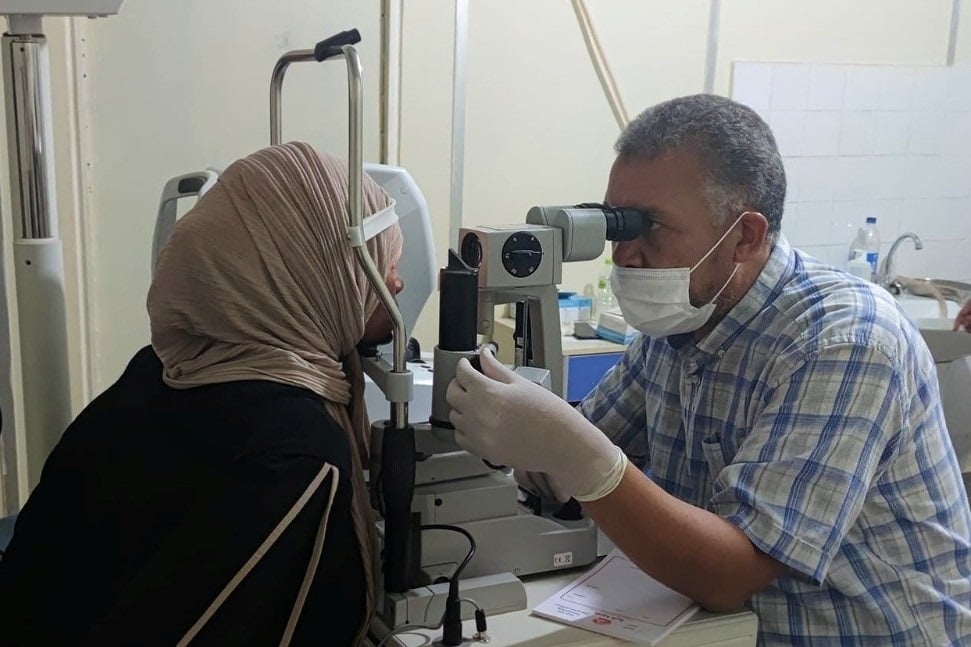
Libya has officially eliminated trachoma as a public health problem, the World Health Organization (WHO) announced Saturday, marking a significant achievement for the North African nation and the WHO’s Eastern Mediterranean Region.
The validation confirms that Libya has met the WHO’s elimination thresholds for the bacterial eye infection, which can lead to blindness if left untreated. Libya is now the 28th country globally and the 8th in the Eastern Mediterranean Region, to achieve this milestone.
“This milestone reflects Libya’s determination to safeguard the health of its people and reinforces our conviction that progress against neglected tropical diseases is possible everywhere,” said Dr. Tedros Adhanom Ghebreyesus, WHO Director-General, in a statement released by the organization.
Trachoma, caused by the bacterium Chlamydia trachomatis, is spread through contact with infected eye discharge. Repeated infections can cause scarring of the eyelid, leading to trichiasis – a condition where eyelashes grow inward and scratch the cornea – and blindness.
Early efforts to control infectious eye disease in Libya date back to the 1970s and 1980s, with subsequent strengthening of the national health system. Surveys indicated a dramatic decline in trachoma transmission, prompting the Ministry of Health to prioritize its elimination in 2017 as part of the National Prevention of Blindness Programme.
Novel surveys conducted in 2022, supported by WHO, Sightsavers, the International Trachoma Initiative, and Tropical Data, focused on six southern districts where trachoma was suspected to persist. These surveys revealed active trachoma and trichiasis prevalences below WHO elimination thresholds, with the exception of trichiasis in Wadi Al Hayaa/Ghat. A subsequent surgical campaign addressed the remaining cases of trichiasis in that district.
A follow-up survey in 2025 confirmed that the prevalence of trichiasis had fallen below the WHO’s elimination threshold, leading to today’s validation.
The achievement is particularly notable given Libya’s recent history of political instability and humanitarian challenges, which have strained health services and increased demand for basic necessities. Despite these pressures, the national trachoma elimination program successfully integrated surveillance, expanded access to surgical care, and built capacity among eye health workers.
“This validation is a source of pride for Libya and a testament to the commitment of our health workers and communities,” said Dr. Mohamed Al-Ghoj, Acting Minister of Health. “Even through difficult years, we maintained our focus on improving eye health services and ensuring no one was left behind.”
Dr. Ahmed Zouiten, WHO Representative in Libya, emphasized the collaborative nature of the success, stating, “Reaching trachoma elimination status in Libya is a testimony of what could be achieved when the Ministry of health teams and the WHO teams deliver as one. It is a collective public health triumph achieved through science, national mobilization and international solidarity.”
Globally, trachoma remains endemic in many vulnerable communities with limited access to water and sanitation. The WHO launched the Alliance for the Global Elimination of Trachoma by 2020 (GET2020) in 1996, fostering collaboration between governments, NGOs, and academic institutions. Libya’s success brings the total number of countries that have eliminated at least one neglected tropical disease to 59 worldwide, with 10 located in the Eastern Mediterranean Region.
