
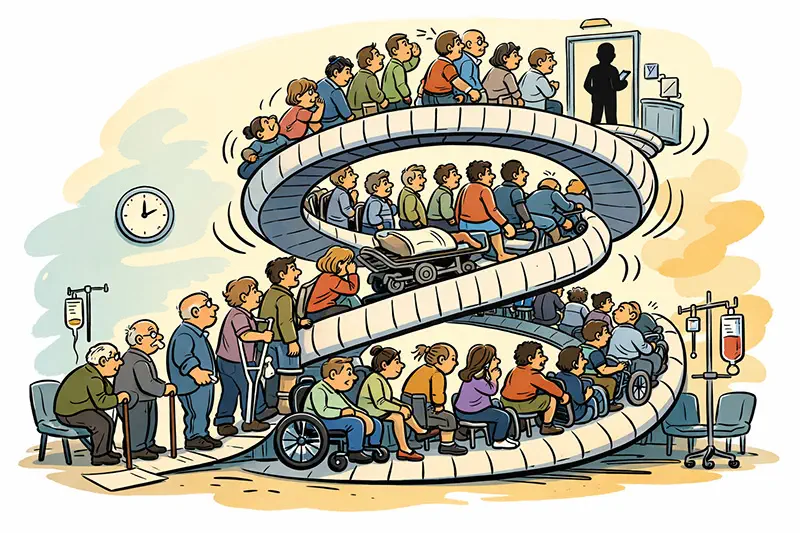
France recorded 6,148 organ transplants in 2025, a figure the Agence de la Biomédecine (ABM) hailed as a historic high. However, a collective of patient associations and medical societies contends this record number does not alter a concerning trajectory: with one year remaining in the 2022-2026 national transplant plan, targets are slipping and waiting lists, particularly for kidney transplants, remain under significant strain.
As of January 1, 2026, 23,294 patients were registered on the national waiting list, with 11,642 classified as active, according to the ABM. The agency also reported 966 deaths in 2025 among those on the list. The collective argues that the overall transplant volume is now “below the lower limit” of the growth corridor established by the 2022-2026 plan, and that the same trend is observed for living donor kidney transplants.
Kidney transplantation is at the epicenter of the pressure. Nearly 90 percent of those on the waiting list are awaiting a kidney, with median waiting times exceeding five years in some medical centers. The collective links these delays to deteriorating patient health, increased deaths while on the list, and a growing number of patients removed from the list due to worsening conditions. Data for 2025 regarding deaths and removals from the kidney transplant waiting list are not yet available, but the collective’s assessment is based on clinical signals and overall indicators.
The collective points to Spain as a contrasting example, citing its “voluntarist, structured, and prioritized” organization as a model. Spain recorded 52 deceased donors per million inhabitants in 2024, compared to 28.5 in France. Spain also has a higher proportion of donations from circulatory death donors – exceeding 50 percent – compared to France’s less than 17 percent. A greater percentage of patients with end-stage renal failure receive transplants in Spain (56 percent) versus France (44 percent), with the reverse being true for dialysis rates. The Spanish government reported 6,464 transplants in 2024, a record number representing 132.8 transplants per million inhabitants, and an increase from 2023.
The 2022-2026 plan included an additional €210 million in funding, bringing total commitments for organ procurement and transplantation to €2 billion, a more than 10 percent increase over previous budgets. However, the collective asserts that the implementation of the plan has been delayed and incomplete, leading to a “worrying under-consumption” of these funds and a “budgetary under-execution.” Specific figures detailing this under-consumption have not been publicly released.
The collective’s statement emphasizes the critical role of hospitals, calling for a renewed focus on organ procurement and transplantation as a strategic priority. This includes ensuring adequate access to intensive care units, operating rooms, and on-call services, as well as improved coordination and training. Difficulties related to on-call duties for practitioners involved in transplantation were specifically highlighted as an immediate concern.
The collective also advocates for maximizing the potential of living donors, noting that only a minority of transplant centers are meeting the plan’s target of 20 percent activity from this source. They call for a “shock of simplification” including improved information and peer support, streamlined evaluations, and access to operating rooms, as well as the establishment of a legal status for living donors to guarantee financial neutrality. The potential of donations after circulatory death (DCD) was also cited, referencing international best practices and the require for highly standardized protocols in intensive care and operating rooms.
The collective concluded with a warning that without a rapid and profound reorganization, France will continue to fall short of meeting the vital needs of its population.
