
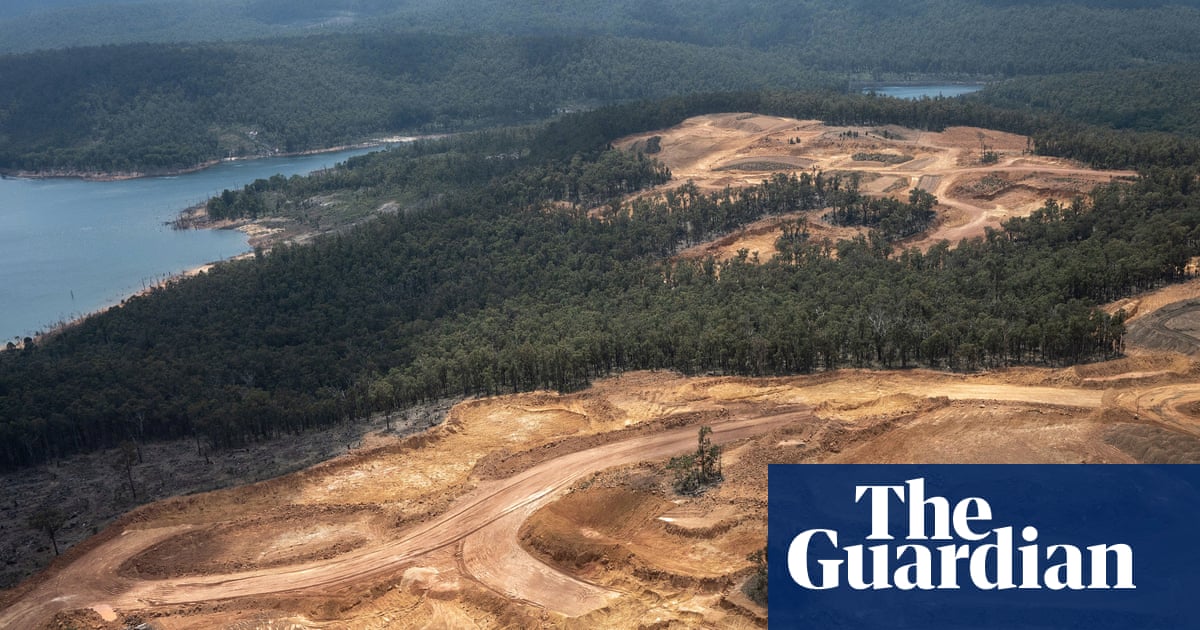
The Australian government authorized U.S. Mining giant Alcoa to continue clearing portions of the jarrah forest in Western Australia, despite the company’s prior illegal clearing practices, in part due to a critical minerals agreement with the Trump administration, according to a newly released document. The decision has sparked outrage from conservation groups who point to Alcoa’s 15-year history of unlawful land clearing and a penalty of $55 million – applied only to a six-year period – as evidence of prioritizing foreign interests over environmental protection.
The document reveals that Alcoa was warned by the federal environment department as early as 2011 that its bauxite mining operations in the forest required environmental approval under Australian law. However, a department spokesperson stated that any clearing prior to 2019 fell outside the statute of limitations, precluding investigation or enforcement action. The $55 million penalty, announced by Environment Minister Murray Watt, is an enforceable undertaking related to clearing that occurred between 2019 and 2025 in habitats for nationally protected species without the required approvals under the Environment Protection and Biodiversity Conservation (EPBC) Act.
Watt simultaneously granted Alcoa a “national interest exemption” allowing it to continue clearing for another 18 months even as the government assesses a proposal to expand the company’s Huntly and Willowdale mining operations through 2045. The newly released document demonstrates that this exemption was, in part, a response to the critical minerals deal struck with the Trump administration in October 2025. The agreement included the sale of gallium to the U.S. For use in defense and renewable energy sectors.
The U.S. Department of War is slated to invest in the construction of a 100 metric ton-per-year advanced gallium refinery in Western Australia, according to a White House fact sheet detailing the deal. Watt similarly noted the involvement of the Japanese government and Sojitz Corporation as joint venture partners with Alcoa in developing the gallium plant at Alcoa’s Wagerup refinery, with both governments committing funding and equity to the project. Watt reasoned that granting the exemption would “reinforce and give confidence” to both the U.S. And Japan regarding Australia’s commitment to the critical minerals framework.
Conservation groups have sharply criticized the decision. Matt Roberts, executive director of the Conservation Council of WA, called Alcoa’s 15 years of alleged illegal clearing “outrageous and an affront to every West Australian.” Georgina Woods, head of research and investigations at Lock the Gate, described the decision as “disgraceful,” stating the document showed the environment minister was “essentially told by the mining company that this action was necessary to discharge Australia’s obligations under the critical minerals deal with the United States.”
Western Australia Premier Roger Cook acknowledged a long-standing “disappointment” with Alcoa’s environmental performance, stating the state government had been working with the company to establish a “modern and contemporary environmental protection arrangement.” A review published in a scientific journal found Alcoa’s rehabilitation efforts were “substandard” and on a “poor to declining trajectory.”
The national interest exemption power has historically been reserved for emergencies, such as firefighting efforts during the recent Victorian bushfires and the emergency management of threatened red handfish in Tasmania. WA Greens upper house MP Jess Beckerling stated it was “staggering to read that Alcoa has been clearing illegally since 2011” and that no penalty was imposed until now. She criticized the justification based on gallium production for the American military as “farcical.”
Watt declined to address specific questions, referring inquiries to a previous interview with ABC radio in Perth, where he characterized the $55 million penalty as “an unprecedented amount” for unlawful clearing. He stated that discussions between his department and Alcoa regarding approvals had been ongoing for approximately ten years and that the new EPBC Act amendments had resolved the legal disagreement. He also asserted that the Albanese government had “beefed up its compliance efforts” and was “prosecuting a lot more people” than previous administrations.
Alcoa maintains that the national interest exemption will allow the company to “fully modernize our approvals under the EPBC Act” and sustain thousands of jobs. The company acknowledged a “difference in position” with the government regarding its historical approvals under the EPBC Act, stating its operations predate the legislation and it had operated under the belief that certain exemptions applied. Alcoa stated it has voluntarily entered into agreements with the government to resolve this difference and that the associated investment is for conservation programs and research within the Northern Jarrah Forest.
