
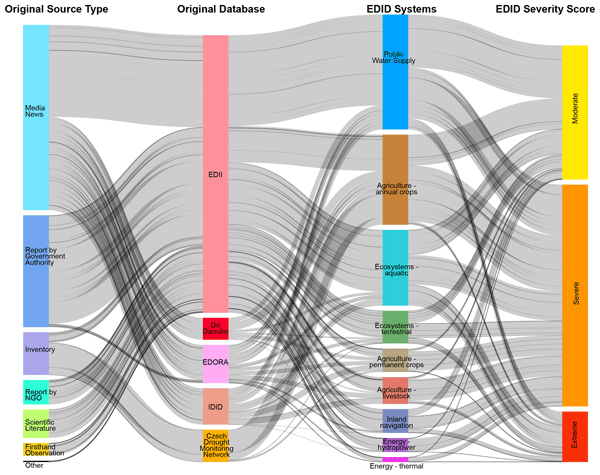
Europe is facing increasingly severe and frequent droughts, with impacts ranging from agricultural losses to disruptions in energy production, according to a growing body of research and monitoring data. A new report from the European Drought Observatory for Resilience and Adaptation (EDORA), released this week, highlights the escalating risks and the need for a systemic approach to drought management.
The EDORA report, building on the European Drought Impact Report Inventory (EDII), details how drought conditions are no longer isolated events but are becoming a persistent feature of the European landscape. Researchers are finding that successive droughts are impacting tree species differently, with deciduous trees showing a greater decline in resilience compared to evergreen species, as noted in a recent study published in Wiley Online Library. This divergence in resilience has implications for forest composition and ecosystem services.
Compounding the problem, forest loss is intensifying the effects of meteorological drought across more than half of Earth’s climate zones, according to research published by the American Association for the Advancement of Science (AAAS). This creates a dangerous feedback loop, where deforestation exacerbates drought conditions, leading to further forest degradation. The situation is further aggravated by increasingly frequent and intense forest fires, as reported by the World Resources Institute.
The impacts of these droughts are far-reaching. Agricultural sectors are particularly vulnerable, with studies demonstrating significant socioeconomic consequences, especially in regions like Andalusia, Spain. Researchers have been working to develop drought impact functions to better predict and manage these risks, as outlined in a 2017 study by Bachmair et al. These functions aim to quantify the relationship between drought severity and specific impacts, allowing for more targeted mitigation strategies.
Efforts to understand and predict drought impacts are evolving beyond traditional drought indices. Researchers are now leveraging text mining and machine learning to analyze newspaper articles and other media sources for real-time information on drought impacts, as demonstrated by work in Germany. This approach, combined with data from impact reporting databases like the National Drought Impact Reporter (NDMC) and the Irish Drought Impacts Database, provides a more comprehensive picture of drought’s effects on the ground.
Still, challenges remain in accurately forecasting drought impacts. A recent report from WIREs Water highlights the gaps in current impact-based forecasting systems, emphasizing the need for improved integration of hydrological models, vulnerability assessments and impact data. Researchers are similarly exploring the role of functional traits in determining how different tree species respond to successive hotter droughts, with studies in Europe providing insights into which species are most likely to thrive in future climate scenarios.
The increasing frequency and intensity of compound droughts – events where drought coincides with other extreme weather events like heatwaves – are also raising concerns. Research indicates these compound events are becoming more common and have particularly severe consequences. The European Commission’s Science for Policy Brief on EDORA underscores the need for a systemic perspective to tackle growing drought risks, moving beyond a focus on hazard to a more holistic understanding of vulnerability and impact.
Despite growing awareness and research efforts, a significant gap remains in translating scientific understanding into effective drought risk management. The European Drought Risk Atlas, published by the Publications Office of the European Union, provides a valuable resource for assessing drought risk across Europe, but further investment is needed in early warning systems and adaptation measures. The European Commission has scheduled a follow-up meeting to discuss EDORA’s findings and potential policy responses in March 2026, but no specific actions have been announced.
